Category: Board Games

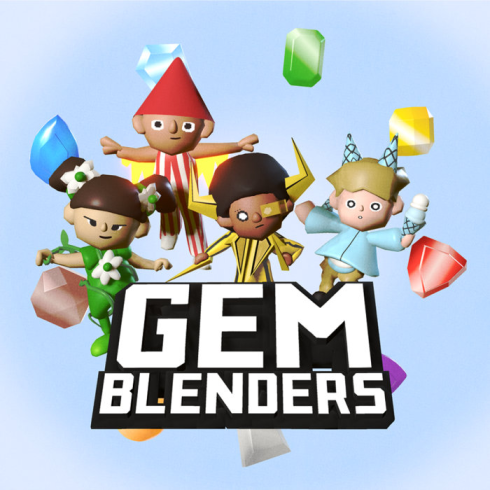
  • Gem Blenders Review

    I’ve been keeping an eye on Gem Blenders for the last few years at this point, and my opinions have been a bit mixed at times. I thought it was interesting the first time I played. I was also a bit dismayed last year to learn that they had completely switched their card back, preventing their “alpha” versions of the cards from being played with the modern cards last year.

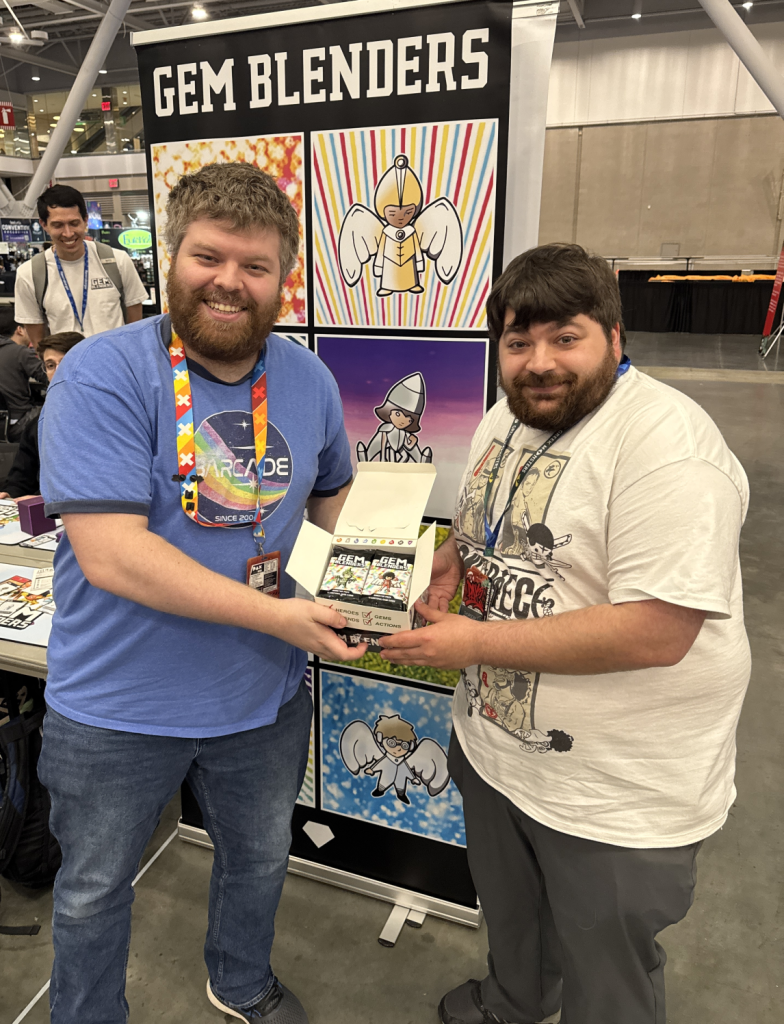
    That said, this year they were offering some free tournaments at PAX with Booster Boxes as the prizes. I’m nothing if not a sucker for cards, so I purchased a starter deck, threw myself into the games, and finally Gem Blenders clicked for me.

    Of course, before I talk about that moment where everything clicked, let’s talk about how the rest of the game works.

    Starting the Match

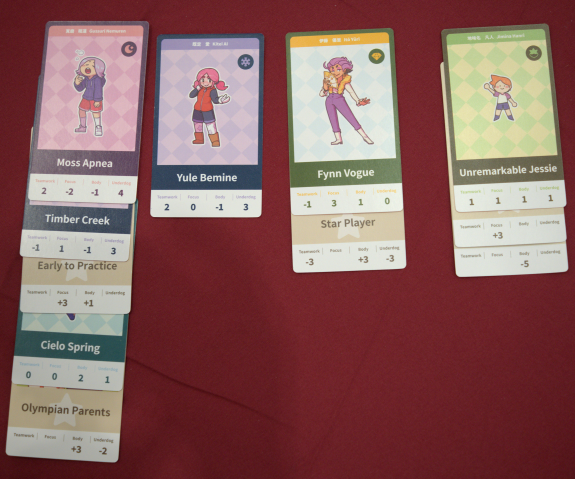
    Gem Blenders is an indie TCG played between two players. Each player starts with a 50 card deck and 4 heroes. After arranging the heroes, choosing a starting player, and drawing hands of 7 cards, the heroes get flipped up and gameplay starts.

    Gameplay Systems

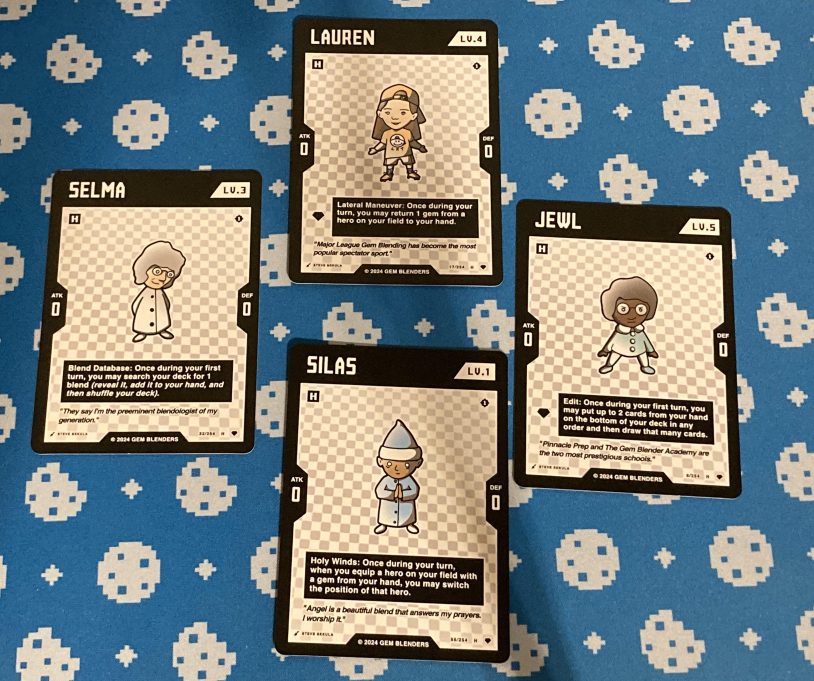
    Heroes make up the first part of Gem Blenders’ primary mechanics. They have some abilities, a position on the board, attack and defense stats, and a level. More on levels in a bit.

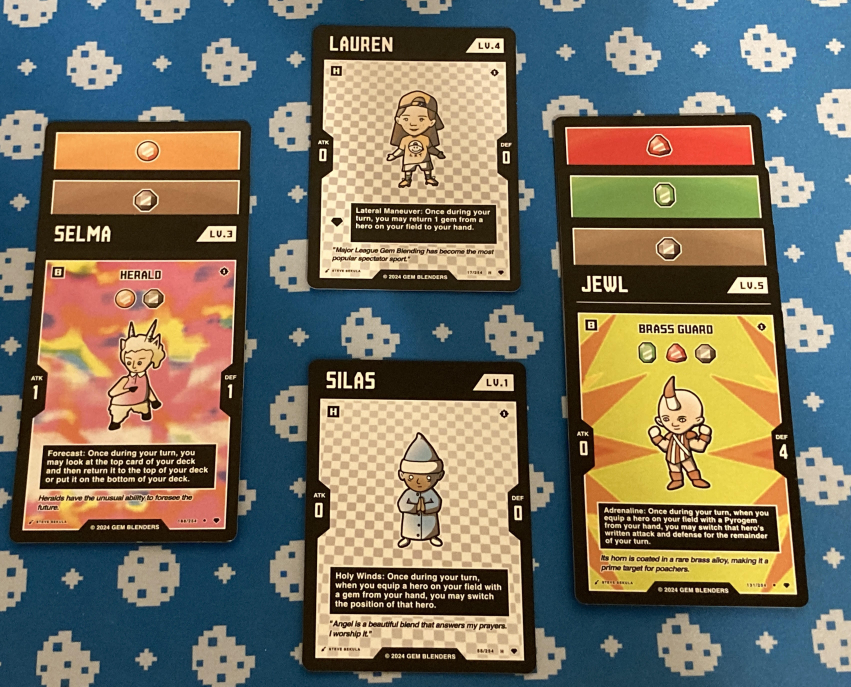
    Of course, those attack and defense stats for starting heroes are almost all zeros, which is why you’ll want to play Blends onto them as quickly as possible. Blends are probably easiest to compare to Pokemon’s evolutions. You place them on top of a hero, and they replace it’s stats and abilities with their vastly more powerful own.

    Blends can’t just be played out though. Instead, they can only be played onto heroes with a high enough level, and the correct gems already attached.

    Gems serve as the Gem Blenders resource system. They’re played onto heroes, and they’re required for playing blends and activating certain abilities. Only one can be played per turn, and so the choice of which color to play, and what to do is pretty important.

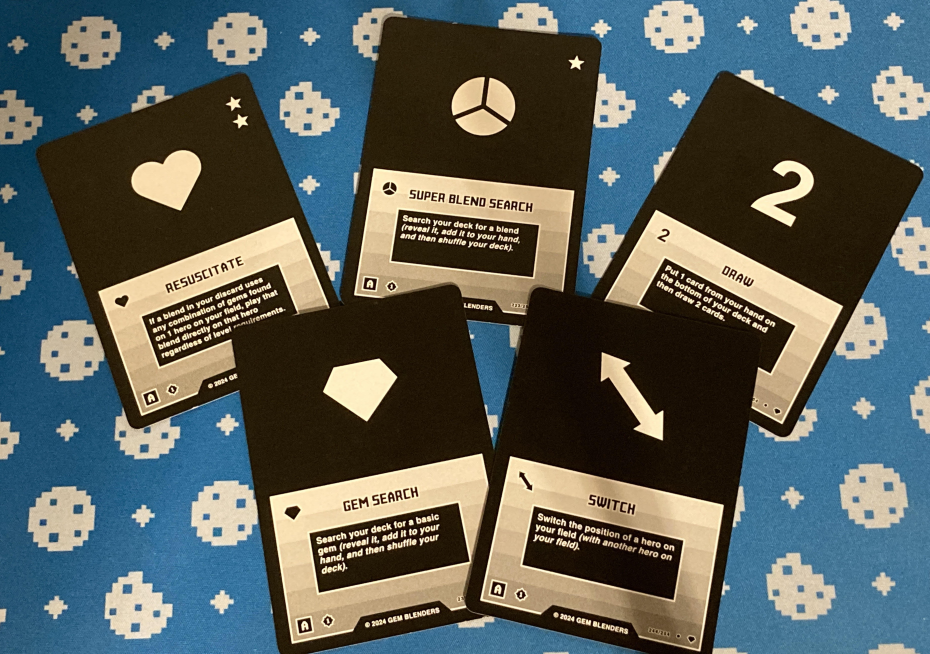
    Finally, there are actions cards. Action cards sit in a weird sort of parallel to the rest of the game. You can play any number per turn, but you can’t play more than five per game. Note that I said game, and not match. It’s going to be relevant in a moment.

    Winning the Game

    A “full” match of Gem Blenders technically consists of 3 games. The first game starts when the match starts, with both players having 20 life. Each turn, a player can choose to attack with their gems, and inflict damage to their opponent equal to each of their front row heroes’ attack minus the defense of the hero that they’re facing. When one player knocks another player down to zero health, the game ends, but the match doesn’t.

    Instead, the player whose turn it was immediately ends, both players reset to 20 life, and reset the number of actions they can play, but the board state remains. It’s an interesting twist with some neat implications.

    The Moment Things Clicked

    I haven’t done a write up on Gem Blenders before because, frankly, I felt underwhelmed the first few times I played. The game felt slow, and a bit grindy with a lot of “draw, go” happening.

    It wasn’t until I was playing it for prizes over the weekend that I finally understood what I’d been missing: Gem Blenders is all about knowing your play lines, and being able to forecast what needs to happen so that you can win.

    Unlike a lot of Magic or Pokemon, where just slamming cards out will eventually lead to a resolution, playing like that in Gem Blenders will just lead to the game stalling out. Instead, you need to be looking at your hand, figuring out what pieces you need to fetch in order to assemble your deck’s core engine.

    Let me give an example.

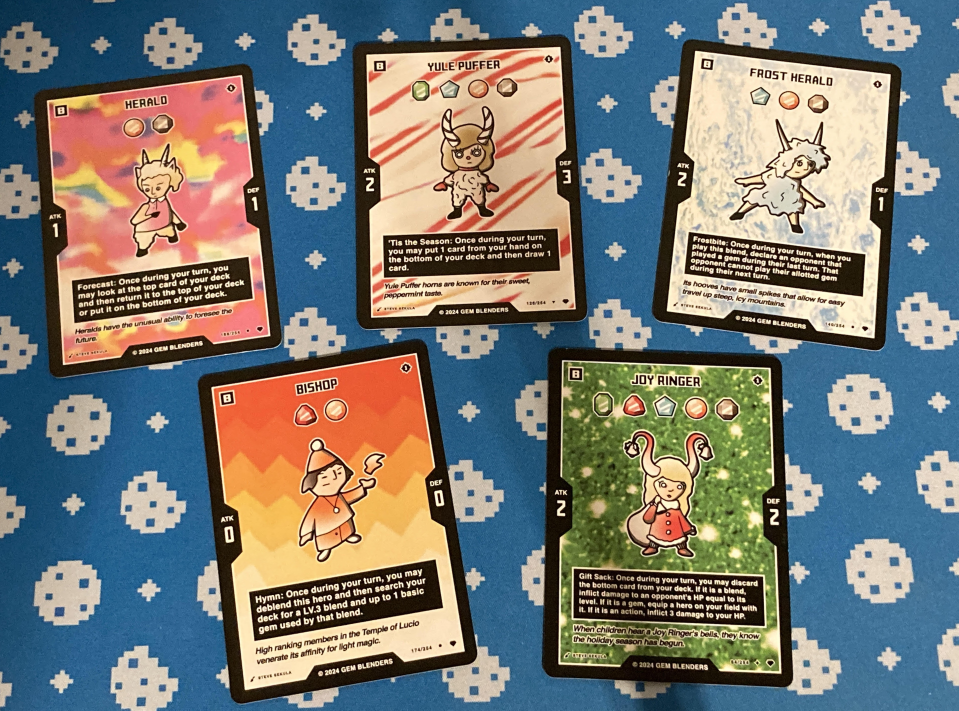
    The deck I played over the PAX East mini-holidays was called Joy Holiday. It contains some cheap two gem blends, and a few more expensive ones. It’s entirely possible to play it in such a way that it gets out a Guard or two, maybe a Frost Herald. But that’s probably not the right choice.

    Instead, it’s better to build up a board of Heralds, and use them in combination with Bishops to find the Joy Ringer and Yule Puffer, and combine those two together to either thrash your opponent’s health, or ramp yourself into the stratosphere.

    But in order to do that, I had to recognize that this was my plan at the start of the game, and play towards it, instead of just playing cards as they came up.

    Overall

    There’s a lot of little things about Gem Blenders that are a bit weird. The art style is a mixed bag for a lot of folks I’ve shown the game to, and others don’t really want to play another TCG.

    But there are also a lot of fun moments. The game doesn’t lend itself to huge amount of targeted removal, so there’s more of an opportunity to build up an engine and let it rip. And it’s a really fun puzzle to try to build your way out of difficult scenarios, or to make the right calls to keep a game alive.

    Gem Blenders isn’t perfect, but it’s a fun sort of imperfect, like a karate fight in slow motion. I don’t think anyone needs to rush out to buy a booster box, but if you see it at a convention, and find yourself a bit put off by the artwork, give it a try anyway.

    You might be surprised.

  • Tournament Arc

    Partway through my last game of Tournament Arc, tragedy struck.

    Mr. Bear transferred schools and was then immediately hit by a bus.

    Obviously, this did not bode well for his odds in the hot dog eating competition (which was ultimately won by Bonk Dents, despite starting the game with most of their bones already broken).

    More would be broken later.

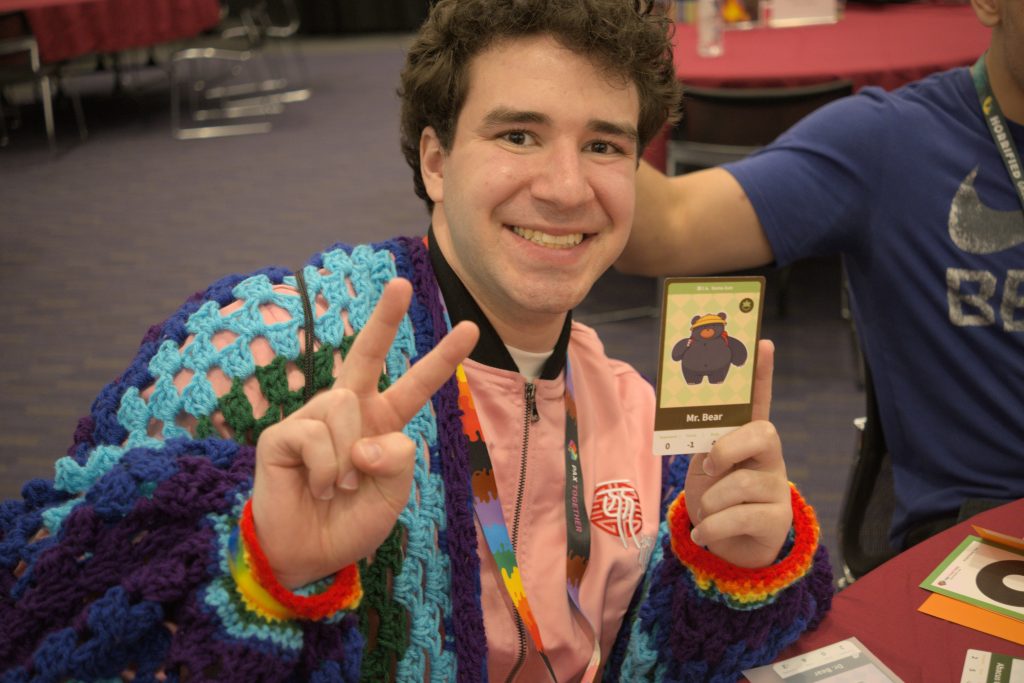
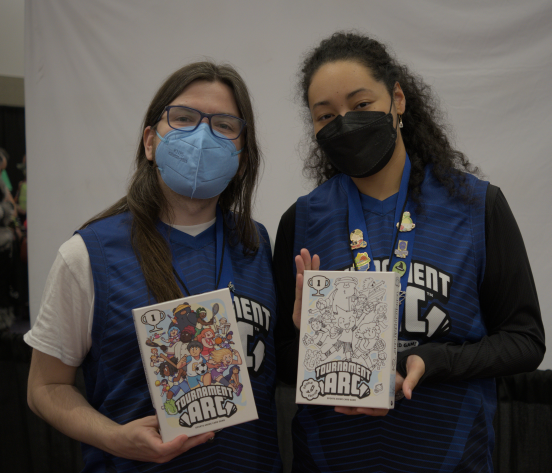
    Mr. Bear, and one of the folks I was playing with, moments before disaster.

    These were just a few of the memorable events from my last game of Tournament Arc. A few other highlights included stacking three athletes on top of each other to make a single, suspiciously larger athlete, and the running favorite turning out to be their own evil clone.

    All of which is to say: I like Tournament Arc. And if after reading the rest of this, you like the sounds of it as well, I encourage you to check out the Kickstarter, which will be launching on Tuesday, May 20th.

    Tournament Arc is a light party game inspired by sports anime. After drafting a set of athletes, players take turns playing episode cards onto said athletes in attempt to prepare (or perhaps un-prepare them, when you start debuffing other players athletes) for The Big Sports Game.

    What is the Big Game? Well, no one knows until partway through training, when the sport card gets flipped up. And even that is no guarantee it’s what they’ll actually be competing in, since some episode cards can change the sport.

    This might sound like a bit of a chaotic mess, and honestly, that’s why I love it. The joy of tournament arc is in the incredibly wacky narrative it creates. Did someone make one of their players the coach’s favorite? Arrest the coach! Is one of your players suffering from insecurity? Well, that’s probably why they started doing steroids.

    It’s very much a game about the journey, and not the destination. Especially when that journey involves someone being raised by Olympian parents who were also clowns.

    I don’t have any real critiques of Tournament Arc. It’s a game about telling goofy anime-style stories, not one about the strategic decisions of running a coal mine in industrial Europe. The game is incredibly funny, the art is wonderfully cute. And it doesn’t play off “that” part of anime. You know. The one that makes you wince.

    Tournament Arc is going to launch on Kickstarter on May 20th, 2025. If you like the sound of it, or are looking for a very funny party game, maybe check it out and help push it over the finish line. And if you’re not sure yet, you can learn more about it on the game’s website.

    Also, quick shoutout to the folks at Little Creature!
  • Is a Jigsaw Puzzle a Game?

    Occasionally I see a take on the internet, and get real twitchy about it for a moment. This morning, it was a post about if puzzles are board games. Thus the twitching began.

    The first thing I want to ask is, “Why are we asking this question?” That’s not superfluous, or being rude, it’s an important distinction.

    The first response to the original question on Bluesky links to the Board Game Geek game criteria page. It is a very nice page, and I especially enjoy how it puts puzzles out of scope in one moment, and then puts escape rooms, a collection of puzzles, back in scope paragraphs later.

    But the BGG page has a specific purpose. They want to limit and filter what sorts of products end up on their website, because they do not want to just have a list of everything. It’s a valid reason to define what a board game is, and to decide that a puzzle is not a board game for their purposes.

    Let’s look at two others real quick. A friend asks you to bring something for board game night. You bring a 500 piece jigsaw puzzle. Are folks going to be happy?

    Probably depends on the friend group. But I’m leaning towards, “No.”

    What about sorting things for a store? Do puzzles go with the board games? In my experience, often the answer is, “Yes,” though that might have more to do with packaging and distributor than content. But the last few times I’ve been in a store, the puzzles sit right next to the copies of Cards Against Humanity.

    So going back to the original question, what I want to ask is: Why does it matter if a puzzle is a board game? Are you stocking a store? Giving a gift? Setting up a web page? Because that context is going to change the answer.

    Why am I being twitchy about this?

    I don’t like it when people define words around art and art adjacent spaces in such a way as to exclude certain things from being in that category. To do that, there needs to be a good reason for it.

    The usual reason for folks doing that is to exclude a category of other people from being in their in-group. The prime example of this is “gamers” claiming that The Sims and Animal Crossing aren’t “real games,” but I’m sure their are plenty others. That’s not a good reason, it’s just being a gatekeeping asshole. Now, I don’t think the original question on Bluesky was posted to gatekeep. But gatekeeping is why my brain decided to do the record scratch noise, and spend 40 minutes on this garbage writeup.

    This year at PAX East, I got a chance to meet some of the folks doing Speed Puzzling. Presumably the speed part is what elevates it to the level of board game, but it was something fun and neat that I’d never heard of before. It’s also something that would never show up on BGG.

    I’d rather that board game enthusiasts had space for weird stuff that does not in fact conform to neat tables of rules, or perfect definitions. I’d rather we had more In Memory Of sorts of things.

    Okay, but are puzzles board games?

    A sandwich is a piece of meat between two slices of bread.

    Is this a sandwich?

    Which is to say: it doesn’t matter without additional context!

    Someone who’s very hungry might be happy to have a hot dog after asking for a sandwich. Someone who catered a sandwich tray for a work event might be slightly less enthusiastic to receive sixty Costco hot dogs.

  • Sky Team

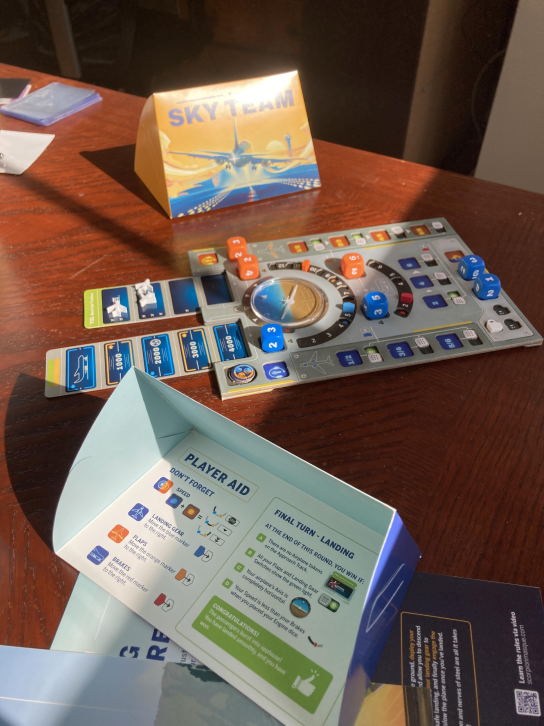
    I have played a lot of Sky Team over the last few weeks. Games of Sky Team mostly happen when my co-pilot (and actual game owner) asks me if I want to play, and I respond with a half-hearted “Sure.”

    Outside of our first flight, I have never deliberately visited my friend in order to play Sky Team. We find our way into the cockpit every time we run out of things to do or talk about, and don’t particularly feel like playing a competitive game.

    The game’s general simplicity and short playtime mean that despite my general lack of enthusiasm for taking to the air, I’m never really opposed to it.

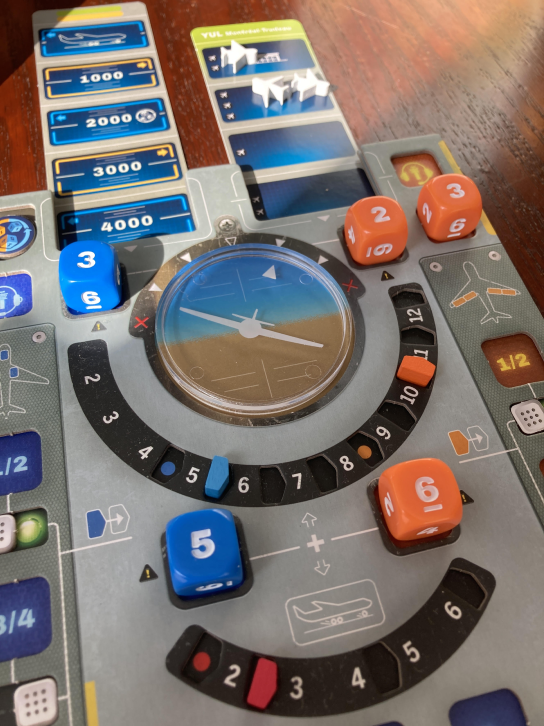
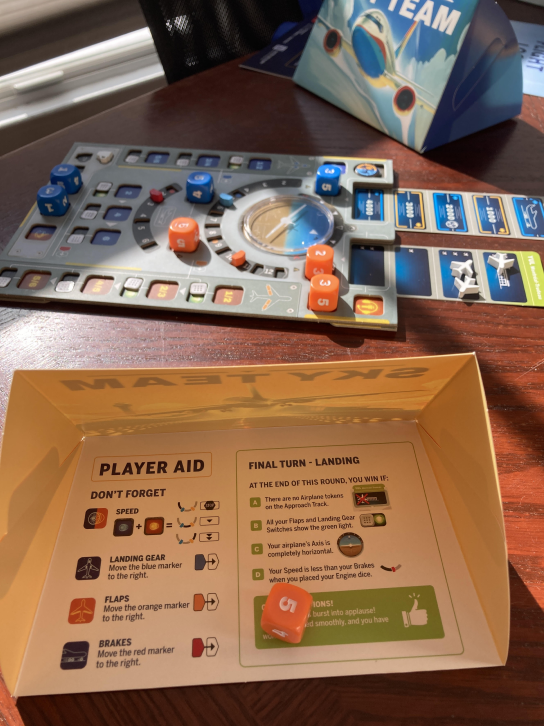
    Let’s start with that simplicity. Every round, you and your teammate each roll 4 dice, and then you take turns placing them onto a semi-split board. EYour dice pool is secret, and you cannot talk to your partner during the round.

    Slots are color coded, specific to each player. Speed and axis must be filled each round by each player, leaving your other two dice to be used for a variety of other problems, such as other planes in your path, flipping the variety of switches that will allow the plane to land, and dealing with an untrained intern.

    The actual game is a fine dance of probability and signaling. Can my teammate deal with the plane we are about to crash into? Can I slot a six into our axis freeing up my 3 to signal traffic out of the way? Or will doing so throw us directly into a tailspin?

    All of this stands against the ever ticking clock: you have a limited amount of fuel, and must reach your destination before the final turn with all flaps down, and at a slow enough speed that we don’t run ourselves directly into the airport Cinnabon.

    As the difficulty levels crank up, additional challenges have been thrust upon us. We must dodge mountains must by manipulating the axis meter within a specific range. A greedy kerosene gauge loses fuel if it isn’t plugged with a dice to minimize the loss. There is an intern. I’m not sure why we’re letting them fly the plane, or why failing to train them is as catastrophic to our success as doing a 360 no-scope directly into Kathmandu, but I don’t make the rules here.

    Despite all of the additions and add-ons, I’ve never found myself excited by Skyteam with the level of either enthusiasm I had for Clank: Acquisitions Incorporated, or in retrospect, the curiosity I had for Lost Ruins of Arnak.

    Instead, Skyteam is just kind of there.

    It feels odd to be so ambivalent about a game that I’ve played so much of, and also is the winner of the Spiel, but here I am. I’ll play it. I’ll do my best to enjoy it. I’ll be impressed by its thoughtful mechanics, and absolutely brilliant box and component design. But I’ll never feel inspired or enthused by it.

    Post Script: It’s not entirely true that Sky Team elicits zero emotional reaction from me, but the sole example of a time when it did is neither flattering to me or the game.

    During one session, I came up with the idea of a 9/11 themed expansion for Sky Team. Obviously, this hard to justify for a variety of reasons.

    But the one that made me laugh, and laugh and laugh, was the thought that it would be a very easy expansion, as landing would no longer be required.

  • War Story: Occupied France

    I enjoy co-op campaign games. As a result, after finishing up Arkham Horror, I was looking for something new. It was then that I saw a writeup from Dan Thurot on War Story: Occupied France. Sure, a World War Two choose your own adventure sort of thing is a bit out of the usual wheelhouse, but it seemed like it would be worth giving a shot.

    On the whole, I have quite mixed feelings on War Story. I think I can explain them (and the rest of the game) best by first pulling the box quote from BGG.

    Through three replayable story missions, you must exploit the specialties of your chosen agents to uncover information, enlist allies, and obtain weaponry. Engage occupying forces on tactical encounter maps where careless positioning could cost your agents’ lives. Remember, no plan survives contact with the enemy…and time is running out.

    Let’s start with those “three replayable story missions.” Yes, there are three of them. Yes, they are missions. Are they replayable?

    I would not call them that. As the box also says, much of what we spent our time doing was simply gathering information. Playing again while knowing what and where the Nazi forces are up to feels like it would somewhat defeat the point. After all, it is a choose your own adventure booklet.

    Perhaps the game has an elaborate branching path system, but by the time we finished mission 3, we had a pretty good sense of all three ways we COULD have finished our objective, even if we did only focus on one of them.

    That said, the general missions and choices they present are fun, tense and exciting.

    I would not say the same about the tactical encounter maps.

    I’m going to be honest: the gunfights feel like a crapshoot, and there were at least two instances where we got absolutely screwed by the system. That’s not to say there aren’t choices, but often the choices boil down to trying to read the game text about the tactical maps for clues.

    And many times, it just feels like those clues aren’t there. A choice with no information is the same as a random selection, and random selection isn’t agency. To the quote the box for a final time “no plan survives contact with the enemy,” and no, our plans did not. Instead, the gunfights feel like a matter of asking “Are you willing to spend gun tokens to avoid the worst case outcome on this check?” twelve or so times in a row.

    Either way, I don’t think it’s something that would have annoyed me if it wasn’t for a larger problem I have with tone.

    Now this might just be a me problem. My friend didn’t have it, and I believe Dan Thurot had a sort of opposite experience to mine. But it’s my writeup, so I’m going to talk about it here.

    To me it feels like there are two very different types of story trying to co-exist in War Story. The first is a sort of grim, intense insurgency narrative, with all the things associated with said narrative.

    Life is cheap, the enemy is endless, and while your actions are impactful in the grand scheme of things, they will also lead to death and torture for others around you. There are morally grey choices, and whether you are a terrorist or freedom fighter is ultimately going to be decided by if your side wins.

    The way bulk choices are handled with cards, all available or not available as the mission demands is clever, but really only feels used to its full potential in mission 3.

    This attempts to sit side by side with a sort of heroic myth thing. The primary enemy is a literal cigar smoking Kriminalkommissar Nazi, who the first two acts spend significant time building up. There is extended narrative time spent on a few “Face” characters who show up, but don’t actually spend much time as part of the story, like the albino toymaker.

    Perhaps this is just the result of it being a choose your adventure story. Dan was darkly delighted at a moment when he was confronted with a treacherous informant, and given the choice of killing this person, lying to them, or trying to buy them off. I was equally frustrated when upon encountering a child of a German soldier or potentially SS Officer, I was not given the option to shoot the child.

    This was not a choice I was enthusiastic about, but it did feel like a key moment where I would be confronted with the fact that in order to reach my objectives, I would have to make some heinous choices. Instead, we just distracted him and he ran off.

    It was an oddly dissonant feeling, and one that has stuck with me since then.

    It’s an interesting experience, but playing it by the book it felt frustrating at times, and frankly I don’t see how it could possibly be replayable. Would I play another game in the series? Maybe, but only if someone else was footing the bill.

    I don’t really recommend or not recommend War Story. If someone told me they were thinking about playing it, I think the first thing I would say is that I’d love to hear their thoughts after they finish.

    The second would be to ask if they wanted to buy my copy.

    And here sit the 7 out of 8 agents that I got killed by the end of the campaign.