Minecraft Dungeons

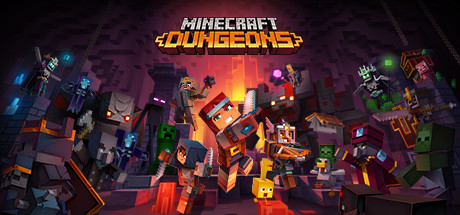
I spent months seeing ads for Minecraft Dungeons and assuming it was a fancy Minecraft mod. As it turns out it’s a completely different game. It uses Minecraft textures, sounds, creatures, and trappings (like the currency is emeralds), but its actually an Action RPG.

Blocky Diablo would also be accurate.

If you’re new the genre, ARPG is just a fancy name for a Diablo clone. It’s a 3rd person top down dungeon crawler where you collect loot and level up your character. As a big fan of Diablo II and a big fan of Minecraft, you might expect that this would be my kind of game… and you’d mostly be right.

I mostly enjoyed Minecraft Dungeons. While I didn’t play much endgame content or go to the much harder difficulties, I did clear the full story, and some of the postgame, and had a good time with it.

However, I have three fundamental problems with the game

  1. Lack of twangy guitar music.
  2. Consumable arrows.
  3. Map readability and collision.

While issue one pretty much speaks for itself, issue two is a bit more nuanced. Why does it matter that Minecraft Crayons has consumable arrows? To explain that, let’s talk about how the game handles skills.

Minecraft Funyons has an interesting “class” system. I put class in quotes because there are no set classes; how your character approaches the game depends entirely on what kind of gear you wear and enchantments you apply. If you want to be a rogue, you equip armor that makes you deal more physical damage. To be a tank, you equip armor that reduces the damage you take. If you want to be a caster, you equip armor that reduces the cooldowns on your artifacts (effectively your abilities), and then equip artifacts that deal damage. And if you want to be an archer, you equip armor that gives you extra ranged damage and extra arrows.

The problem is that the arrow economy is such that even with bonus arrow armor, enchantments, and artifacts, you STILL run out of arrows at some point each run. With at most 10 de facto classes, it’s a strange design choice to make one of them effectively unplayable.

My third issue was map readability. While the Minecraft style maps are very pretty, because all the elements are visually similar, I often found it hard to quickly figure out which terrain was walkable and which blocked me. And that’s a big problem when trying to make a split second decision with a million mobs following me. Hit a wall, and you’re dead.

Being pinned against terrain by a wave of enemies wouldn’t be terrible if the standard roll ability let you roll through the enemies, but it doesn’t, unlike almost every game I’ve ever played with a dodge. It also doesn’t actually dodge hits. All it does is give you a quick burst of speed followed by being slowed. Looking back, I found this design decision this most frustrating part of the game.

And there are a few other things that don’t quite make sense to me. The enchantment system seems to be built to encourage you to try out new sub builds frequently. But this never really worked. There are only two ways to get your enchantment points/levels back to try out a new item or build.

Option 1 is to salvage the original item, getting rid of it. If you do this and then don’t like your new build, you’re shit out of luck. Option 2 is go give your items to the Blacksmith, which gives you back your enchantment points, and then upgrades the item after your clear 3 levels. But again, if you don’t like your build, you’re still shit out of luck, abeit only for 3 runs. Why there isn’t just a “refund enchantment points” button is beyond me.

The game is also a bit buggy. While none of these are “Eat your savefile” or “Crash your machine” levels of bugs, they’re still annoying. For example, I fought a miniboss at the start of a level, and then spent the entire level listening to the dramatic boss music. Almost every chest you open spews some consumable items out of the level, entirely wasting them. Another time I rolled in the middle of combat and got stuck in a hole in the map.

Overall, I did have fun with it, even if it was somewhat simple. It honestly felt like the game was initially designed as a roguelike, but at some point they changed it to a perpetual gear chase. The addition of the Tower, a game mode that is quite literally a roguelike adds to that theory.

Minecraft Dungeons is available on pretty much every platform, and also has cross-play between all of them. So if you’re looking for a solid, but simple ARPG you can play with other folks, grab a copy, and sit back. Just be prepared to deal with some annoyances along the way. And if you’re still on the fence, you can read more about it here.

Ed Note: The post-game content is actually surprisingly extensive, and decent. I played it even if Max didn’t. It functions similar to PoE’s mapping system, in that the zones themselves are remixes of previously cleared areas with increased mob variety and specialties. It also has it’s own special gear chase with gilded items and whatnot. TLDR: Postgame good!

PAX East – Dome Keeper

I was going to title this post the “Good Stuff” post. It was going to be a nice big list of everything from the show that I liked, but hadn’t listed out yet.

Then I ran into a slight problem. See, that list was a grand total of one item long. I already covered most of the games from the show that I liked in the “Games From PAX With Demos you can play at home” post.

So instead, you get a super short post about Dome Keeper, the single remaining entry on that list. So I say to Dome Keeper: congrats! And please don’t disappoint me when you actually release.

Published by Raw Fury! Who also published Atomicrops, which I loved.

So what is Dome Keeper? Well, two things, sorta. It plays like a combo of Motherload, and Space Invaders. You are a small space person, living in your tiny little dome. You can leave the dome to dig down, and gather various minerals and ores, which you then drag back to your base and deposit. Different ores are used for different types of upgrades, which range from increasing the speed at which you move, your carrying capacity, and how quickly you dig. They can also be used to upgrade your dome. And you’re going to want to do that, because there’s a timer, and when it ticks down, your dome gets a attacked by a wave of monsters.

Of course, even if you clear that wave, the next wave will be stronger. So back into the mines you go to search for more minerals. Rinse, repeat.

The demo itself was a ton of fun, and the game is supposed to release later this year. The Steam page has it listed as a roguelike, so I’m curious to see how that gets implemented, and what other features the game has.

But like I said, the demo was fun. And really, that’s the most important thing. So cross your fingers with me, and let’s hope it’s good.

Dungeon Defenders: Going Rogue

Dungeon Defenders going rogue is undercooked and unfinished, don’t buy it.

Let me save you some time and money. Don’t buy Dungeon Defenders: Going Rogue. If you want to close this article now, or perhaps just read about a better Roguelike, or a better Tower Defense game, that’s fine.

I’m writing the rest of this article because posting a writeup that’s just one paragraph long is rude. Also, spite, because I spent $15 on this junk.

Dungeon Defenders: Going Rogue wants to be a combo tower defense game and roguelike. It’s also technically an entry in the Dungeon Defenders series. (More on the franchise’s weird history later.) If you’ve never played a Dungeon Defenders game, they were 3D tower defense games with action combat, and fairly heavy leveling/progression systems.

Dungeon Defenders: Going Rogue, is not quite that. Here’s how the traditional loop of a Dungeon Defenders game worked: you’d pick a map to run, and a difficulty for that map. A map consists of a series of waves of enemies to fight, and potentially some form of boss at the end. Killing enemies drops mana, and you use mana to build and upgrade towers. Enemies can also drop loot, items you can equip, and whatnot. If you get to the end of the map, you unlock more maps and challenges, and if you fail, you keep the loot you had so far, but you have to start over.

All this is combined with having a permanent character, from one of the game’s classes, who you level up and such, also with mana.

Dungeon Defenders: Going Rogue tries to take that formula, and turn it into a roguelike, but it just doesn’t do that very well.

Let’s quickly get mechanics out of the way. Like standard Dungeon Defenders, you have a hero, and you have the same sort of abilities. These abilities vary from class to class, but generally have a pattern. Each class has a basic attack, a secondary attack, a nuke, an activatable overcharge, and two tower slots. Unlike towers in normal Dungeon Defenders, these towers have time to live, and die once the the timer empties. But the cooldown to place a tower is far higher than the time a tower actually stays alive, so in practice, you can only ever have two towers up for a short amount of time. In an ostensible tower defense game, this is a bit strange.

The biggest issue I have with Going Rogue is that as a roguelike, it’s incredibly boring. A good roguelike offers a high skill ceiling for mechanical mastery (Dead Cells, Enter the Gungeon, Nuclear Throne), informational mastery (Slay the Spire, Inscryption), or preferably a combination of both (Binding of Issac, Spelunky). If your game is going to be based around playing effectively the same thing over and over, playing needs to feel rewarding, and runs need to feel different. A weaker player should have good runs where they can feel like they’re succeeding even if they don’t know everything, and a strong player should be able to salvage even bad runs.

But even if you disagree with my definition of what makes a roguelike good, I think you’ll agree that being boring is exceptionally bad in a roguelike. Every run cannot just feel the same. And that’s the issue with Going Rogue.

The way the game handles abilities and power growth is underwhelming. After you clear a level, you open a treasure chest, and the chest has a few random items in it. One of these are the game’s runes, which seem to be intended to function as value pickups. Ultimately, I find them mostly worthless, because there’s virtually never a reason to not pick them up, and they give uninteresting stat buffs, such as 5% health, or 10% movement speed. They’re numerically boring stat sticks. And most of the time you don’t even get to choose which ones you’re getting.

At end of 3 waves, when you clear a map, you get a slightly bigger chest with a special rune drop that lets you choose between 3 different runes. The problem is that the very generic runes mentioned before are still in the pool, and it’s entirely possible to roll the same one twice as one of your choices.

The weapons, trinkets, and towers suffer from a similar but slightly different issue. As a run progresses, better towers/weapons/trinkets drop from the end of level chest. And because they’re almost always net better, there’s virtually never a situation where you’d choose to keep your current item, even if it has interesting stats, over an item with more damage. Get a cool tower early on? Too bad, by the time you’re in the 3rd zone, it’ll have 1/5th of the DPS of any random trash that pops out from your end of level chest.

The end result is a system where you can’t construct a build. You can only pick up bigger numbers, and hope they’re big enough.

Perhaps this could all be ignored if combat felt good, but it doesn’t. It’s a weightless affair, where you swipe at enemies until their health bar empties, and they fall over and die. Particle effects and animations are unimpressive, and feel like greybox assets. There’s not an ounce of mechanical mastery required, and the fact that abilities have virtually no synergy does the game no favors either.

But that’s all subjective. Maybe I have bad taste. But regardless of my taste, the game is buggy. In five hours of playing, here are a few highlights of what I encountered:

Random disconnection from multiplayer for no reason, killing the run.

Items dropping with a description of “ITEM TEXT GOES HERE”, no stats, and a sell value of 9999.

Items all dropping with the exact same stats, instead of having random rolls.

So that’s Dungeon Defenders: Going Rogue. A unpolished, unfinished mess. A brawler with poor combat, a tower defense game with no towers, and a roguelike with no power progression. If you took your money, and set it on fire, you’d get more value. This is because while the money would be gone, at least you wouldn’t have wasted any time playing the game.

Ed Note. So, Dungeon Defenders as a series has a bit of weird history. There was Dungeon Defenders, then a shit ton of DLC, then Dungeon Defenders 2, and presumably even more DLC. At some point, the company making it sorta shut down, then someone else bought the rights/reformed the company? I’m not 100% clear. In any case, the folks who bought the rights again wanted to make a new Dungeon Defenders game. They didn’t have any money though, so they made Dungeon Defenders Awakened. It was mediocre. Then they made Dungeon Defenders Eternity which… no longer exists. And now they’ve made Dungeon Defenders: Going Rogue, which isn’t worth playing.

Ed Note 2: If for some reason you want to see actual gameplay, why not watch me play it with a friend here?

Satisfactory – Take #2

A while back, I wrote a post on Satisfactory. However, I don’t think it was particularly satisfactory, haha, I’m so clever, wordplay. Okay, that’s out of my system. Anyway. I’m not super happy with how it came out. So I’m gonna give this a second shot, because Satisfactory deserves a more focused review.

What type of game is Satisfactory?

One of the things I’m the most unhappy with in the last article I did on this game is how I actually described Satisfactory, because I really didn’t. I think at least part of this is because Satisfactory doesn’t quite fit into any video game genres particularly well. While you could call a Automation game, or maybe a sim, it’s not really a sim of anything, and most of the elements in the game aren’t particularly… sim-esque. (For who does think Satisfactory is a Sim, please go run 3000 MW through 3 inches of cabling, over several miles, and let me know how well that experience matches up with doing the same in Satisfactory.)

Instead, I think Satisfactory might be closer to a genre of board game, the engine builder. Engine builders as a genre are mostly about building sets of systems to take actions and produce resources, all of which ultimately get turned into victory points. Most board games with this system have some sort of win-lose condition, but this isn’t present in Satisfactory.

But Satisfactory does have a lot of what I’d consider to be the hallmarks of engine builders. There are a variety of resources, and you turn them into other resources. As you progress, you get access to both new types of equipment, and more powerful/faster versions of the equipment you already had. This access is gated by having your current setup produce certain thresholds of resources.

Why is it good?

Regardless of what genre you want to put the game in, Satisfactory can be really good. The animations and models are incredibly polished*, the gameplay is smooth and satisfying*, watching conveyer belts spin up is enjoyable*, and I really like the semi-parallel tech trees.

*If you’re wondering what that asterisk is for: Don’t worry, we’ll get to that in a bit.

Lets talk about those tech trees for a moment, because unlocking them serves as both a combination of progression and tutorial. We’re mostly going to focus on the Tier progression tree here. There are several other systems in place that also unlock building items and craftable items, but they’re mostly sidegrades/semi-optional. Except for the ladder. I have no idea why the ladder is in the coupon machine.

Here’s how tier progression works. There are 8 tiers of research, and within those tiers, there are research goals. Once you unlock a tier, you usually unlock a few new structure types, the ability to see what unlocking the next tier will require, and the list of research goals.

As an example: I can work on unlocking improved logistics, or a jetpack, but neither of those will progress me to Tier 7-8.

At any given point in time, making progress on a tech tree is your general goal, usually requiring you to craft somewhere between 50-1000 of various different parts.

But the main gameplay of Satisfactory is building. And everything around the building is mostly designed to make it easy. For example, if you disassemble a structure, you get all the resources it took to build back.

It’s also fairly easy to switch between what you’re building, and you can look almost everything up in the in-game Codex. That’s right. No longer do you have to have a fandom Wikipedia page that consists of 95% advertisements and 5% the recipe for wood logs.

At the same time, the buildings themselves are fairly flexible in how they can be placed. You can run conveyer belts through each other, and also across things that you maybe shouldn’t be able to.

Look, the highest praise I can give Satisfactory is that each time I try to think of nice things to say about, I go boot the game up, play for 6+ hours straight, then go do something else because I’ve completely lost my train of thought. There’s a constant feeling of success and progress, even if you mess things up a bit.

Okay, nice things over. Lets talk about the somewhat… unpolished parts of Satisfactory.

The elephant in the room.

If I had been forced to guess how long Satisfactory had been out, prior to actually knowing the numbers, I would have gone somewhere between half a years, to maybe just sneaking up on two years. There are two reasons for this, the first being the combat, and the second being the multiplayer performance, and bugs. Let’s talk about the combat first.

If the combat in your game makes me LONG for Minecraft’s combat system, you’ve done something horribly wrong. Satisfactory has a combat system, but I’m honestly not sure why. From what I can tell, there are three or so types of enemies, all of which have larger more “Dangerous” versions of themselves. The dangerous is in quotes because every single enemy in the game can be dealt with in loosely the same way: Kite it behind something, and then hit it until it dies. Assuming you’ve unlocked one of the games two ranged weapons, you have the alternate option of “Stand far away and shoot it until it dies”. Lets actually talk about those weapons for a moment, because they’re awful. The entire weaponry array of Satisfactory consists of the pokey stick, the pokey stick that does more damage, a modified nail gun (which is the only one that comes anywhere close to fun to use) and the worlds most unsatisfying rifle.

Special shoutout to the rifle here as being the most joyless gun, both across real life and games that I have ever encountered. It both eats through ammo, which is a massive pain in the ass to make, has a laughably small clip size of 10 shots, and has absolutely no feedback/tracers/anything to make it clear if you’re actually hitting your target, or if shots are flying freely though the wind, and for all of that effort, it doesn’t seem to even kill things very well.

I can’t tell what the goal is here to be honest. If combat is supposed to be anemic to make us focus on building and other mechanics, why does every single resource node past a certain point have several of the higher tier enemies, who despite being dumb as bricks, also hit like a stack of them, and will force you to salty runback to where you dropped all of your stuff. If the combat and unlocks related to it are supposed to be meaningful, why do they all suck so much? It’s clear the devs already understand how to create gated zones with things like the hazmat suit and gas mask. That sort of thing is much more similar to the sort of game Satisfactory feels like it is, with the unlocks of various tools and equipment and options to make building more efficient and easier.

The thing is though, as much as I loathe the combat, it is vestigial. An annoyance when it shows up and rears it’s ugly head, but it can be ignored a good 95% of the time. The next big problem I have with the game can’t be.

Satisfactory, much like Minecraft, isn’t a game I would ever really play single player. This is because both games are about making things, and the purpose of making things, at least for me, is to show them to other people, and to see the things other people make. It also massively cuts down the labor needed, because while you’re working on optimizing iron production, your friend can be setting up a full oil refinery. I personally find exploring the world tedious, but some of the folks I was playing with enjoy it. Where there are required tasks that one person might enjoy, others like them.

All of which would be cool if multiplayer wasn’t quite as shit as it is.

“Bugginess/Stability” is kind of a weird metric. For me, the impact a bug has on my experience comes down to pretty much two factors (1) How often does the bug occur? and (2) What happens when it does? Something like Skyrim has a lot of bugs, but from what I’ve seen, they’re usually more immersion breaking then they are save file shredding. In my playthrough of Elden Ring, bugs themselves are fairly rare, but when they do occur, the game fucking crashes, and in a game where closing the game without saving is death, and death means losing all your experience points/currency if you aren’t able to get to where you dropped it, this is substantially more aggravating. I had one friend whose entire save file was corrupted and effectively died outside the door to the final boss, after 63 hours. A patch fixed that issue, and he was able to complete the game, but that’s the sort of thing that leads to an uninstall.

There are two bugs I’d like to talk about with Satisfactory multiplayer. The first is incredibly specific and straightforward: When you log into a multiplayer game, if you’re not the host, or if you’re playing on a Dedicated Server, there’s a pretty good chance you will show up with exactly nothing in your inventory. As a result, you’ll have to spend a fair amount of time running around and trying to resupply/reequip potentially each time you log in. Disconnecting and reconnecting won’t solve it, and there’s no easy fix. When I looked up this bug, I found bug reports and discussions to it that date back several years ago.

The second set of bugs are a set of bugs I’m just going to refer to as “Desync” bugs.

While I’m not a game developer, I do have a technical background, and enough knowledge to make a guess as to what I think is likely occurring to cause these bugs, and why I’m specifically calling them desync bugs. First, a brief and somewhat inaccurate crash course in one way multiplayer games work. You have a server. The server is the sole source of truth for information about the games state. Then you have clients. Clients send information about what the player is doing to the server, and the server sends world state information back to the player. Because moving things, even across the internet can only go so fast, many game clients use various tricks to make things look instantaneous, or have the game client attempt to predict what will happen in order to give a smoother experience. When the client and server can’t talk to each other fast enough, for any number of reasons, you get latency, AKA lag, AKA the server is delayed in processing client inputs and sending the client information. I’m pretty sure these bugs aren’t lag, because they happened to me almost non-stop even while running the game on the same machine I was running my dedicated server one.

Instead, there’s a second type of problem that can occur. Usually, the game server tries to send only information that the client actually needs. If the system is well designed, this will be information that is relevant to the player. If the system is not well designed, it might not do that quite as fast, or it might not refresh certain information at the rate that might be desirable. For example, loading in that the player has walked directly into a cloud of poison gas.

And because the server is the sole source of truth, the client can send instructions that directs the player into situations where they take damage on the server, before the client receives that information. To the player, it seems like they died to nothing, because the state that the server was in did not match the state of their client. This is desync.

And it is fucking everywhere in Satisfactory. Sometimes its just annoying, such as with how every single conveyer belt in the game displays what it’s moving inaccurately, and how trying to grab things off them is a complete crapshoot.

And sometimes it will just fucking kill you, because you walked into the aforementioned poison gas. Or alien bees. Or radiation. Or a pack of angry spiders. You can see where I’m going with this.

Bugs are not inherently a reason to rip on a game. They can be a reason to avoid the game until it patches, like I’d currently suggest with Elden Ring, they can be a amusing nuisance like with Skyrim. But in the case Satisfactory multiplayer, they are a massive pain in the ass that actively interferes with the games gameplay loops and feel, and many of these issues have remained unfixed for years at this point. One friend who I had played with was shocked at how little had changed since the last time he’d played the game, about 3 years ago.

Early Access isn’t an excuse to ignore multiplayer performance, and frankly, there’s zero evidence that server performance will ever be fixed. They’ve had 5 years to do it, and they haven’t. I don’t see why I should believe they’ll do it in the next 5.

TLDR/Wrap-up

As a single player game, it’s an incredibly satisfying engine building/factory construction game of optimization and improvement, with a vestigial combat system, and some unimplemented features. As a multiplayer game, it’s all that, but with some exceedingly aggravating bugs that offset much of the games polish and design, in exchange for being able to untouched wilderness into a something resembling if MC Escher was tapped to design an Amazon warehouse with your friends, and the fun you’ll have is directly proportional to how long you can all go as a group before one of you snaps and quits to go back to a game that doesn’t wipe your inventory every time you try to log in. If this interests you, it’s out for PC on both Steam and the Epic Store at $30 a pop.

PAX East Party Game Post

This week: The party games we saw at PAX East!

I mentioned in another post-PAX writeup how I’m hesitant to recommend boomer shooters based off demos. This is because boomer shooters almost always demo well, even if the final product is subpar.

Well, this week, we’re talking about another genre that almost always demos/plays well at a convention: The party game!

Combine the excitement of being at a con with anything competitive, and a large number of people to play with, and just about everything can be fun for a bit. So here are the party games I saw at PAX East.

Starting with…

This image does not do a good job of capturing gameplay mechanics.

From what I played, Orbitals felt like a Smash Bros style 2d party brawler. The game had two mechanical twists though. The first is that the whole thing takes place in a gravity free area. You have to move from area to area Super Mario Galaxy style. The second is that after each round, you get points to spend to upgrade your character.

When I played, I found the gameplay a bit floaty. I couldn’t tell if that was just because it was my first time playing. The gameplay seems interesting, and Orbitals is on my watch list because of that. If you want to find out more about the game, click here.

Next up:

I guess this one does slightly more?

Match Point by Jolly Crouton is effectively multiplayer super Pong. It supports up to 4 players. Unlike Pong, you have a few other abilities then just bumping into the ball. By pressing certain triggers, you can magnetize yourself to pull the ball in, or do harder shots. Also, the goal requires you to hit it twice in semi-quick succession to score.

After reading my notes, I have written down that I thought it was “Fine” and “Not really my thing”. Also “Good Party Game???”. I think those notes are pretty accurate. It’s well made, but it’s still mostly Pong. I think it might be fun with the right crowd. But if it seems like your thing, you can learn more about it here.

Which brings us to our last entrant…

Finally, someone made a header image where the image is from the game!

Squish is fairly straight forward. It’s a survival versus game for up to 4 players. You play as a small blob skeleton, and try to be the last one standing while blocks constantly fall down onto the field. You can push this around, but if you get crushed by one, you die. Get killed, and you’re given one last chance to control a falling block. Take out another player with that block and you’re back into the game.

Squish feels like a extended release of a Mario Party minigame if I’m being honest. I don’t dislike it, but it wasn’t amazing. The full game does promise more modes, which might change things up a bit. If you want to find out more, you can click here. It actually has a scheduled release date of May 31st, so pretty soon!

And those were all the party games I played at PAX East. Like I mentioned before, it’s a genre that does well at conventions, and always makes me pause for a bit. My personal favorite was Orbitals, for both having the most potential and being the most interesting.

In either case, join us next week as I attempt to keep writing these summaries because I played a ton of stuff! Not sure what the theme will be then, but I’ll figure it out.