So, for folks who’ve played Yu-Gi-Oh before, and are wondering if they should play Master Duel, here’s my opinion in brief: Yu-Gi-Oh Master Duel can be fun, but only to the extent that you play against other people with decks that function at a similar power level. I can’t speak to higher level decks, because I never made one. I spent a non-zero amount of time being thrashed by players who did make high level decks.
A big critical note: Master Duel is ALMOST ENTIRELY PvP. There are some small PvE sections of the game, but they effectively function as tutorials.
As far as being a digital implementation of the physical game, it seems to do a solid job. I have some problems with how it handles certain mechanics, and there’s also very little flare compared to something like Hearthstone, or Legends of Runeterra. When an opponent searches for a card from their deck and adds it to their hand, the game only shows you the card for a brief moment, instead of keeping it revealed. I hate this, as the game has something like 5000+ cards, and I have no idea what a large number of them do.
Finally, its in-game monetization is fucking awful. I don’t give a shit about some “f2p btw top ranked” motherfucker. The only difference between this game and a crackhead with a knife coming at you in an alley is that the second one is being more transparent in their desire to obtain everything in your wallet.
I’m going to be honest. I don’t have much more to say on Yu-Gi-Oh that provides value in the form of a review. Modern Yu-Gi-Oh is an incredibly alien beast to me. Opening turns can go through what feels like half a player’s deck, only to have any advantage gained be destroyed by one or two cards. First turn kills from the second player are common. The game’s balance seems to rely on handtraps, cards that you discard from your hand to negate your opponent’s effects, and quickly recognizing your opponent’s deck archetype. Knowing their combos and how to interrupt them is just a critical skill as knowing how to play your own deck.
I played 40 hours of Master Duel, and this review is the best I can offer. I know that I enjoyed playing against my friends who also installed it. I know I wouldn’t recommend it to anyone as a “single player” game, which it effectively is in many ways. I don’t like it as much as Duel Links, which had a lot of PvE content. I enjoy some forms of competition in card games, but I don’t enjoy grinding ladder, and that’s primarily what Master Duel seemed to offer.
But hey, it was free*. If you still want to play it, you can grab it here.
*Free to get your ass repeatedly handed to you by Eldlich the Golden Lord, seriously, fuck that card, and that deck.
The mechanical gameplay of an ARPG, and the…. well, everything else of a F2P MMO.
Author’s Note: It turns out writing a review of an entire fucking MMO is hard. As such, this article is an overview of my feelings on Lost Ark.And while I planned on writing more about the game, after about 360 hours of playtime, I never got around to it, and now it’s almost 2023. So take this writeup as you will: a non-MMO players feelings on the game about 2 weeks post-release.
Lost Ark is a MMO-ARPG that was first released in Korea in 2018, and got published worldwide by Amazon about 2 weeks ago. I’ve had a lot of fun playing it so far, but I don’t like how it handles its in game cash store. Ignoring its grindy mechanics, there’s what amounts maybe 20 hour opening campaign that was quite fun to play through, and if you like ARPGs, but not MMOs, it may be worth downloading just to play through that.
Okay, that covers all the big points I’d like to make about the game, as per the Gametrodon editorial policy of not making you read 15 paragraphs to figure out if you’d like the game. Now it’s time for those 15 paragraphs, starting with a bit of context on the sorts of games I like. It’s relevant, I promise.
I dislike MMOs about the same amount that I do enjoy ARPGs. I have tried WoW multiple times and bounced off. I did the free trial of MMO Final Fantasy, and had pretty much the same results.
For ARPGs, though, Path of Exile is my second most played game EVER after Dota 2, and I’ve been playing Dota 2 for over 11 years at this point. Steam says I have 1600-ish hours in PoE, and all of that time was before I switched over to using the game’s standalone launcher.
Anyway, the point is:
1. Oh god I’m old, and I’m going to die
2. Lost Ark is theoretically a MMO-ARPG. This means it’s a combo of two genres, one of which I love, and the other I… well. Hate is the wrong word. Hate implies some sort of emotion. And I simply don’t care about MMOs.
Anyway, if you’re wondering how I feel about Lost Ark, all you really need to know is that instead of writing this article, I’ve just been playing the game non-stop. I sat down yesterday to write this, told myself I’d log in to get some screenshots, and then played for something like 5 hours.
The only reason I’m not playing right now is that I know that if I so much as boot the game up, the probability of this article being finished today drops to zero.
This is not to say that Lost Ark is perfect. I’ve logged 113 146 hours in it so far, and I have some issues with the game. But I’m also not planning on stopping playing anytime soon. In addition, there are so many systems involved in Lost Ark that I can’t cover them all. So instead I’m going to try to give an overview of the game’s portions, and enough info to let you decide if you think you’d have fun with it.
A lot of other folks I’ve seen playing the game have divided the game into early game and post game sections. I don’t hate this categorization, but I’m going to break the content down a little differently.
There is a solid early game campaign that is fairly linear, and has zero freemium bullshit. It’s not too different than playing through the story portion of Path of Exile, or the Diablo campaign. At the same time, it’s also sort of a tutorial for later content.
Generally speaking, I liked these portions of the game. The story is a solid B, the design of many of the actual areas is impressive, the dungeons are fun spectacles, and it’s just a solid ARPG. I want to make a quick special shout out to one specific feature here though, and that’s questing. See, Lost Ark looked at every other game that has you go out, collect eyeballs, and then return to Fred the Eyeball Eater and went “What if we just made it so that after you finish the quest, the person you turn into was in the direction you needed to go next as part of the main story instead of forcing you to trudge back into town with the eyeball sack” and it makes things flow a lot smoother. There’s almost no back tracking required for quests as part of the story progression.
I also really like how Lost Ark’s skill system works. You start with a large set of your abilities unlocked, and you can respec your combat abilities for free. This makes quickly switching things up feel fairly painless, and not the slog that it can be in something like PoE. I will also say that while playing through this first portion of the game, while I took a few deaths, there was nothing challenging enough to make me want to switch up my build. My main was an artillerist, a rocket launcher-toting DPS class, and it wasn’t until end game and raids that I actually read though what my abilities did.
The other part of Lost Ark though is the “end game” content, and this is where the Freemium and MMO genres rear their (ugly) heads. At certain points in the story, you’ll be blocked from progressing to the next part of story content until you reach a high enough item level. The way this works is incredibly simple: you stick your item into a gear upgrader, feed it magic shards until it’s full, and then spend more resources to try to upgrade it.
You can also just move your upgrade level to another piece of gear via gear transfer, though this does destroy the gear used as an input.
You’ll note that I said “Try,” because in Lost Ark, you only have a chance to upgrade your gear. If it fails, you’ll need to gather materials to try to perform the upgrade again.
Author’s Note: Apparently this a common mechanic in some Korean live service games. At least in Lost Ark, you only lose the materials invested in the failed attempt, instead of apparently destroying or downgrading your item?
So how will you get these materials? Well, by engaging in either the end game content, or exploring the world. Let’s start by talking about end game content. There’s a bunch of it, and it includes the following:
Chaos Dungeons – AKA “murder massive packs of enemies with your friends.”
Guardian Raids – ARPG Monster Hunter where your teammates are new to the idea of “not dying.”
Abyssal Dungeons – MMO-style raids, where you’ll learn that no one knows the raid mechanics, including you.
There are also several other modes, including PVP, Platinum Field, and Cube Dungeons.
While you can run end game content almost as many times as you want, you can only really get rewards from a given number of runs per a day. If you want more gear and equipment, you’ll have to find somewhere else to earn rewards (most likely something in the game’s islands and other content systems). You could also buy gear off the game’s in-game market, or from one of the gold farming sites you’ll see advertised by the bots spamming many of the chat channels day and night. But, most likely you’ll get them from islands.
Prepare to spend a non-zero portion of your time waiting around for Islands to pop, and not even be made about it, because TOOKI TIME.
Islands are one of the biggest portions of Lost Ark’s content. After a given point in the story, you get a boat, and can sail around, stopping on various islands. Islands tend to have their own stories and mechanics which can range from being mostly self-contained, to sending you on sprawling quests across the rest of the entire world, to just being permanent PVP murder holes.
Okay, so now that we’ve talked about everything I like about the game, let’s talk about the monetization.
Lost Ark is not the greediest or unfairest game I’ve ever seen in terms of monetization. With that said, it is 100% a “Pay for Convenience” sort of game. The game has a membership system at $10 a month that provides a variety of conveniences, and makes it so you don’t have to pay a fee to use the game’s intercontinental teleports. In addition to that, the game’s premium currency Crystals can be used to purchase gold somewhat like how WoW’s membership tokens work. Crystals can also be used to accelerate research cooldowns at your base, instantly finish daily quests, and reset the timer on stored warp points called “Bifrosts.” In simplest terms, there is no cash shop selling godly weapons, but you absolutely can spend real money to purchase materials to upgrade your gear.
Overall though, I’ve found Lost Ark fun. There are a variety of systems and collectibles I haven’t really touched on in this article, including the world bosses and timer events, the Stronghold mechanics, and skills and how the passive abilities called engravings work. But the end result is fun game, even if it has some weirdness, like the gender locked classes, and Pay 2 Progress Faster mechanics.
Two free things, ones a demo, and ones just a short game to check out.
Today we’re gonna be talking about two very different games, with… actually pretty much nothing in common. Maybe the amount of time it takes you to play through them? They are respectively, Peglin and Crow Story. Oh, also, they’re both free.
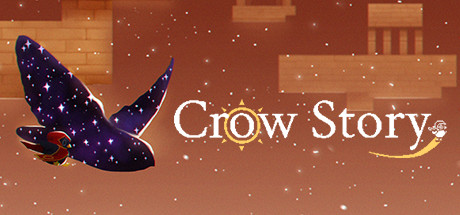
Crow Story is a very short 3D platformer. Playing through the entire game will take you less than an hour. You control a tiny little crow, and you try to make it to the end of each level. There is a story, but it’s told without dialogue, and it’s kind of “Blink and you’ll miss it.”
There’s not very much to Crow Story, but the game doesn’t ask much for your time, and as such it’s a perfectly reasonable way to spend an hour, just hopping around, and swearing when you screw up and get thrown off a ledge.
It’s a small, simple project, but it’s a complete project, and I think that’s worth praising. You can play it here.
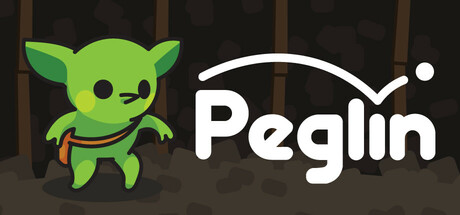
Peglin is a roguelite game that uses Peggles breakout/pachinko style mechanics for dealing damage. You venture from area to area, collect items, and just try to survive. Right now it’s just a demo on Steam, but it could turn out to be something fairly interesting.
While I’m not sure how I feel about the trend of “What if we took X and bolted on Roguelike Mechanics?”, I like it a hell of a lot more than “What if we took X, made it a freemium mobile game, and added a lottery ticket system?”
Death’s Door is has some great moments, and a lot more monotonous ones.
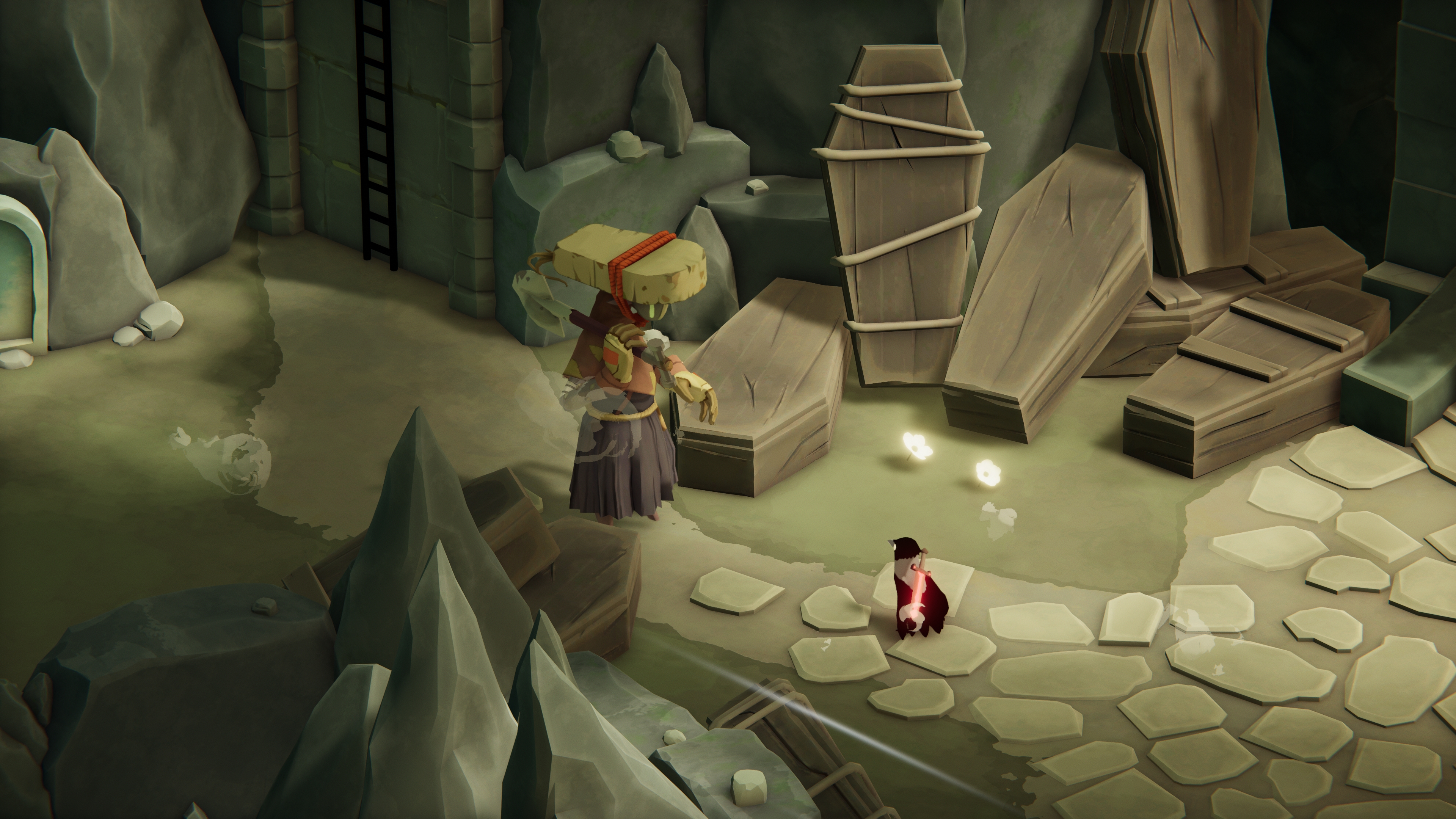
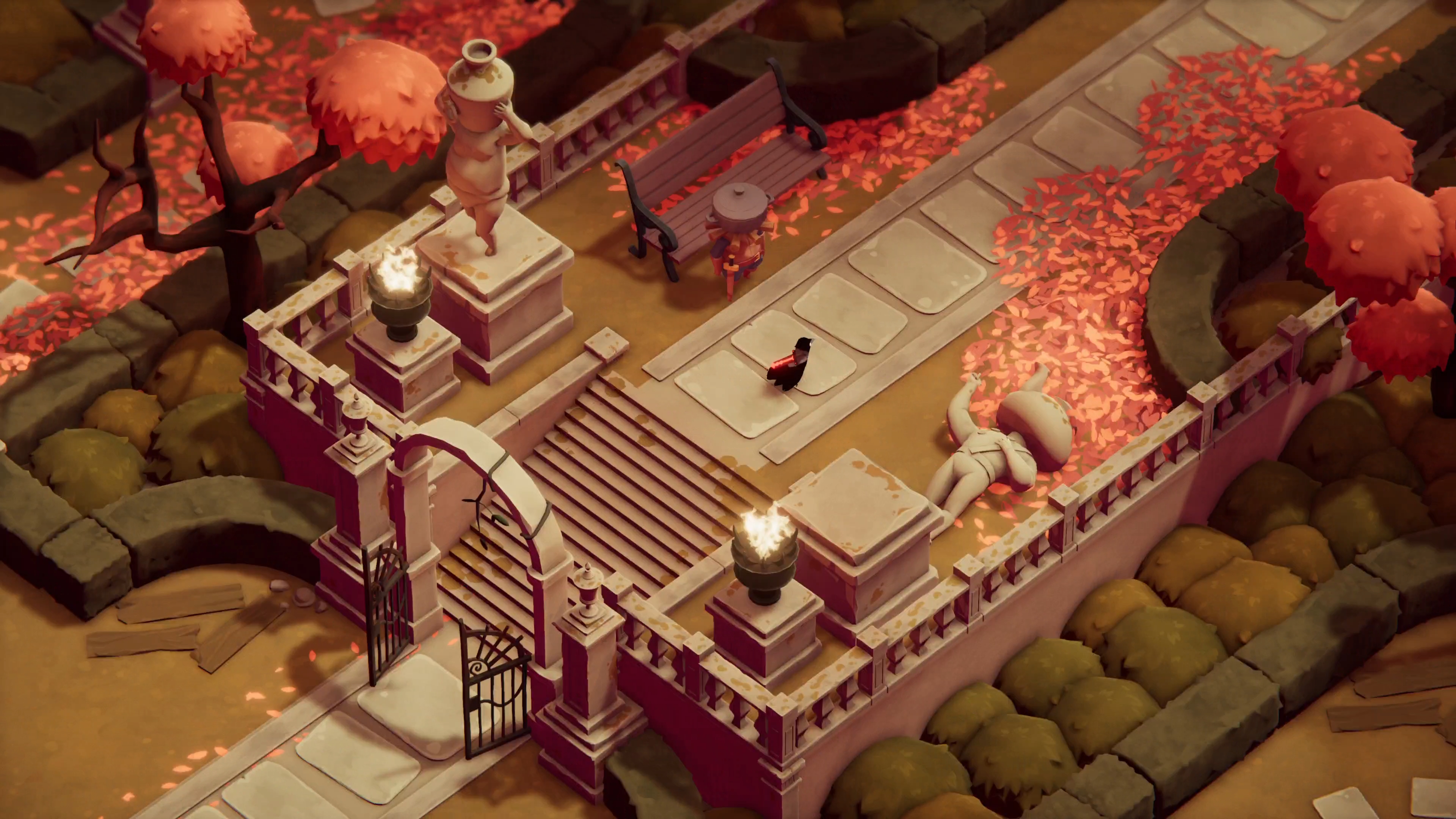
Death’s Door is a Zeldalike. I had that word in brackets, intending to replace it with something else, but I couldn’t find an appropriate replacement, so it stays. You play a small crow working for the Souls Commission. Things happen, and now you have to go places and kill the monsters who live there.
Death’s Door is fine, but it’s not good enough for me to really want to recommend it. It doesn’t do any single thing wrong, but it also never really felt like it did anything super special or unique. It has good moments, but after playing for 10 hours, my primary memory is one of frustration with the controls, and a few cool boss fights.
You’ll go from area to area, solving puzzles, and combat gauntlets, and finally getting to a boss who has to be defeated. These areas are fairly linear with a bit of back tracking. As far as I could tell, there were no real branching pathways, but there were a fair number of hidden areas.
The game just never felt that special though. There are a bunch of weapons, but only one really feels like it changes up how attacks work. Of the four spells you get, three felt just like the same projectile with different charge time. The puzzles were never quite challenging. The combat gauntlets were fine, but the longer non-gauntlet sections often ended up feeling tedious. The upgrades that you can buy are purely numerical, and never felt all that special or meaningful.
Howeverrrrrr…..
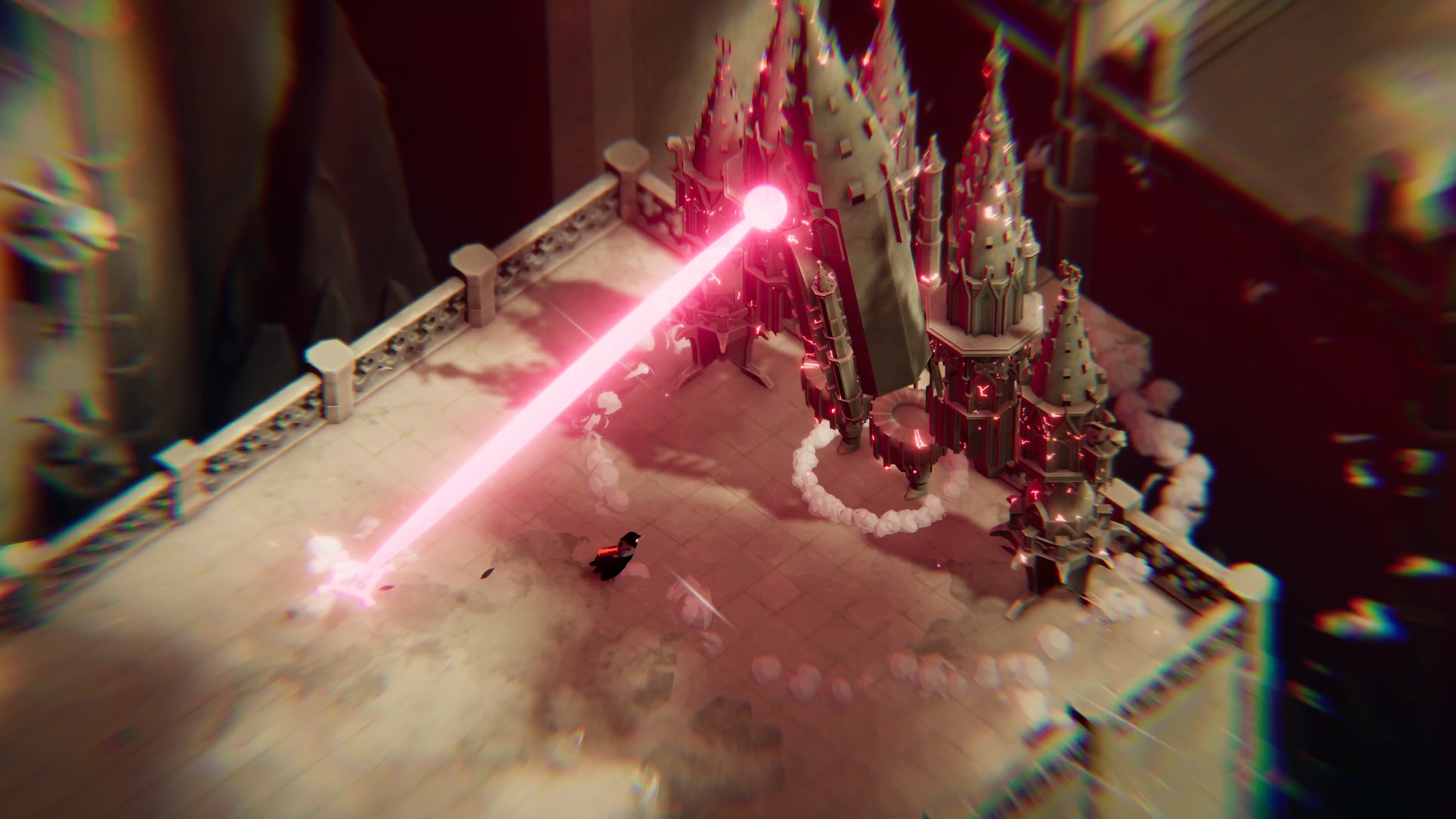
To be clear, this is effectively a mini-boss.
The full boss fights are, with a single exception, my favorite part of the game. They’re fast paced, bombastic with incredible art, and don’t overstay their welcome. Or at least most of them are. There was a single fight that drove me absolutely insane, and did a great job of illustrating my biggest problem with the game: the controls.
Death’s Door does not feel like it was meant to be played with a mouse and keyboard. I’m not sure how to illustrate this outside of giving an overly long explanation, so here goes:
Your movement is controlled with WASD. You can also swing your weapon with left click, use a spell with right click, and charge a heavy attack with middle mouse. (I never incorporated the heavy attack into my patterns, it was just too inconvenient.) You dodge with spacebar.
The problem is with how directionality works. Since you move with WASD, you can only move in 8 directions, and moving anything that isn’t up/down/left/right requires you to hold down two keys at once. Attacking, however, uses targeting from your mouse, and specifically where your mouse is relative to your little crow. Dodging, however, uses the direction that you’re facing at any given point in time. In addition, the camera isn’t permanently centered, which means that if it moves to keep a boss in frame, you can find yourself swinging in the wrong direction because the camera moved, and moved your mouse relative to your player. I often found myself dodging into an attack I was trying to avoid, or missing attacks because I lost track of where my mouse was relative to my crow.
This is my biggest actual problem with the game. While there were some minor technical issues with text boxes and pop-ins on various objects, I suspect these were caused by the fact that I was playing on an ultrawide monitor more than any actual technical failing.
The one thing I really do want to praise about the game is the art. There are some incredibly beautiful moments, mostly with the boss enemy design. The world itself is striking, even if it’s not always obviously impressive.
So that’s Death’s Door. A solid Zeldalike with incredible art, a few clever moments of world building, great boss fights, but also with janky controls, and a generally sort of humdrum feel for the other parts.
If you’re absolutely craving a game with simple Zelda-esque gameplay though, you could probably do worse. It’s available on pretty much every standard console, and for PC on Good Old Games, Steam, and the Epic Games store.
A unique Co-op First Person Shooter with Roguelite Deck Building for progression, with modernized Left 4 Dead-esque gameplay, and Counter-Strike-esque Item Shop by Turtle Rock Studios (TRS).
Author Note: I’ve played a lot of zombie shooters, including World War Z, Call of Duty Zombies, Zombie Army 4, State of Decay 2, and of course Left 4 Dead 1 and 2. As you might guess, I kinda like the genre.
If you’ve never played a zombie shooter before, the general gameplay loop is something like the following: you and several of your friends are dropped into the start of the level. You’re given guns, a few medkits, and “Good Luck!” and tossed out into the apocalypse. You start in some form of safe area, and your goal is to get to another safe area. Along the way, you’ll be attacked by wave after wave of zombies who want to get their hands on your delicious face meat. Different entries in the genre handle things like when waves of zombies spawn, special super zombies, ammo, and importance of individual performance vs teamwork differently. Groundwork set, so lets talk about Back 4 Blood.
Back 4 Blood is the most polarizing zombie shooter I’ve played. I can attest that you will either love it or hate it. At launch it had a lot of problems with bugs and difficulty scaling; however the current patch fixed most issues. As such, I will be judging the game in its current form as of the Dec. 17th update.
Technically, Back 4 Blood offers two different game modes. There are co-op campaigns through 4 different acts, as well as a PVP mode called Swarm Mode. I think Swarm Mode is an awful experience. If you’re looking for PVP look elsewhere. This game ain’t it. The rest of this paragraph is going to be a short list of why it sucks, but then we’re gonna just ignore it for the rest of the article. Swarm mode suffers from too much downtime between rounds, small map size, and frequent disconnects from either side due to just not being fun.
The PvE experience however is great. It offers high replayability with enormous build diversity and almost infinite skill ceiling in that you can always learn a new thing or two every time you play.
The game offers three difficulties: Recruit, Veteran, and Nightmare. Compared to other games’ difficulties these are comparable to Normal, Hard, and Insane. Nightmare is substantially harder than Veteran. The general progression path for all players is that you complete all missions through Recruit, then grind Veteran until you have enough progression unlocked to handle Nightmare difficulty. The main differences between the modes are the typical numeric difficulty scaling. Enemies hit harder, have more health, and more of them. The only big difference between them though is corruption card system.
Corruption cards add modifiers to change up attack patterns or defenses of the zombies. This can include the zombies getting armored plating to negate bullets, having no weak points, or auras to buff allies around them. This adds a lot of variety to the missions. You can go through the same mission, but have a vastly different experience based on what the AI director through against you with this Corruption card system. It could be common zombies explode on headshot for acid damage, which would incentivize more area of effect weapons like Molotov’s or barbed wire to slow them. Of couse, the AI isn’t the only one who gets neat cards. Back 4 Bloods biggest twist on the genre is its Deck System.
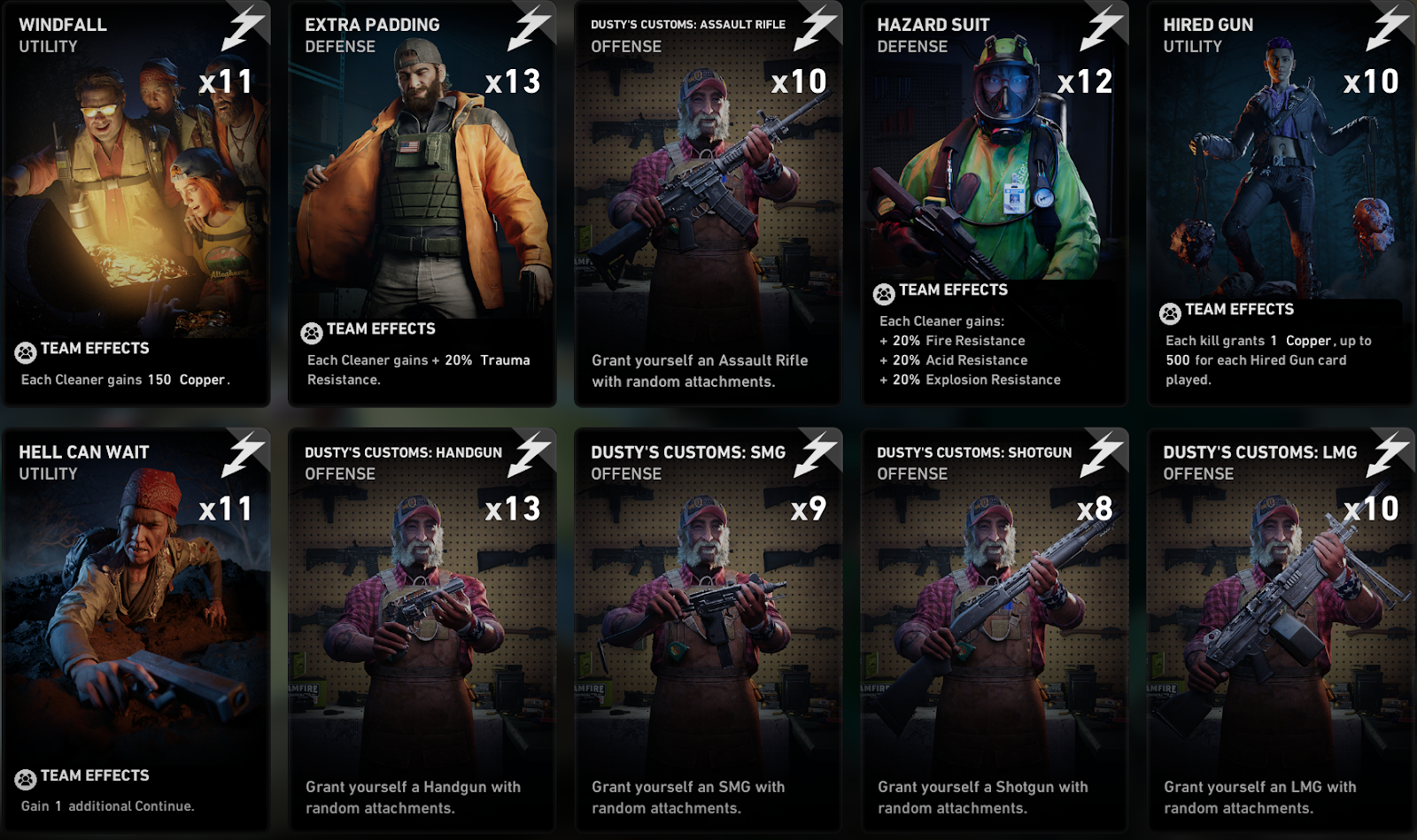
To build a deck, a player selects up to 15 cards to put into one, names it, then selects it and a character at the start of a level when joining a game. Order of cards matters in your deck. Your first card you will always have, but the order you pick from then on is somewhat flexible. For example on the first mission of act 1, you start with your first card but then you get a choice from one of your cards in order of 2 through 6.
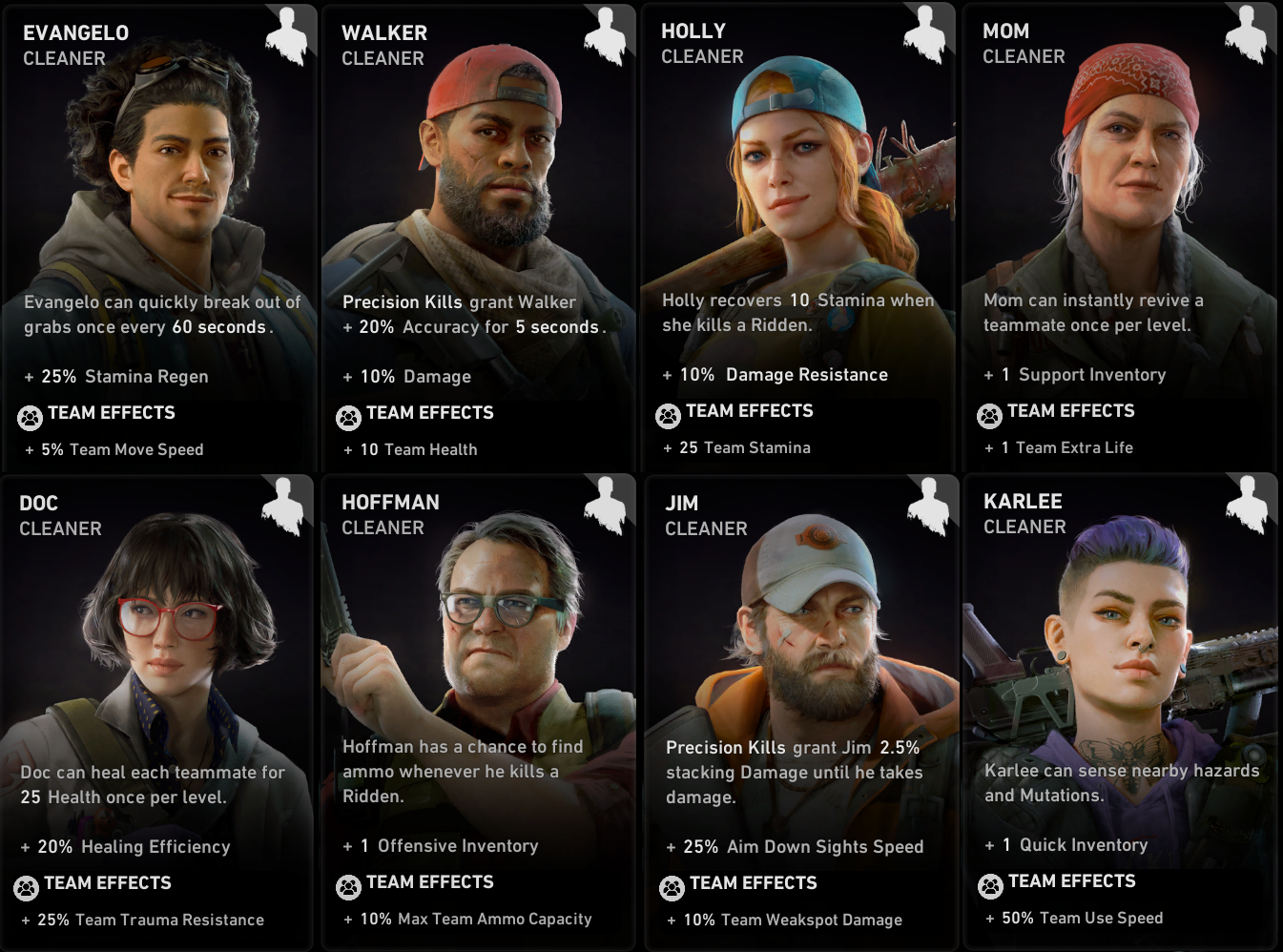
This allows you to build the deck in such a way where you can put cards in to counter certain corruption card modifiers on your current run. For example, there are quite a few corruption cards that reduce line of sight via fog, toxic gas, or lack of lights; you can counter this with the card “Marked for Death” which allows you to highlight a red outline of special ridden while multiplying the damage your team does to them by 10%. No one player however can cover all contingencies; but a team can. There are lots of different strategies to deck-building because you can try to create a jack of all trades that can react well to everything, or you can go hyper specialized. The Deck System is complex because most games don’t offer this level of choice in customizing your character in a co-op shooter. You can make hyper specialized character roles, like melee, healer, reviver, sniper, loot find builds, grenadier, etc. or a hybrid between them. Each of the characters has a unique card (see above) which generally provides a unique buff to them as well as a buff to the team such as move speed or extra lives, etc. All characters are viable and usually have unique roles they best excel at. Depending on the campaign you start with a different amount of cards(see below), but you always gain 1 card per level from your deck.
I’m uncertain what is “optimal” but I can confirm that most cards are viable in some build up to veteran difficulty. Once you get to nightmare difficulty I’d say it is reduced to around 20% of the cards.
You get more cards for your deck by unlocking supply lines with supply points. You get supply points from completing missions. The top supply line is mostly damage cards, middle supply line is mostly support cards, while the bottom supply line is melee/utility/copper find cards. All supply lines are mixed with cosmetics to unlock as you play.
That is not necessarily to say that you can’t win without cards, just that it’s significantly easier with using the “best” cards. Still, all the cards in the world are nothing in comparison to having a good coordinated squad. I recommend joining a discord group because this game truly shines with a four man squad on voice comms. I’ve beat nightmare using exclusively in-game matchmaking on nightmare but prepare for lots of failed runs if you choose to do so.
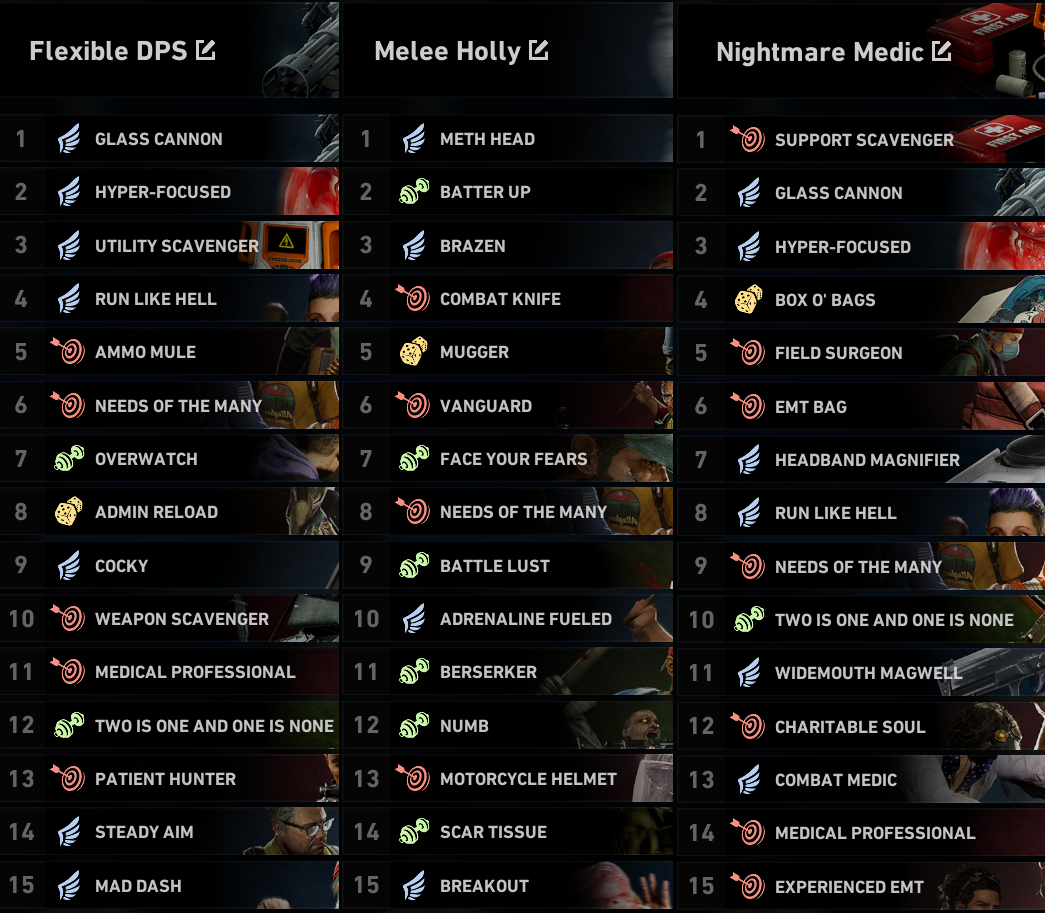
For solo queue meta, the best decks I run with use the same 2 or so damage cards (Glass Cannon 25%damage/ Hyper Focused for 50% Weakspot Damage), 2 or 3 mobility (Run Like Hell for 12% move speed is auto include for all builds) cards and the rest goes to your role. The only role that deviates from this rule is melee, they will be a little weak early game but they are the kingpin to a group. Without melee to handle the common ridden you won’t have ammo to kill the specials or bosses. Pure economy builds based on copper gain or loot find are too slow to come online to be viable as Nightmare runs are reduced from checkpoint to checkpoint and rarely completing a full act in one sitting.
Here below are the decks I’ve used for my nightmare runs. Even though you lay out the cards you pick up 1-15, you don’t have to choose that way, for some runs you’ll react to what the corruption card is for that mission and prioritize getting different cards first. Generally speaking though I will prioritize 2 damage cards always, if the team is doing poorly I’ll get cards that aid the team such as Needs of the Many for extra lives, otherwise I’ll focus immediately on more selfish cards.
In the most recent December update they added a new type of one-use-per-level card called “Burn” Cards which apply a buff for one mission in any act campaign you are playing in. They cost on average 50 supply points, which is steep for beginning players. If you are a new player just ignore the burn card supply line and focus on unlocking all the other cards first. This feature is good because it allows you to take out some randomness in the game, for example if you are a LMG build, you can use a burn card to guarantee a LMG for your character at the start of your mission.
I was iffy on burn cards and this following statement is speculation; I am concerned at how easy it would be for TRS to turn Burn Cards into microtransactions where you buy supply points with real cash, so you can apply those buffs every mission for a campaign. The same could be said of regular cards as well. If such a thing happens though I feel like most players would drop this game. TRS are definitely treading a fine line with the introduction of burn cards. In its current state however it is an amazing addition to the game. Here below are some of the burn cards.
Core Game Flaws in summary:
Supply Point Acquisition is ergo the rate at which you unlock stuff is too slow, also no points gained from losses is unnecessarily punishing.
Not being able to see allied players’ decks to strategize accordingly.
New Player experience is mediocre for 6 hours at least which is intolerable for any game. For any casual player that is at least a week before the game gets “good”.
Swarm PVP sounds good conceptually as contests to who can hold out longest, but all the downtime between rounds and in practice feels awful to play with random Battle Royale Circle of gas closing in. Left 4 Dead definitely had the formula right with PVP through the regular campaign.
For Back 4 Blood the ratio between common zombies and mutants is around 75:25 where most zombie shooters are closer to 95:5 so the game feels more special hunting than massive hordes of zombies like most other games in the genre.
Lots of bosses with Big Health bars appear in the different missions, more than half the time the proper thing to do is just ignore them and run. The UI does a disservice in that all gamers have been trained for generations to see a big HP bar and kill it, not run. It’s a tough call though and I understand it’s useful for a player to know at a glance how close a boss is to being dead.
Map objectives are sometimes unclear, lots of levels have parts to them where they spawn endless hordes of zombies until you reach some area. An objective indicator stating such would be nice.
Back 4 Blood failed the silhouette test which is how easily can one spot the difference between the mutant ridden variants based on shape outline alone. In Left 4 Dead you can tell at a glance between Boomer, Smoker, Hunter, but in Back 4 Blood that only applies between the first level special mutant ridden. You can tell the difference between “Tall Boys”, “Stingers”, and “Reekers” however most of the variants of each are subtly different which in the heat of battle are harder to distinguish. For example the visual difference between a tall boy and bruiser is that a bruiser is spikier on the arm, but a bruiser has substantially more HP. Generally speaking when you play enough you learn anyways but I feel more could have been done to differentiate between them all to uphold the silhouette test more clearly.
Core Game Pros in summary:
Corruption System/Deck Card Roguelite system feels amazing
Makes every run feel different and promotes experimentation with different strategies accordingly.
Enables players to feel powerful towards the end of runs in ways no other in the genre successfully captures.
Allows players to finetune decks to cater to a specific playstyle that they enjoy rather than forcing each player to play only one way. There probably is an “optimal” deck for each campaign section and each role but most cards are competitively viable for a given role and feel impactful.
Highly replayable level design is great in that it’s still linear so you don’t get lost but complex enough where there are a lot of little things to learn even when you’ve played the level twenty times.
Cosmetics are all unlockable via in-game progression, and not with microtransactions aside from launch edition bundles of 4 skins. This will probably change, but on the whole is a sight for sore eyes in a world where everything is like 10 dollars a skin in the rest of the world in AAA gaming.
Monthly Patching keeps things fresh and exciting. The november update killed this game with heavy nerfs and ridiculous special spawn rate bugs, but they redeemed most of the problems with the december update with burn card system, and buffs to cards, while nerfing speedrun strategies. When speedrunning was exclusively the only way to play the game, it was just not fun and warranted nerfs. It’s still viable in coordinated group play but no longer required.
The corruption system that randomly buffs them throughout your campaign playthrough is a nice touch to keep you on your toes to change how you proceed through a level. This helps a ton with replayability, as you might gravitate to more bullet stumble type weapons to stagger armored ridden, or you could go for lighter faster firing weapons when they are all fast packing acid or fire heads.
The item shop between missions in an act feels amazing. You are constantly torn between pooling enough coins together to buy a team upgrade for long term power, or biting the bullet and buying up max equipment like frag grenades to shred bosses, or other items. Adding economy as a facet of the game is a huge win for enabling a pause to strategize with the team, as well as extreme flexibility to different strategies for any level. While other games have economy mechanics, none are quite like this for the zombie shooter genre.
At the end of the day I think if you like roguelites, and Left 4 Dead you will love Back 4 Blood. However, Back 4 Blood surprisingly isn’t a zombie shooter, like that’s the story flavor but gameplay wise it’s truly too different from everyone else. World War Z, Zombie Army 4, Call of Duty Zombies, Left 4 Dead are all games which nail the aesthetic of there are millions of these guys and you need to mow them down and get to that next safe room as soon as possible.
Back 4 Blood and State of Decay 2 play more into a slow proactive playstyle with few bursts of action and a focus on efficient resource use. The spice in Back 4 Blood is experimenting constantly with different card builds seeing what works and doesn’t work for you. Tailoring decks specific to each act ultimately. The power curve where you start weak, but over time become a god at your role is addicting in a way no other in the genre captures.
It’s possible you’re not sold on the game, which is understandable. I personally recommend playing Back 4 Blood on something like Xbox Game Pass first just to try it because the game is very polarizing. Some people love it, some people hate it, but no one comes out of it with a neutral opinion.