It’s the second day of PAX Unplugged! This meant that I actually had time to attend some of the meetings that I’d set up yesterday, starting with a demo of Obscurids!
Obscurids
As a game, Obscruids can be described as an attempt to fix all of the problems with Magic: The Gathering’s commander format. Mana screw has been removed, there’s no summoning sickness, and the game is based around victory points instead of life totals. That last one is important, because it heavily rewards aggression over purely defensive play.
If those words didn’t mean anything to you, it’s probably best to describe Obscurids as a big monster brawl, and a fun one that at. If you want to learn more about the game, it has a Tabletop Simulator Mod here.
(And for folks who might be a bit worried by that “collectible card game” under the tagline, the devs have told me that there will also just be a 5 deck box set for all the people who don’t like cracking boosters.)
After that I just tooled around the show floor a bit, helped some folks find the upstairs freeplay area, and finally headed over to UnPub. I played a few things that didn’t quite stick, before finding Tournament Arc, a sports anime themed game by Little Creature.
Tournament Arc
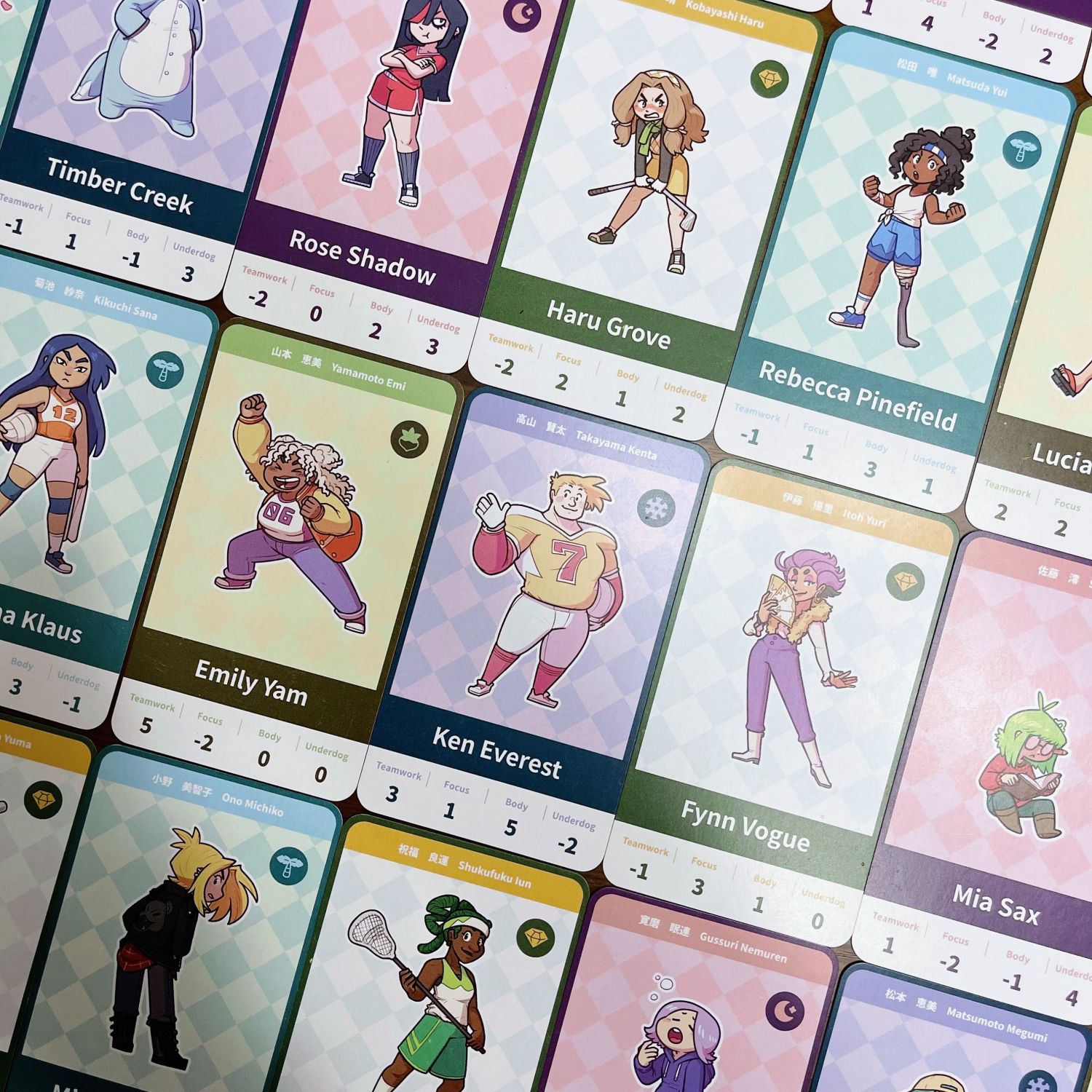
Tournament Arc is pretty straightforward. Players draft athletes, and then take turns playing episode cards to buff and debuff their own and other players’ athletes. All of this is in service of creating the best team for the sport that’s been randomly chosen.
While it’s a simple game and some ways reminded me a bit of Fluxx or Muchkin, its strongest point is just how funny and accurate it feels to following sports anime. Someone got isekaied! Someone has a tragic backstory! There’s a love triangle.
I also just found the art to be incredibly wonderful. It feels incredibly evocative but without engaging in a lot of the crappier anime tropes.
Leaving UnPub, I went back to browsing the expo hall. I did a little shopping, and picked up a copy of Clank Legacy 2. I said in my Clank Legacy writeup that I wouldn’t play a fresh game, but the $115 I just spent says otherwise.
Was that my entire day? Well, no. The Indie Games Night Market tonight is probably the thing I’m most excited to see at PAX, followed by the Jonathan Coulton concert. So of course they’re at the same time. I also have a few meetings to demo stuff before the night market, so I’ll have to see how that pans out.
That said, the Night Market will be receiving its own writeup, so I’m going to take this hour to chug pedialyte and consume a waffle refresh and relax, before rushing back to the show floor.
If you’re curious about my experiences on day 1, you can read them here. And if you’d like semi-random photos and live blogs of the show, you can follow me on Bluesky here.
Woof. It’s just around 4:00 PM, and everything is in a bit of haze. Maybe it’s the hours on the con floor, or maybe it’s the 5 hours of sleep. It’s been a good event so far, if busy. PAX Unplugged actually sold out for the first time this year, but it hasn’t felt too bad.
Side Note: I’m on Bluesky now. If you want tweets and updates from the show, follow me there. Shilling over, back to blogging.
Morning
I spent most of the morning getting ahold of few things that seemed like they would be pretty tricky to get otherwise. Notably the new Lord of the Rings trick taking game. I don’t have any special fondness for either rings or tricks, but I have friends who do, and Dan Thurot has given it positive review, so I grabbed a copy.
Buying games based on other peoples’ enthusiasm is not something I usually do. Usually, I just make questionable purchases based off box art. Given that the game sold its daily allotment by about 1:00, I think I may have made the right call here.
I followed this up by demoing and purchasing a copy of Happy Camper’s Combo, a retheme of Surfosaurus Max. It’s a co-operative set building game where you try to have your own personal cards be the best value in the set.
Last purchase of the morning was Undergrove, again, going in somewhat blind. But Elizabeth Hargrave is an incredible designer, so I’m willing to take a chance.
Afternoon
The afternoon was a bit more chaotic. I taught some folks dressed up as the Grinch’s dog Max how to play Lorcana. I did a little bit of networking and chatting for a future investigative piece I’m doing (mostly just looked for contacts and grabbed business cards) and just wandered the floor.
I can’t talk about those conversations too much yet, but they felt like a productive start to a bigger piece.
I didn’t play as many games as I had expected to play in UnPub. But fortunately, the two games I did play were both great.
First up was Matthew Everhart’s Dance Shuffle, a very clever dance themed deckbuilder for 2-6 players. I’ll likely revisit it in a full UnPub rundown post-show. But in summary: it’s worth playing even as it currently stands. It has some very satisfying movement, chaining and typal triggers, and also has a very clever scoring system. None of which I quite have the energy to currently describe in detail.
It’s not finished yet, but if you like deckbuilders, and get a chance to play this, you should.
The second game was Brightcast. Brightcast describes itself on the back of the box as a 1v1 card battler, which is really underselling it. I think it’s like two MTG controls decks into each other. It’s a very tense of game of reading your opponent’s options, and trying to figure out how to they interact with your own.
It’s a very fun experience, and the dev team was actually giving out free copies of the game up in UnPub.
It also has some incredible art. Again, cannot stress the whole “Get a free copy of this” thing enough.
Oh! This doesn’t fit in anywhere else, but I chatted with a few folks who had been competing in Speed Puzzling! It’s basically doing jigsaw puzzles as fast as you can. It was really cool to see part of the event, and learn about something I’d never heard of before. So that was really neat.
Of course, the show isn’t over yet. I’m planning to do some two headed giant Magic in about an hour and 30 minutes, but that’ll probably be my final event of the night. I’m a little wiped from the drive down, and not getting enough sleep. I really want to conserve my energy for the Indie Game Night Market tomorrow, and the Jonathan Coulton concert.
Corrections 12/9: In an earlier version of this article, I incorrectly called Dance Shuffle’s creator Matthew Everhart by the name Matt Ever.This has been fixed.
Before I talk about SolForge Fusion, I want to talk about SolForge. SolForge was its predecessor. A digital-only card game that lived a brief 4 years, and then died. We should talk about why.
SolForge never had a problem being fun. Its core mechanic was, and remains, brilliant and simple. Here’s how it worked.
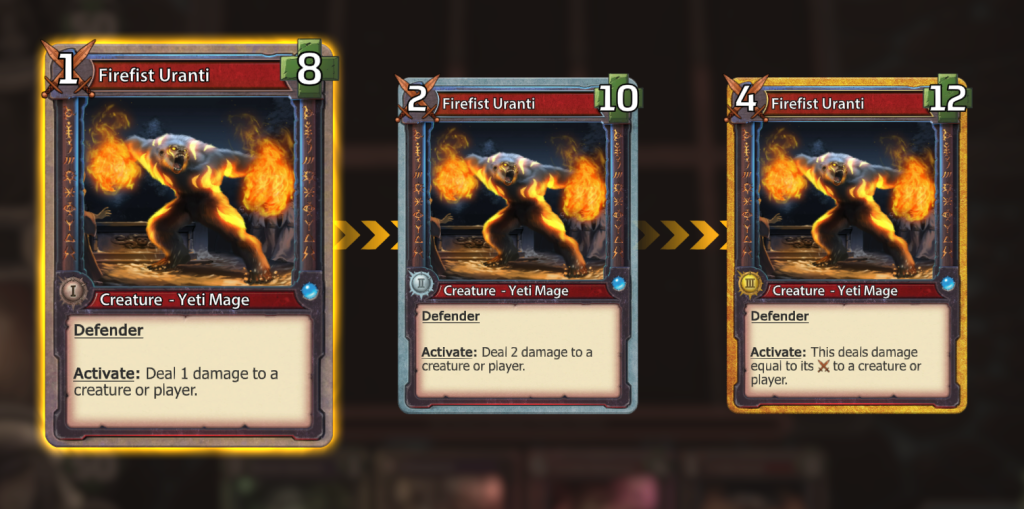
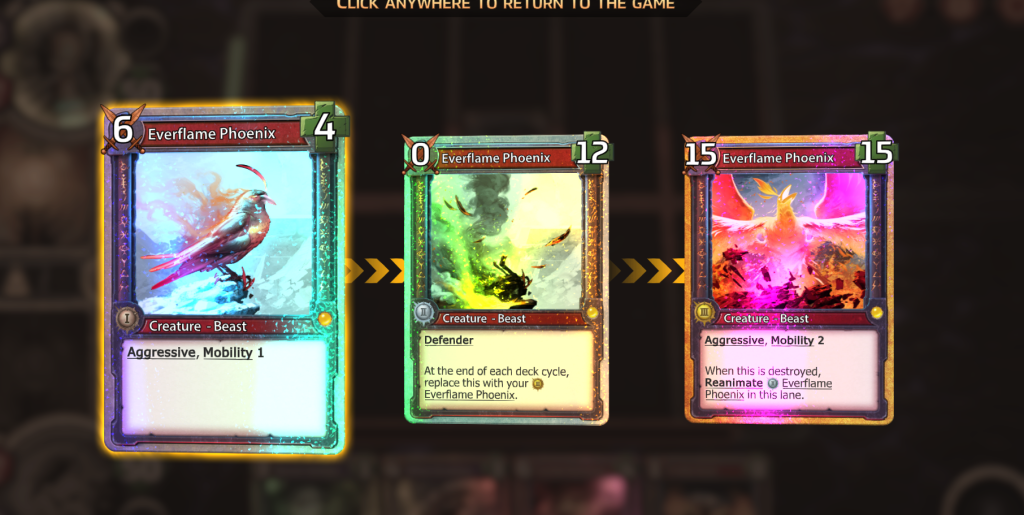
In SolForge, each time you played a card, it got stronger in future rounds. Decks were small, and every few rounds they’d shuffle all the upgraded cards back in.
This created a simple, but very exciting core tension: Playing the best card for the moment vs. playing a card that might be less ideal now, but was better later.
SolForge didn’t die because of bad mechanics. It died because it didn’t make any money.
But here, from the ashes, comes SolForge Fusion, a brand new digital/physical/web3 card game! Bringing back the traditional upgrade mechanic, it’s replaced its deck construction with a combo of KeyForge and Smash Up.
Gameplay
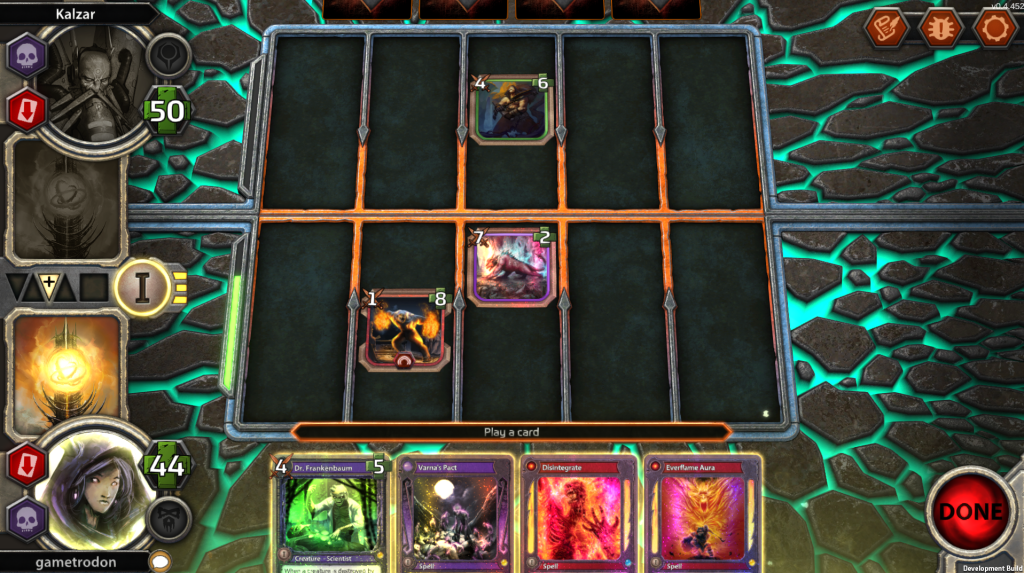
SolForge Fusion is played over four phases of three rounds each. At the start of each round, players draw a hand of five cards from their deck, then each take alternating turns, generally playing a single card into one of five lanes.
One player is given the forge to start, marking them as the first player for that round. They will play the first and third card of the round, while the other player will play the second and fourth (and final) card. Creatures played by the player with the forge are aggressive, meaning they will attack the turn they are played, while creatures played by the non-forge player will defend, but not attack. After one turn, every creature in play moves to the top of the lane and attacks.
If this sounds complicated, it boils down to: alternating first player, and since the first player is somewhat punished by the opponent getting to see all of their plays before combat, they also get to go on the offensive.
At the end of each round, players discard their unplayed cards and creatures slam into each other dealing damage equal to their attack. Unblocked creatures deal damage to the opposing player. After three rounds, cards are shuffled back into their owners’ decks, including upgraded cards, and the process repeats.
Whoever runs out of health loses, and if both players have health after all four phases, whoever has the most wins. There is a bit more to it than this, but this is the general loop.
So, is it worth playing?
Yes.
That’s a yes that I’m going to caveat heavily over the next few sentences, but I’ve had a lot of fun with SolForge Fusion. Specifically, a lot of fun I’ve had exclusively playing the digital version of SolForge Fusion.
I wrote about SolForge Fusion briefly before in 2022, but I was writing about the paper version of the game. To summarize my opinion from then: the game is simply far too clunky to play in paper. In digital, though, all of those issues are managed by the computer, so it’s a silky smooth experience*.
*Compared to the physical game.More on this later.
A second caveat is that I’ve spent most of my time playing the Roguelike PVE mode. It’s a sort of Slay The Spire thing where you pick a deck and fight through a series of enemies, culminating in a boss. While the content feels limited, it’s just very fun to play. Currently there are only 2 campaigns, and only one is free. The second costs $10.
But now that we’re talking about money, let’s talk about the in-game economy.
The in-game economy is a mess.
SolForge Fusion has Web 3 integration. Here’s the whitepaper. I got 3 slides in before my eyes glazed over, mostly because the first 3 pages are the exact same set of words, rephrased.
Side Note: The official position of this blog is that crypto can suck it.At some point I may clarify my position on this.
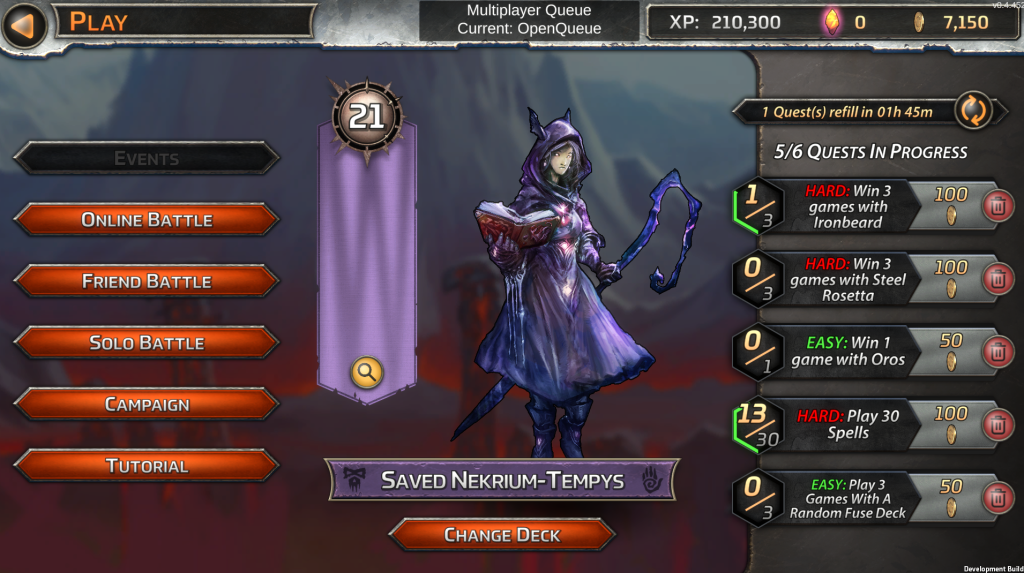
Now, you can ignore this and play, in which case… it’s still a mess. Even after playing for 18 or so hours, I haven’t saved enough gold to get one permanent deck.
There’s also a premium battlepass that comes with the second PVE campaign. I paid to unlock it, and then realized that the good rewards on it would require me to play 40-60 more hours of the game. Frankly, I feel like I got my $10 worth out of the campaign, not so much out of the battlepass.
It’s just a mess.
Side note: I posted about the grindy battlepass on the SolForge Discord, and the response I got was that it’s intended for long term players who have played the game a lot more than me. I understand that viewpoint, but I think it misses the point, because the end game track rewards are additional decks. As a new player, I would have liked to have more than 4 decks to play with, so that I can actually… y’know. Experiment and enjoy of the game. Which might have led to me playing an additional 40-60 hours. But given that really only have one deck to play with currently, I’m now a bit burnt out.
Bugs and Weirdness
As I was playing a few final games to put the finishing touches on this writeup, I played an online game where the server hit a critical error and crashed, kicking me back to the game’s login screen.
There are also a few goofy UI things. For example, when you complete a quest, it doesn’t auto-claim, so it’s possible to complete your quest and then forget to actually get your rewards.
Also, the store still has purchasable items for an event that already ended, and can’t be played further, so that’s great.
These things are small, but they’re part of a clunky experience that just drags things down a bit.
I’m sure some folks will defend the game by saying “It’s an early access alpha!” to which I say “It has a fully released cash shop that takes real money, as such I will treat it as a fully released game”.
Overall
SolForge Fusion is fun, which is a bummer because I still don’t feel compelled to spend any more money on it than the $10 I put in. Given that I may well be the patron saint of spending money on card games I don’t really play, that probably doesn’t bode well SolForge Fusion’s long term success.
One thing I didn’t touch on in this write-up is that the player base seems low. I didn’t mention it because it’s not really relevant. There’s PVE, and if the game detects that you’re sitting in the PVP queue for too long, it’ll match you against some pretty decent bots that count as players for the purpose of rewards.
Then just decide if you want to play more, or go do something else. I wish I could say that its fun gameplay will carry it to success. But there’s a lot of junk here, and quality is often no indicator of games’ long term profitably.
Disclosures: I received an unsolicited playtest key for this Beta via KeyMailer, the key distribution site. The content in this write-up was made in what the game describes as “Alpha 2 v 1.0”.
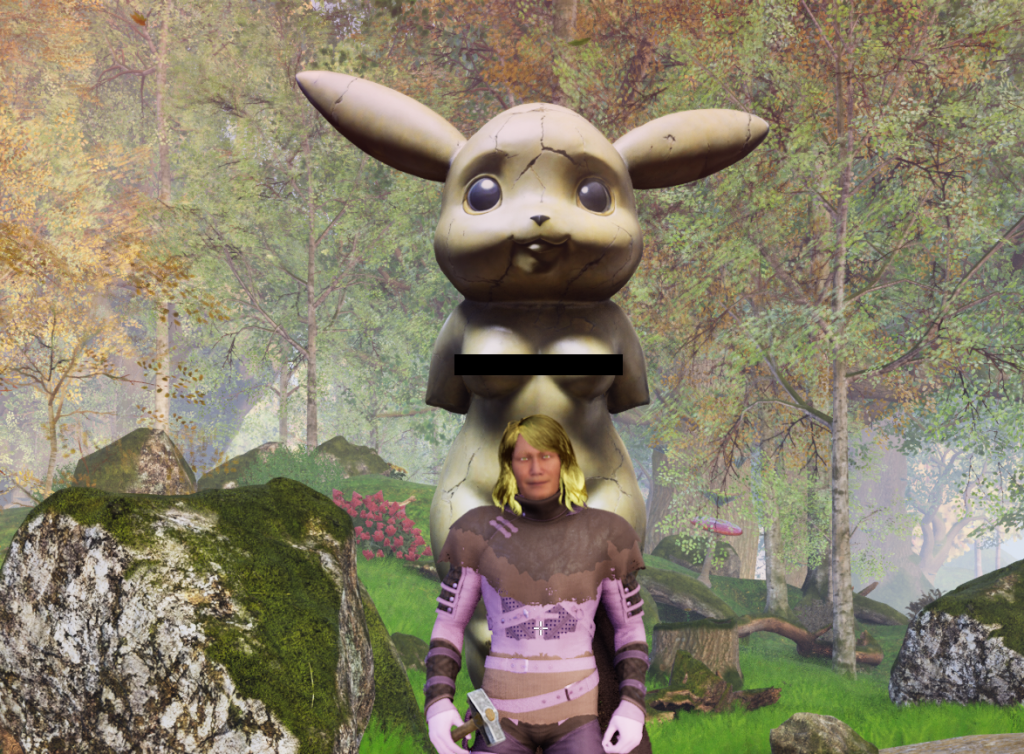
They say a picture is worth a thousand words, as such I present the following.
Now that I’ve got your attention, either via lust, fear, or horror, let’s talk about DreamWorld!
DreamWorld, full name “DreamWorld: The Infinite Sandbox MMO” based on the press content I had to read, is not intrinsically interesting. The general gameplay is just “Cruddy Valheim MMO.” The controls are somewhat clunky. The graphics are tolerable, and there’s very little to actually recommend the gameplay.
The games only real strong point, outside of the one I’m about to talk about, is it’s building system. And even that, while in depth, isn’t particularly easy to use.
Even as I type this with the game in the background, a single doe clips back and forth at 90 degree angles in the distance.
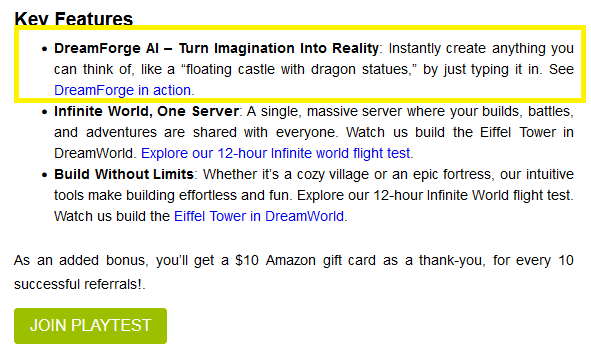
But the first line of the game’s press release is what really caught my eye:
Surely this could only end well.
A Bad Idea, Implemented Poorly
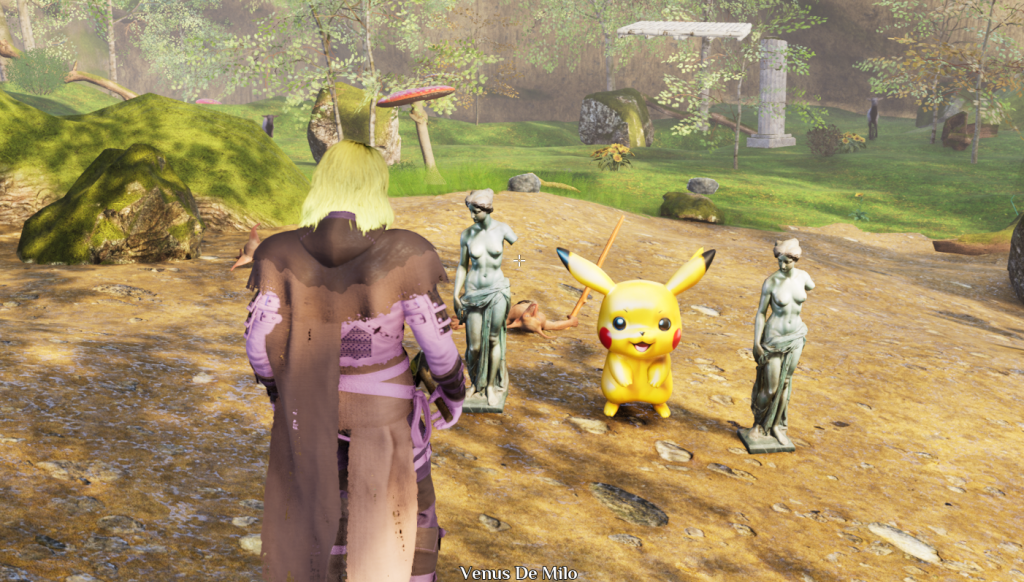
DreamWorld allows players to use text-based generative AI to create 3D models that can be placed in the world, hence the Venus de Milo Pikachu above.
Using generative AI to create 3D Models isn’t new. Services like Meshy have been around for a bit, and models like Shap-E for local use also exist. But DreamWorld is the first game I’ve seen actually use one in “real time,” instead of just using it to generate assets to place into an in-development game.
As an idea in the abstract, it’s somewhat interesting . As a practical implementation, what DreamWorld currently has in its Alpha lacks necessary guardrails to prevent copyright infringement, adult content, or combinations of both!
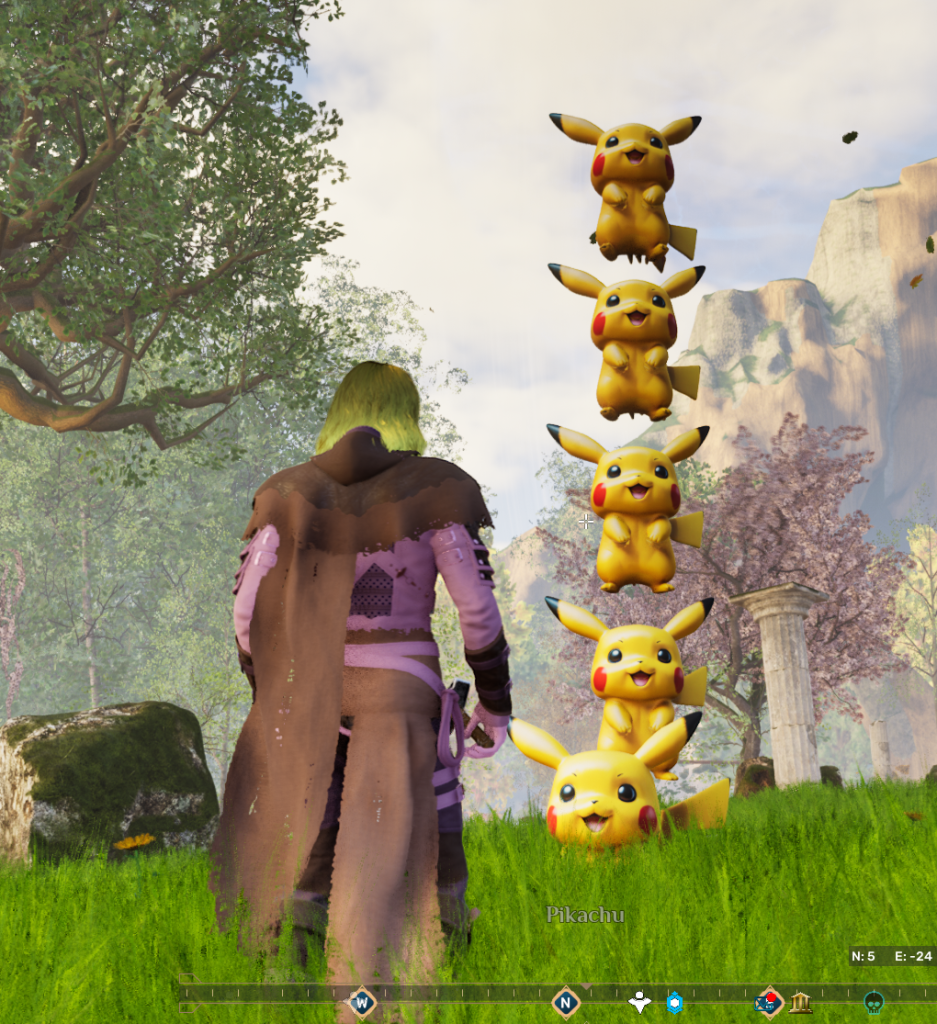
Pikachu prior to fusion.
Before I get into the problems with bad actors (me) using the system, I first want to note that the system is entirely useless even if no one uses it to try to create pornography.
In DreamWorld, only the player who generates an asset can see the asset.
The result is that even using this in a positive way, like to cleverly generate extra decorations, the end result only appears for the building player, and no one else. For everyone else, it just appears as a sparkling box. So, the system is useless.
Secondly, assets are only cubes.
Every assets is just cube. It can’t be a chair, or a chest, or something clever and useful, it’s just a static cube. No dynamic properties, no color changing, just cubes.
A Lack of Reasonable Guardrails
DreamWorld appears to lack any sort of moderation on its models. While it limits users to 5 prompts per day, this isn’t much of a guardrail.
Here’s a brief list of prompts and results I tried out.
Prompt: Pikachu Result: Copyright Infringement
With this “success” I decided to try for something slightly more risque. While I suspected their were filters for various keywords, I guessed that traditional artwork would not be subject to those filters.
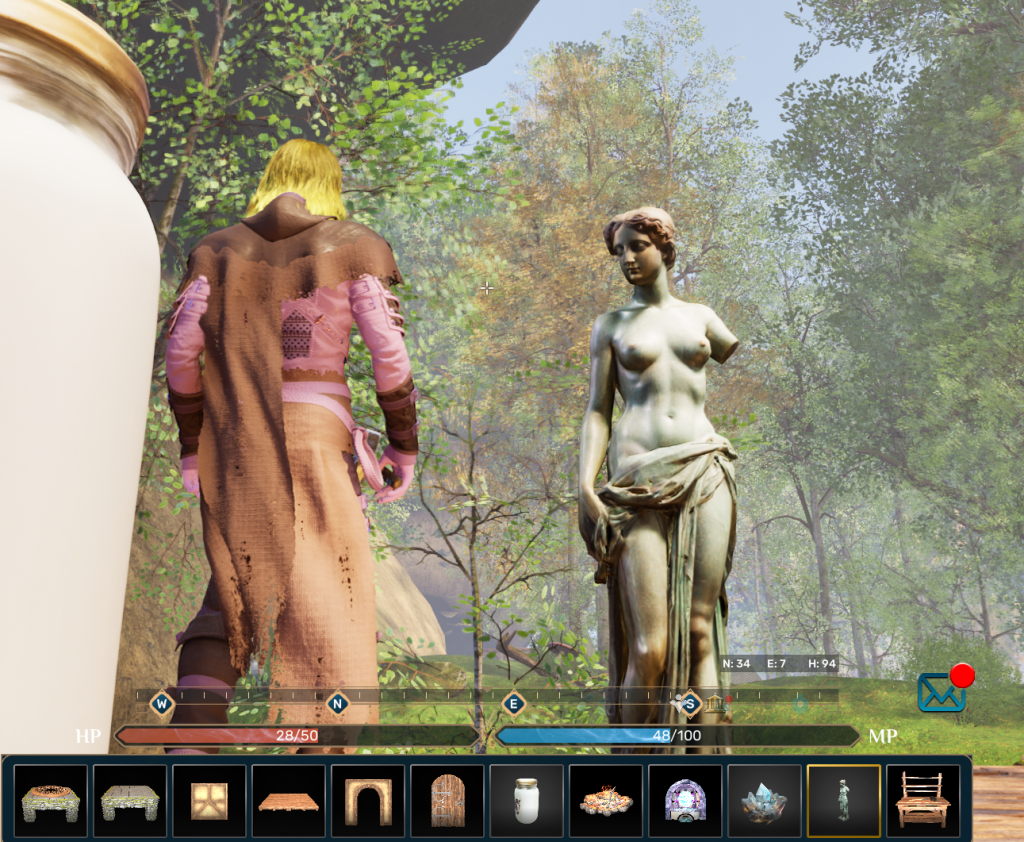
Prompt: Venus De Milo Result: Tasteful Nudity
With this confirmation that content didn’t appear to be filtered or moderated, I decided to move onto something a little more clever.
Prompt: Venus de Milo with the head of Pikachu Result: Less tasteful nudity
Almost certain of my inevitable ban, I decided to show this off to a few friends. This led to suggestion that if there was a filter, it probably wasn’t calibrated for euphemisms in context.
Spoiler: It was not.
I didn’t end up creating anything too interesting with my remaining generations, but I do think this does a pretty good job of demonstrating that the game is absolutely not ready for prime time.
Now, some folks will be saying “What’s the harm?” or “This is only a problem because you made it a problem.” For those people, I would like to point them to the following document on Roblox from Hinderburg research.
I not opposed to adult content in games. I’ve written about a fair number of them on this site, and I’ve even suggested a few that are worth playing.
But adult content in unmoderated online spaces exposed to children is a bad idea. Unmoderated online generative AI is a terrible idea.
Final Thoughts
I don’t much like generative AI. If you want the longer take, read it here. But ignoring my personal feelings, this is still a bad implementation. Assuming there are no bad actors, the system does nothing meaningful. Taking bad actors into consideration, it lacks any meaningful human moderation or reasonable safeguards.
I reached out to the DreamWorld team on Discord and via Email, and they confirmed on both channels that in the future they expect to allow other players to view generated assets.
All I have to say on that is that I hope they have better moderation by then.
Non-Clickbait Title: I went to an Azurite Sea pre-release, and got 3rd.
I went to an Azurite Sea pre-release just about two weeks ago. I had never played in a Lorcana sealed event before. In fact, I’d never played in any Lorcana event before this one, and I’ve probably played less than 20 games of Lorcana total.
(Okay, that’s not counting grinding first chapter games with a friend about a year and half ago, but again, it’s been a while, and there game has had like 5 expansions since then.)
So why did I decide to spend $45 to play a sealed format for a game I don’t really play, for a set that I’d done no prep for? Well, because I make poor decisions when I’m bored.
Arrival, and Opening Boosters
I was relying on my expertise at Magic to carry me through the event. However, after cracking my boosters, I was hit with a few key realizations.
The first was that I had no sense of how “good” any given card was stat-wise, something that I can do with no effort in Magic. Is a 1/2 for 1 that quests for 1 worth playing? Should I only be running 2/2’s for 1? Something I take for granted (assessing stat values) was completely gone.
The second thing was the deckbuilding structure itself. In a sealed Lorcana event, you can use all colors of cards. This is a bit of a double edged sword, because what it actually means is that deck construction becomes a game of cutting 32 of the of the 72 cards you’ve opened.
Finally, I was confronted by the fact that I didn’t have a good sense of what the Inkable vs Non-Inkable ratio should be.
Faced with this dizzying array of choices, as well as not really knowing how locations worked, I decided to go back to my basics, and reach for my classic strategy.
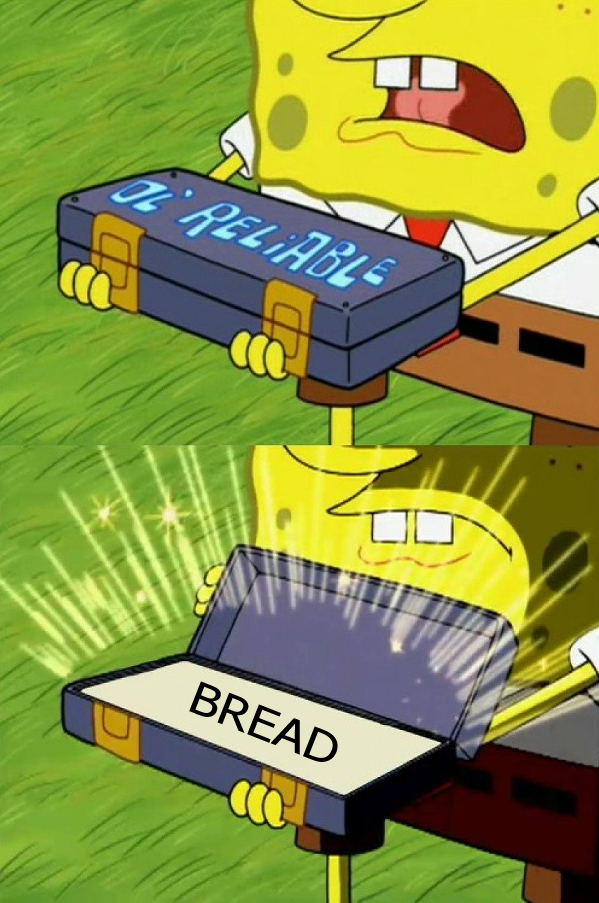
BREAD
BREAD is a Magic strategy that dictates card value order in limited/sealed formats. It stands for the following:
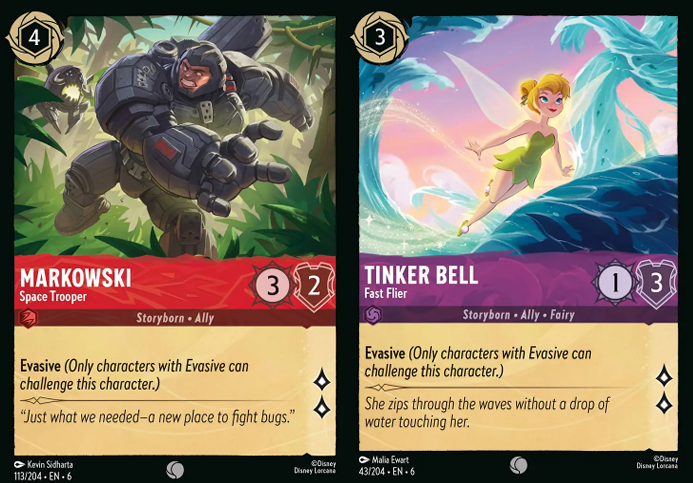
B- Bombs These are cards that will win you game if you resolve them, either due to high power, or just a very strong effect. R – Removal Cards that get rid of your opponents’ cards. Notably, there are far fewer of these in Lorcana than I’m used to, and they’re much higher costed. I actually only had a single card that could do any direct damage to a character. E – Evasion These are cards that get through to your opponent even if they have lots of characters out. Fortunately, Lorcana does have a good example of this: The keyword Evasive. These characters are tricky to remove and can safely build lore turn after turn.
I ran both of these in my deck, and they both did a LOT of work.
A – Aggro Cheap cards that can be played early, and apply pressure. D – Duds Cards you just don’t want to play.
Deckbuilding
Confronted with an overwhelming number of cards, and 25 minutes to build a deck, I came up with the following plan:
I would build out a pretty standard curve, prioritizing 1 and 2 cost cards, with a majority of the deck being under 4 cost.
I’d try to run as many characters as possible, and few locations, but no items.
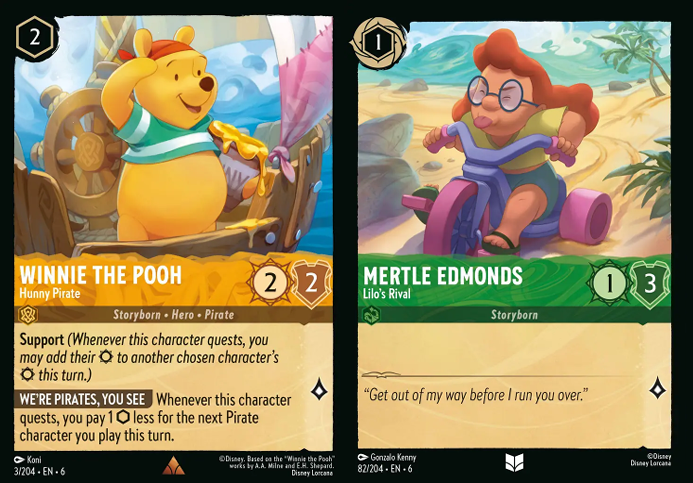
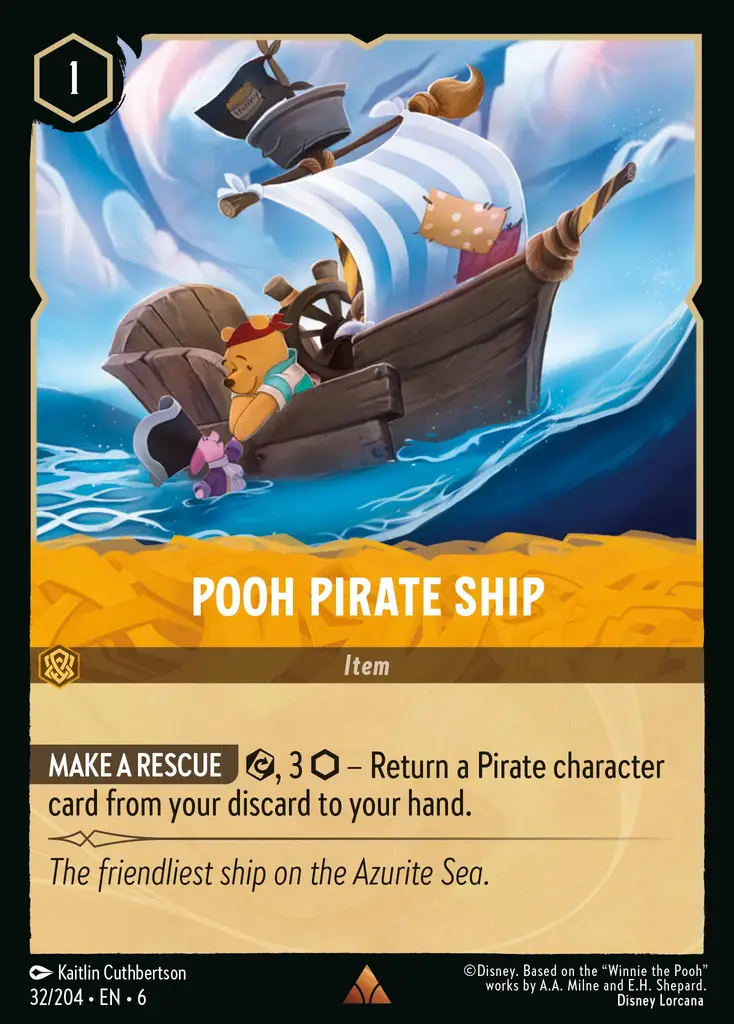
After building this deck, I made one last big decision, and probably the single decision responsible for my final result: I added in Pooh Pirate Ship.
Now, while this goes completely against everything else above, as it’s an un-inkable, type-specific item, I figured it could be worth it. Something that had become clear to me was that Lorcana had very little direct removal in the lower rarity slots, so I was unlikely to run into those sorts of cards. The second bit was that because Sealed formats for card games in general are at a much lower power level, they often stall out into top-decking.
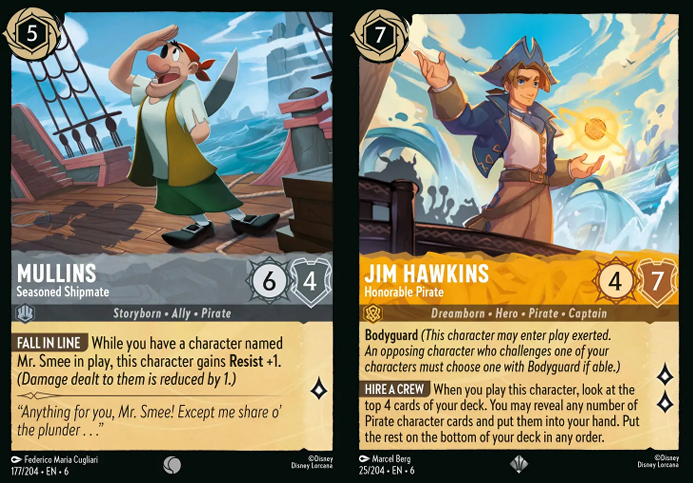
My thought was that Pooh Pirate Ship would be a siegebreaker sort of card, allowing me to continually challenge with my pirates, and then fetch them back to replay them. And while I only had 8 or so pirates, I had two pretty decent targets for recovery in Mullins and Jim Hawkins, both of which seemed to have decent stats for combat.
These two quite honestly carried the day.
With deck construction complete, it was time to play.
The Games
I didn’t take great notes on my individual matches. But I can talk to the effectiveness of the decisions I made.
I finished with a record of 2-1, with most of my matches going to 3 games.
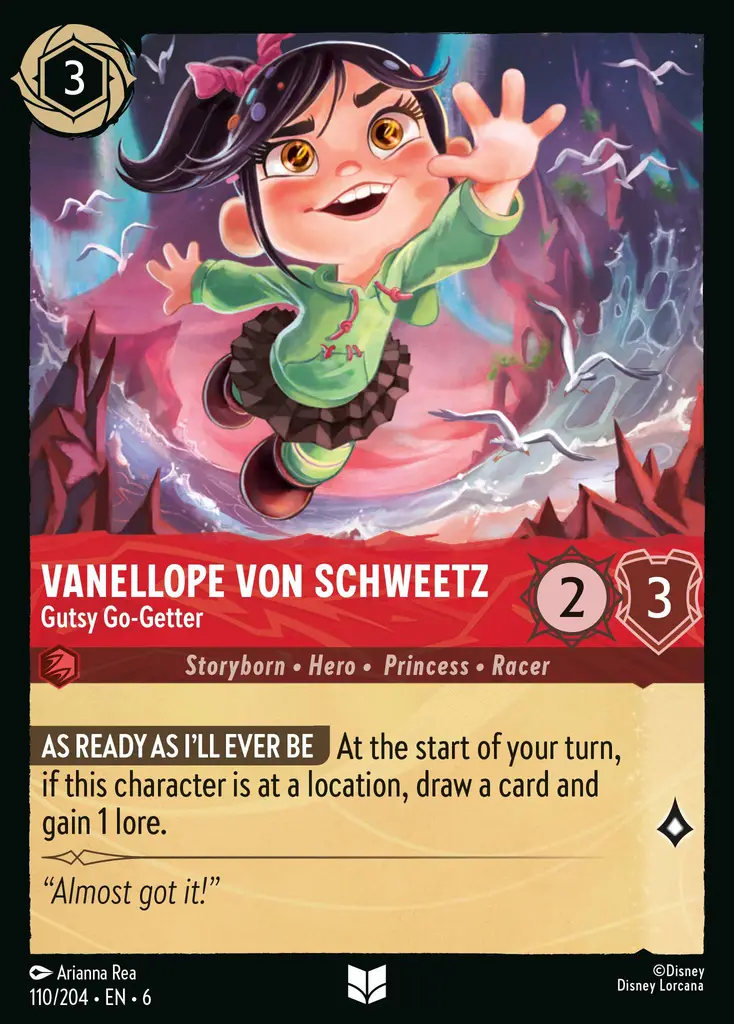
Match 1 wasn’t exactly a stomp, but I managed to pull ahead in the late game. Match 2 was my only loss of the three, and while it was possible I could have pulled out a win, I made some pretty significant misplays around my Vanellope Von Schweetz, choosing to Ink the locations that I would have placed her at.
That said, my game 2 opponent was also significantly better than me at managing the early game tempo, and outran me to the point that even when I had set up my board, I couldn’t clear their characters before they won.
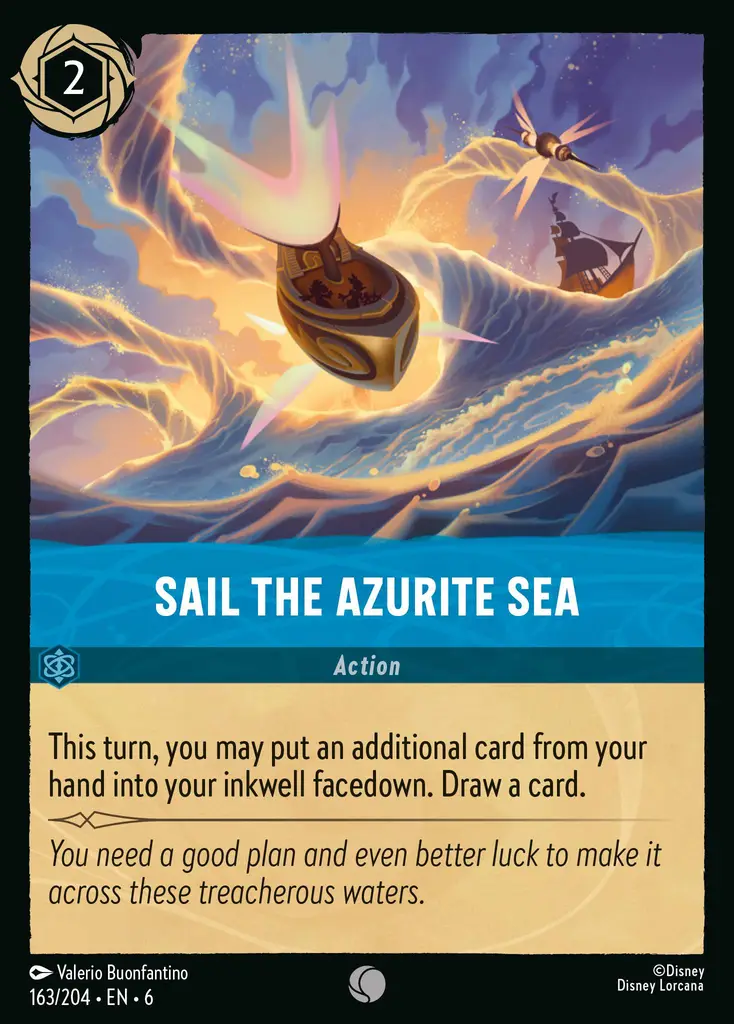
Finally, for match 3, I managed to hit two Sail The Azurite Seas back to back into an early Jim Hawkins. He refilled my hand, giving me the win early, and then I was able to use Pooh Pirate Ship in the second game to grab back my cheaper 2-3 drop pirates for another win.
Overall
The last time I wrote about Lorcana was about a year ago. I predicted that if it could weather the storm, it would be set up to become one of the larger card games in the space. Not the most shocking armchair prediction, but something that seemed unclear at the time, what with the pretty blatant scalping making it impossible for folks to actually buy the game.
As far as I can tell, Lorcana seems to have done that. I’m not really a Disney person on any level, and coming in with no knowledge of the characters or cards, I still had a pretty good time. Games felt tense and plays felt meaningful.
Some of my habits from playing a lot of sealed Magic did carry over (recursion and evasion is good!), while others didn’t (My single damage spell did VERY little work). I think that sealed Lorcana might actually be a more interesting experience than Magic sealed, because it allows combos that can’t be done in the normal game, whereas sealed Magic is pretty much just slower standard Magic.
Overall, it was really fun to see how Lorcana has developed since I last played it, and also to see the design space that’s getting used now. For example, typal is much more of a thing than it used to be. I’ll probably try to play a bit more Lorcana, as I am getting a bit burnt out on Magic, and Foundations didn’t really sell itself on its limited format.