Everyone loves listicles. Otherwise why would anyone write them? Because they’re easy content that can be ginned out at a moment’s notice, with little effort? Nonsense! It’s because they’re the glorious future of writing.
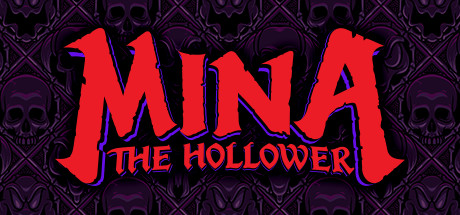
1. Mina the Hollower
Expected Release: 2024
Mina the Hollower was, simply put, the best video game at PAX East this year. It’s a brilliant combination of old school Zelda with some Soulslike influences. It’s being made by Yacht Club, who’ve proven their worth already with Shovel Knight. The 50 minutes I played made me wish I’d backed the Kickstarter. If the full game is as good as the one level I demoed, this will be my indie game of the year for 2024.
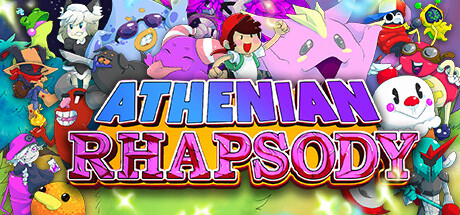
2. Athenian Rhapsody
Expected Release: 2023
Athenian Rhapsody was my dark horse of the show. I had never heard of the game, developer, or publisher before I saw it for the first time. It sold me on the strength of its demo alone. I’m very curious to see the final product, and frankly, I have a mild sense of trepidation. This game’s either going to very, very good, or an unbelievable disaster and cringefest. Trying to emulate the tone of things like Earthbound and Undertale is hard, and I’ll applaud the effort either way. I just don’t know if I’ll be wincing while I do so.
3. Cobalt Core
Expected Release: 2023
I was going to put information about Cobalt Core here, but then I realized a friend made a meme about it that I could steal and use instead.
TLDR: Spaceship deck builder from the Crypt of the Necrodancer people. The demo I played was fun as well.
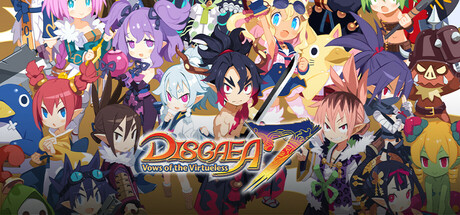
4. Disgaea 7: Vows of the Virtueless
Expected Release: 2023
This entry is technically cheating. I didn’t actually play it at the show, but NIS had a booth, and I saw an advertisement for it, so I’m going to say that counts. Disgaea 6 moved to a new engine, and was a somewhat weaker entry in the series, but still had a strong story and fun gameplay. I’m hopeful that 7 returns the franchise to a point of strength. Also I’m pandering so I can get a pre-release copy.
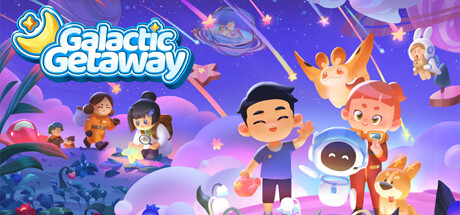
5. Galactic Getaway
Expected Release: Not listed at time of writing.
I’ve got Galactic Getaway on this list because it’s trying to do something I don’t think I’ve seen another game try to do: go toe to toe with Animal Crossing. And it’s being made by the developer of Nookazon. Which is to say, this isn’t someone trying to compete with Animal Crossing because they think there’s a load of money to be made, so much as they think the player base for that game is underserved.
It was announced yesterday that Storybook Brawl will be shutting down at the end of the month. It’s interesting. Storybook Brawl wasn’t the game I thought I’d be writing a retrospective of today. I thought that would be Crimesight, which will shortly share a death day with Storybook Brawl.
This won’t be a writeup about the gameplay of Storybook Brawl. If you want that sort of information, perhaps because you’re engaged in some technical equivalent of an archaeological dig, I did a writeup on that here.
Instead, I think it’s worth looking at how we got here, and why. After all, it’s not like Storybook Brawl is an inherent failure. Steam charts show it as having a high of about 500 players a day. And I played the game! Storybook Brawl was fun. I’m going to ripping into another game later today that had less than 60 people play it yesterday. And it’s not going down in under a week.
Storybook Brawl is, like many other games, not going to go down because it was bad game. It was fun. It was fair. It wasn’t gacha oriented garbage. It didn’t sell skimpy bathing outfits for its characters. It likely died because it did one thing, and that one thing probably wasn’t even a bad choice at the time.
See, a while back, Storybook Brawl was sold to a small scrappy financial investments company run by an effective altruist you might have heard of. His name was Sam Bankman-Fried. And his company was called FTX. Well, at least FTX was one of the 50 or so he had set up. I don’t know which one actually bought or managed Storybook Brawl.
Then, as you might or might not know, the whole FTX thing lost 8 billion dollars (give or a take a bit), and stole its users’ money. And the aforementioned Sam might have committed a lot of financial crimes. Oh, and they were a cryptocurrency exchange. I don’t think I mentioned that bit.
When Storybook Brawl sold to FTX, with the implication that NFTs would somehow be added at some point, I was pretty unhappy. These days though, I have a more realistic view of indie game development. Frankly, I can’t blame them for taking the money, even if it might have been tainted. Or stolen. Probably stolen.
For all I know, the FTX deal is what kept Storybook Brawl alive for these last few years, up until this month. Maybe 500 daily active users, and 93% positive reviews isn’t good enough. Maybe making an interesting, novel, and fun game isn’t what you need to do to succeed.
Maybe you need anime girls in skimpy swimsuits distributed from slot machines and marketed to children. Maybe you need to take money from elaborate ponzi schemes, funded by stolen money and the inherent stupidity of crypto.
There was a woman demoing a physical version of a Storybook Brawl card game at PAX Unplugged last year. I have no idea what will happen to it. Maybe it will get a theme change, and shopped around. Maybe it’s as dead as the servers.
It’s hard to tell if Storybook Brawl was another casualty of FTX, or something else. Maybe it was less a victim than a slavering thrall, remaining animate by the money FTX pumped through its veins, and eventually killed by the death of its host.
Return of the Obra Dinn is a clever, unique idea, executed with distinct visual style and theming. But those three factors clash with each other, and while they do create a unique experience, for me it was primarily one of frustration and exhaustion.
Return of the Obra Dinn came out in 2018. It’s a mystery game combined with a logic puzzle. It got a lot of good press at the time. So I decided to finally play it this weekend. And I’m… frankly, I’m a bit underwhelmed.
I don’t give out scores on this website. Usually I just say if I think a game is worth playing. But I’d give Return of the Obra Dinn a grudging 8/10. It’s not a bad game, but it isn’t excellent. This is weird because Return of the Obra Dinn ticks all the boxes to be excellent, but is somehow less than the sum of its parts.
The premise of the game is simple. The player is an insurance claims agent sent to investigate the titular Obra Dinn. It’s a ship that was lost at sea and has just now returned to the shores of England with no passengers or crew. Your job is to determine the fate of everyone aboard. However, you are not empty handed. In addition to your own wits, a crew manifest, and some sketches, you also have a magical watch. Using the watch on a corpse transports you to a still moment in time/memory of when that person died.
Within the memory you can walk around, hear a snippet of audio, and also get some information about who else was present. Using this, you need to reconstruct the full series of events and determine the cause of deaths of everyone who started aboard the Obra Dinn.
Just a word of warning before you read any further. I will be spoiling the “experience” of playing Return of the Obra Dinn in the rest of this review. I won’t be spoiling specific gameplay.
There’s one thing I’m going to rant about regarding one single death, but outside of that, reading this review won’t make you any better at playing the game. But it will probably impact your experience of the game. So, last chance to stop now, and read about a mystery game I like more: Lucifer Within Us.
Okay, so I called Return of the Obra Dinn a grudging 8/10. That’s because it does everything in such a way that it should be excellent. It has a fantastic presentation and theme and a unique visual style. It has a decent story. And it has a unique game mechanic that I haven’t seen before or since. That means that this game is five years old, and no one ripped it off.
Tick tick tick.
But all of these things feel like they somewhat play against each other. Let’s start with the story. The story of Return of the Obra Dinn can be summarized as: a trading ship brought passengers aboard with a magical artifact. At one point, members of the crew tried to kidnap these passengers and escape on lifeboats, and steal the artifact. The artifact attracted mermaids, the mermaids killed some people, but then were knocked out. The mermaids were imprisoned back on the ship, more mermaids came to try to free them, but were killed. Then a Kraken was summoned to tear the ship down.
Which is fine EXCEPT, this feels kind of like paint-by-numbers Lovecraft. It plays counter to my level of interest in rest of the mystery. What’s the magical artifact? Why are the mermaids attacking it? How did the passengers get it? I didn’t get answers to these questions.
Instead I just got to figure out which crew member was killed by getting a spear through the head, and which one was killed by being strangled. That’s not actually as exciting as a mystical artifact.
It felt like attending a dinner party where someone is served their mother’s head, and then being asked to determine which table settings had the wrong fork.
Secondly, the story is experienced in reverse. Which means you get the big finale/setpiece of the Kraken attack first. Then everything else is a slower boil. There was no building tension past a certain point, because you see how things end up pretty quickly. The ending/beginning serves to refocus the story, which continues to remind me of a Lovecraft paint-by-numbers.
Yes, this is very pretty. Yes, it is probably technically interesting. But it also makes details hard to make out unless you’re staring right at them.
The game has a excellent theme and rendering, being done entirely in only two colors, with minimal detail. However, this hindered my ability to actually “play” the game. Viewing a death memory requires you to interact with a corpse of someone who died at that point in time. While the scenes themselves are fairly straightforward in how they’re laid out, you usually experience them in reverse order.
This is frustrating, and it’s doubly frustrating when you want to view a scene in chronological order. On top of that, scenes also can take a bit to load. They play the audio clip once each time you enter the scene, but don’t let you replay it, so you have to load it again if you want a replay. It’s frustrating and difficult to navigate.
Side note: the game also doesn’t have a resolution setting. So I had to use Unity launch flags to play it on my Ultrawide, because of course I did. Small gripe, yes, but this is from 2018, not 2012. I should not have to do this.
You’ll notice I used the word “Frustration” a lot in the previous paragraph. For me, a thread of frustration carried throughout the gameplay. The game has a “Fate” system, where you enter how a given individual died and their name, and then once you have 3 correct, the game validates it, and permanently enters it into the record. As a result, in order to progress you need to solve the deaths of 3 crew members correctly.
In theory this is a cool system that prevents you from making random guesses. And it sort of does that, but the structure of Return of the Obra Dinn meant that in the later 75% of the game I found myself doing a bunch of guess and check, just throwing things at the wall to see what stuck. I might not know which Chinese topman was struck by lightning, but I know it has to be one of them, so I might as well just slam different names into the journal until one works.
The most frustrating thing for me was trying to figure out what was, and what wasn’t a clue. For example, one of the biggest hints you get at the start of the game is a set of drawings of the voyage of the ship at various points.
These drawings include everyone on the ship, and for some of them, there are clues in where they’re standing, and what they’re wearing. For example, crew members of certain nationalities are bunched together, or wearing similar outfits, or only certain ranks wear some specific attire.
I don’t understand why, in a game about identifying people and situations based on location and appearance, the developers decided to so stingily ration pixels. It’s not actually possible to identify who people are without right clicking them, and seeing their photo.
It also doesn’t help that some clues require you to look out of game. Maybe the game is made for people who are smarter then me, but I don’t what Formosa is. While I might know what an Italian accent sounds like, I don’t speak Danish, or know anything about Papua New Guinea. So perhaps if you’re European, and did well in social studies, the game is more straightforward.
The general feeling I had with Return of the Obra Dinn was frustration. Solving deaths in the later half of the game never had a “pieces falling into place” moment, where everything just clicked and made sense. Instead it was a perpetual slog of getting three more deaths, then trying to brute force my way via guess and check into my next set of deaths.
I also do want to direct some specific enmity at one particular death, and the only one I ended up looking up. This individual was attacked with a projectile spike, crawled away, pulled the spike out of their body and is seen leaning against a wall prior to their death. In other cases, these spikes have been quite lethal. So how did this person die? Well, according to the game, they were shot through a wall. Which I was supposed to figure out by looking at their corpse, back tracking 5 scenes, and then seeing who could have fired the bullet.
Have I mentioned that the game has an art style that makes it hard to see things? Things like small details, and exact outfits?
Looking back at it now, maybe what I’m supposed to realize is that the watch can only transport you to the moment of death, and as such, I’m supposed to be looking for the exact cause of death at that point in time. I don’t know. Maybe I wasn’t smart enough for the game. But what I do know is that after 12 hours, I’m mostly just frustrated.
I didn’t have fun. The game doesn’t give answers for many of its open-ended lore questions. When I beat it, there was less catharsis than a “Well, at least I have something to write about this week.”
No, we shall not be.
Return of the Obra Dinn is a clever, unique idea, executed with distinct visual style and theming. But those three factors clash with each other, and while they do create a unique experience, for me it was primarily one of frustration and exhaustion. If you think you’re smarter than me, you can buy it on Steam here.
Note: This writeup is about an EARLY ALPHA. The mechanics are great, but it’s still buggy, lacking content, and polish. And when I say alpha, I do mean alpha. Not “Steam Early Access.” But it’s also the best thing I’ve played this week.
Don’t Die, Collect Loot is a combination of Vampire Survivors, and Diablo. And it is absolute brain cocaine. If this was a chemical substance, the DEA would have already found the creator, kidnapped them, and brought them to some sort of black site.
Fortunately its perfectly legal to distribute on itch.io. I don’t know how much I’ve played, and I’m not sure I want to. But let’s talk about the mechanics first.
Don’t Die, Collect Loot is an ARPG and Roguelike. Prior to starting a run, you set up your equipment and skills. You then select a map to run (right now there’s only one), a difficulty, and head on out into the world.
The map scrolls, so at least at the start, just staying on the screen making is one of the obstacles to survival. As you kill enemies, you’ll level up for the run, and each time you level up, you’ll be presented with a set of three upgrades to choose from. These can be for various skills that you have, or just general purpose buffs to HP or resists.
Getting stuck behind a random tree you failed to notice is a depressingly common way for runs to end.
You go until you die, or until the game breaks somehow. Right now, it’s mostly the second one. Again, alpha build.
Right now, I’d consider the game to be fairly bare bones. There are only two classes, one map to run, a single boss with 2 mini-bosses, and a decent skill tree. That said, the game manages to capture what ARPG’s are all about: making builds where you click once and everything on the screen explodes.
And despite its bare bones state, and despite the fact that I’ve lost multiple 30+ minute runs without getting any items whatsoever to bugs, I cannot stop playing it. It’s almost hypnotic. It strips out almost every vestigial part of the ARPG gameplay loop. No fetch quests, no annoying story. Just murder everything in front of you, and acquire treasure. The game’s name is a perfect encapsulation of what you’re trying to do: Don’t Die, Collect Loot. That’s it. That’s all that really matters.
If you want to play the game, you can find the current Alpha here on itch.io, and you can find the Steam page here. Now if you’ll excuse me, I’m going to see if I can max Inferno without making the game break.
I’ve been trying to write about Pedigree Tactics for a while. I wrote a few initial drafts, but they all sucked. Perhaps the difficulty is in the fact that I already wrote my review here on Steam. It was fairly critical, noted a variety of difficulties and bugs, and asked the dev to reach out to me.
And then they did! We had a good chat, I repo’d a variety of bugs in a one hour video I made, and now I’m here. Trying to write a honest and fair review about a single-person passion project.
Pedigree Tactics is single player tactics game in the vein of Disgaea. It’s fairly short, and the main reason to play it is to engage with the unique monster fusion mechanic.
The standard start of a battle.
The game consists of levels with 3v3 monster battles, and the goal is to knock out all opposing monsters. There are 23 levels, and beating the whole game took me about 3 hours each time I played through it.
Let’s just get the rough bits out of the way. The art is jarring; it mostly suffers from dissonance between the crayon-drawn monsters, video game maps, and attack effects. The sound effects and music exist. I’ve seen more tonally consistent sexy calendars than this game’s story.
The family tree of the glorious hustling Melonator.
That said, it does have an interesting core mechanic in its monster fusion system. Briefly into the game, you unlock the ability to fuse any two monsters together. This mutates them into a new monster, and gives the resulting monster access to the move pools of both the result, and the “parents.”
It’s interesting to try to puzzle out some of the monster combos. But the fun mostly comes in making incredibly busted monsters. My personal favorite trick was to have one monster spam stacking self buffs. Then I’d have another monster use its action to give the first monster extra turns. And after that, I’d have the first monster spam map clearing AOEs.
This fusion system and the fun you can have with it, giving abilities to units that really shouldn’t have them, is the heart of the game’s fun for me. It is somewhat unfortunate though that the rest of the game isn’t as appealing.
If you’re curious about Pedigree Tactics, you can find it on Steam here. I don’t exactly recommend it, but it’s weird and unique. And that made it worth experiencing for me.
Editor’s note: I don’t know what this cursed drawing is doing here, but I enjoy it.