2022 had a lot of good games. But these are the best ones. It’s not an opinion, it’s just fact.
Nothing says Christmas like phoning in work, and nothing says phoning in work like listicles.
So with that said, I’d like to introduce the first not-yet-annual Gametrodon awards, the Placeholders.
I cannot think of anything that better encapsulates the spirit of this blog than a single tiny image made in MS Paint at 11 PM at night, and likely to be used for at least the next two years!
Okay, all cynicism aside for a moment, I’m having a bit of a rough Christmas at the moment. Perhaps you can see that leaking into this writing. Regardless of that tone and my terrible award, I am sincere in all the praise I offer these games. So lets go over the award criteria:
Must be a game I played this year, and wrote about on Gametrodon.
That’s it. That’s the entire criteria.
I’ll be giving each game an individual award, but that’s more to differentiate them then to pledge to any set of awards in the future. All of which is to say, giving out a “Best Mobile Game” award this year doesn’t mean I’ll give one out next year.
Best Soundtrack – Hazelnut Hex
I’ve said a lot of nice things about Hazelnut Hex before. How it’s a fantastic entry to the concept of shmups. How it’s brilliant crafted and concise. I don’t want to repeat all that here, so maybe just go read my review if you missed it.
In addition, Hazelnut Hex has a fantastic soundtrack that I cannot praise enough. I listen to these songs usually twice a week if not more while running. The soundtrack is wonderful chiptune music that absolutely blew me away the first time I heard it. And the soundtrack continues to just be great to listen to even after hearing each song 50+ times.
There were a lot of good card games this year! Which is very unfortunate for them, because Inscryption is better. In the spirit of the game, I did its writeup as a sort of multiple choice thing.
I recognize that some people may be a bit unhappy with some portions of the game. And I personally didn’t love the ending. But the core gameplay and mechanics were fantastic, making it an easy pick for this award.
Best $60 Game – Elden Ring
If I was a different site, I’d call this the best AAA game of the year. And while that’s technically true, most, if not all of the AAA games I even bought this year were for my Switch.
It feels a bit rich to call something the best AAA game of the year when I didn’t play too many other AAA games that didn’t involve monsters that could fit into pockets. So, Elden Ring. You can read my full writeup on it here. Congrats on the award, now please release some DLC. My friends are all starting to show Soulslike withdrawal symptoms.
Best Indie Game – Nobody Saves The World
I was considering calling this this “Best Game That Came Out At The Start of The Year So We All Forgot About It By The Time Award Season Rolled Around” award. But that would be a bit long. Then I thought about calling it “Best ARPG.” But I’m not even sure Nobody Saves The World is an ARPG.
Mad Rat Dead – A combo rhythm/platformer game with banger music.
Stacklands – Proved that I was wrong about Sokpop Collective not making games with… well, gameplay.
Satisfactory – Sure, it’s been in Early Access for 8 years. But at least it’s a fun game. I just wish the multiplayer was smoother.
CRIMESIGHT – An anime version of the board game Clue combined with manipulation and deduction. Possibly the most niche title on this list.
V Rising – ARPG Survival Crafting. A good time overall.
I’ll be doing a few more writeups/wrapups over the next few weeks. Overall, I’d say it was a pretty good year for games, even if a few games I had high hopes for were personally disappointing. But more on that in the final wrap-up of the year.
Wherever you’re at, whatever holiday you’re celebrating, we hope it’s a good one. We hope you’re healthy, and hope you’ll keep reading next year.
Mythic Mischief and Klask don’t really have anything in common with each other. It’s not even like they had booths next to each other or something. Mythic Mischief is an action economy and movement-based game with victory points that almost reminds me of Chess. Klask is a skill-based dexterity game that feels like miniature air hockey.
So why am I covering them together? Because I don’t have enough to say about them separately to fill writeup! Anyway, let’s get to it.
Mythic Mischief
Mythic Mischief is an asymmetric grid-based movement game, designed by Max Anderson, Zac Dixon, Austin Harrison, and published by IV Games.
The best summary I can offer is that you and your opponents both control 3 miniatures on a 5v5 grid. Alternating turns, you attempt to spend your actions and use your abilities to place your opponent’s units in the path or directly on an NPC unit called the Tome Keeper.
Editor’s Note: Tome Keeper not to be confused with Dome Keeper
At the end of a player’s turn, the Tome Keeper moves towards specific locations. If there are units in its way, the Tome Keeper knocks them out, and the player who didn’t control those units scores points. Units that get knocked out can be replaced at the start of the next player’s turn.
There’s a fair amount to the movement and action system, and how it plays with the game’s upgrade choices that I don’t think I can summarize effectively, so I won’t try. It’s a perfectly fine system, but I would not describe it as “Sparking Joy,” at least for me.
It is worth noting that each player will be playing a different faction, with unique abilities and so keeping track of what your opponent can do is necessary to succeed.
I only played one game of Mythic Mischief, and it was a combination of a demo and an ass beating. I wouldn’t say that I hugely enjoyed it. That might have been because I lost, and because I get salty easily. But I also struggled with two other factors.
First up, just because of how the game works with scoring, it felt very difficult to make any sort of comeback once I fell behind. Secondly, the game reminded me of Chess in that it felt like a game of trying to find the “Correct” moves, and like a puzzle of chaining things together. That’s just not something I find very fun.
So yeah, if you do like deterministic movement games, or things like Chess, maybe you’ll get more out of Mythic Mischief than I did.
Klask
Klask is a manual dexterity game by Mikkel Bertelsen.
Honestly, it feels weird to be reviewing Klask here. It’s as if for some reason I felt compelled to write a review of Skeeball, or Soccer. The closest games I can think of as a comparison to Klask would be Air Hockey or maybe Foosball.
Those chips look really good.
All of this to say that the “Manual Dexterity” part of the game is absolutely not optional. Klask is played in an elevated square wooden box with sides. Each player has a magnet with a stick in the end that they hold under the box, and a pawn they place on top. The top pawn is moved by dragging it with the magnet from under the box.
The pawn and stick aren’t the only magnetic pieces, though. Klask also has 3 small plastic beads with magnets in the center that are placed equidistant in the middle of the playfield at the start of a point. These beads will jump and stick to your pawn if you get too close, and if 2 of the 3 stick to a player’s pawn, their opponent gets a point.
Points can also be scored by a player hitting the ball into the goal indent on the board, or if a player messes up and gets their pawn stuck in the indent.
The interesting part of Klask for me is how the tiny white beads open up strategy. Without them, the game is pretty much just air hockey with a marble. But with the beads, you can do interesting stuff like hitting them towards your opponent in order to close off parts of the board.
Overall, I like Klask. I just don’t like it enough to really want to buy it. That said, if someone asked me if I’d play, my response would be a semi-enthusiastic “Sure!”
Conclusion
I don’t think there’s any meaningful conclusion you can take out of things like both Klask and Mythic Mischief being present at PAX Unplugged. Maybe there’s some sort of testament to the diversity of mechanics and games present. Maybe there’s something to be said for the sorts of games you’d play if someone else is footing the bill.
And maybe there’s nothing. Maybe there is no purpose. Maybe the real journey was the friends we made along the way.
If you want more nonsense and to be notified whenever I write new stuff, maybe consider following me on Twitter? The site still seems to be up and functioning, at least for now.
I don’t have anything good to put in this opening paragraph. Maybe I should just talk about how good the food is in Philadelphia? It’s really tasty. Reading Terminal is delicious, even if PAX Unplugged does pack it to the brim. Even if it can take 40 minutes for someone to get you an egg and cheese on a roll.
Anyway, enough about sandwiches. Let’s talk about board games. Today I’ll be covering the board games at the show that are either adapted from, or licensed from video games. It’s an arbitrary category, but one with a fair number of entries. Also, interestingly enough, all of them are based off games I’ve played.
Shovel Knight: Dungeon Duels
I want to open this part of the writeup by noting that I love Shovel Knight the video game. I did a writeup on it where I said as much. Which makes it a bit hard to say the next bit.
Shovel Knight: Dungeon Duels feels like the literal definition of overproduced Kickstarter Ameritrash.
That’s kind of a bold claim, so let me make some observations to back it up. From a mechanical standpoint, the game is incredibly uninspired. The goal is to get the most victory points. You do this by defeating enemies, and clearing out a boss. This, in turn, is done by moving across a board.
You have three actions per turn: moving, attacking, and jumping. Of those actions, only moving doesn’t require you to roll dice. You can’t just move your way to victory, because the board is covered in spikes. You’ll need to roll to jump over those. And if you fail? Fall into a pit, and lose half your victory points. You want to attack something? Roll dice, and hope you get enough successes to do something valuable. Because if you don’t, you might die, and lose half of your victory points.
Should you manage to survive long enough to get to a shop tile, you can spend your victory points to buy a completely random upgrade. It could be +1 dice to all your rolls! It could be the ability to make ranged attacks. It could be a worse item for a slot you already have filled, because it’s a random draw from a deck. Upgrades are frequently utterly worthless and get thrown away immediately.
Of course, dying doesn’t knock you out of the game. You’ll get to replace your wonderfully crafted miniature at the start of the next round on the far side of the board. And that’s good, because aside from the aforementioned falling into pits by missing a jump, or just taking enough damage to die, you can also get pushed back into pits by enemies if they damage you.
Now, this can’t happen during the boss fight. Instead, if you get knocked off the board during a boss fight, your character goes prone, and has to spend an action to get back up. If you get unlucky, the boss can do this to you before you even get to take a turn. And yes, someone in my demo was on the receiving end of this.
These are all the mechanical reasons I have for calling Shovel Knight: Dungeon Duels “Ameritrash.” The game is incredibly random with a focus on dice rolls for resolving most meaningful interactions. You have minimal capacity to make meaningful choices around upgrading or building your character.
This game was Kickstarted. It has 44 miniatures. And they are very nice minis! I like these characters so much from playing the video games, that I was and am still tempted by them because of how much fun they would be to paint. But those minis are also probably a large portion of why this game costs $125. It has a 58 page rulebook, apparently? It has custom dice, and tokens, and lots of playable characters.
My personal verdict: cut down on the minis and include a fun game. Or even keep the minis and include a fun game! Or, scratch that, screw the game, just let me buy the minis from you directly. Because they’re the best part about what I played here.
SolForge Fusion
Continuing a trend of writing things that guarantee I will never end up on a press list for prerelease copies of anything, let’s talk about SolForge Fusion. Like with Dungeon Duels, I really liked SolForge Fusion’s parent game, SolForge. Also like with Dungeon Duels, I really don’t like SolForge Fusion. It’s for a very different set of reasons though, and to explain them, we need to talk about SolForge briefly.
Or perhaps it would be more accurate to talk about what SolForge was. You see, SolForge is dead. And unlike many games that I’ve written about in my end of year wrap-ups, SolForge didn’t really do anything to deserve to die. It just didn’t make enough money for the company to continue supporting it. Which honestly kind of sucks, because SolForge was one of the best digital CCG’s to exist.
The key word in that sentence, and the root of a lot of problems we’re going to be talking about, is “digital.” SolForge’s key mechanic was digital-only, and it worked like this: whenever you play a card, an upgraded version of the card is added to your discarded cards. When you run out of cards in your deck, you shuffle your discarded cards back into a new deck, and continue the game, now with some of your more powerful cards. It also had a reliance on triggered effects. Also damage and buffs on creatures didn’t wear off between turns.
All of these were good and interesting designs that worked well digitally. The computer could manage resolving triggered effects, tracking stats, and upgrading your cards. Because all of these were handled by the computer, games were quick, fun, and could allow for ridiculous numbers and scaling.
Perhaps you see where I am going with this.
Works great with a single digitally managed card. Works less great when it’s 3 physical cards that have to be swapped out.
You see, all of these mechanics technically could work in a paper card game. Each paper deck would need to have three times the cards, forcing you to keep track of which ones you played. And because damage and buffs don’t wear off, you’d have to have a billion tokens for keeping track of damage. And you’d need to manually track all triggered effects, and also manually resolve the full combat step for the board.
This is all technically possible in the same way that it is technically possible eat an entire card board box. You can do it, but I don’t know why you would, and it probably wouldn’t be a good time.
All of this is to say that SolForge Fusion is effectively a port of the aforementioned mechanics to tabletop. It’s not a straight port by any means, with many cards being heavily changed around, and the numbers having been rescaled a fair amount. But it’s still a port!
Anyway, as if this wasn’t funny enough, two days ago I got this in an email:
So yeah. They’re planning to make a digital version of a physical card game based off the mechanics off a digital game that was shut down for ultimately just… not really making enough money.
It would be cool if this went well, but I’m not exactly holding my breath. And again, the digital version doesn’t exist yet. Until a digital version exists, playing SolForge Fusion requires managing a set of decent mechanics that are fundamentally flawed in meat-space.
Storybook Brawl Unnamed Deckbuilder
I’ve debated whether to put Storybook Brawl’s unnamed deckbuilder here with the other video game adaptations, or with a later page on games I played in the Unpub hall. Ultimately I decided to place it here.
I’ve written about Storybook Brawl before, but you don’t need to read that writeup now. Unlike the other games on this list, this board game is its own game. It’s also in the rawest state, if the fact that it doesn’t even have a real name wasn’t enough of indicator.
Unlike Storybook Brawl, instead of building a set of characters that you play out onto a single large map, it’s much closer to a deck builder with simultaneous play competitive elements. And while it maintains some mechanics (such as the idea of tripling, and playing a single spell per turn), this unnamed deckbuilder mostly puts its own twists on the video game’s mechanics.
I wouldn’t say that I love this as-of-yet-unnamed game. But given that it’s still an alpha, there’s both time to improve and tweak things, and also to refine the game as a whole. Despite its flaws, Storybook Brawl’s unnamed deckbuilder is probably the most interesting of the three games on this list, despite not being a full game yet.
So in summary…
What have we learned today? Well, mostly that Panda Cult and Stone Blade Entertainment are incredibly unlikely to send me review copies for any reason whatsoever in the future. And the same is probably true for Storybook Brawl, if for no other reason than the fact that their parent company lost $16 billion dollars.
On a less sarcastic note, I think the main takeaway should be that if you’re going to adapt anything, it’s probably a better idea to try to work with the strengths of the target format than to just try to port things straight across.
More PAX Unplugged writeups in the week(s) to come! And in the meantime, why not follow us on Twitter, assuming it hasn’t burnt to the ground yet.
This is going to be a bit of a departure from the norm. Usually, I write reviews of games. But this week has been one of those weeks. One of the most weeks of all time. That sort of thing. So instead, let’s review a social media app.
The premise of BeReal is simple: most social media is at least sorta fake, because it’s easy to look for perfect moments and perfect images. BeReal tries to solve this by working differently. Instead of uploading your images and posts whenever you want, once per day the app sends out a notification. That notification is the start of a two-minute window to take and upload an image. You can’t see anyone else’s images until you upload one first, and you can comment on images.
And that’s it. That’s everything BeReal offers at the moment. Let’s talk about it.
As someone who sucks at social media, I like BeReal’s stated goal. The idea of making social media more accurate to depicting folks’ lives is something I think is good. That said, I don’t know that I trust them in that stated goal. After using the app for several weeks, I have quite a few problems with it, and wouldn’t recommend BeReal. I’ll start with the easy problems, that is to say, things that can be fixed, and then go into the harder ones.
First off, from a general usage standpoint, the app currently kind of sucks. It’s constantly buggy. Often it’s not possible to upload a photo in the two minute window. It constantly freezes, and is just somewhat garbage. Adding text to photos isn’t a smooth experience either, and neither is commenting. But these are all technical problems, and solvable with time and money. Which brings me to my second observation.
Money. At some point this app is going to need to actually make money. And it’s going to likely do so the same way every single social media app makes money: advertising and data harvesting. Enough people already have my data, I’m not thrilled to give it to anyone else.
Onto the next problem: actual usage as a social network. I have two issues here. First off, all BeReal lets you do is comment on photos and post a single photo a day. There is no messaging, no ability to ping folks to hang out, none of that sort of stuff. BeReal might be great if you’re a college student, constantly running about to class, or sports, or whatever.
But I’m a working adult. If I take a photo a random point during the day, there’s a 90% chance that it’s just going to be me sitting in a chair. The camera will be pointed away from my monitor because if I take a photo of what’s on that, I could get fired. So instead, you get a picture of my fridge and dishwasher. The remaining 10% of the day will be me sitting in another chair, and playing video games. If I’m out doing something, I’m not going to bother taking my phone out to take a photo.
You have now seen a majority of my BeReal posts.
And that’s the main problem I have with the app. I said earlier that I agree with BeReal’s stated goal: to make social media less fake. That doesn’t mean I think their stated goal is their actual goal. It seems to me that getting users to build a pattern of behavior around taking a photo at a specific point in time is primarily a strategy for making a popular social media platform, and only secondarily about making social media “less fake.”
As a note, you can take photos later and post, but they show as late posts. Personally, I don’t care, but my younger sister said people see it as important that you post in time.
There are probably more problems with BeReal. When I asked my sister who recently graduated about it, she said she found it annoying how first years using the app would all rush for their phones when the notification dinged, even if it was the middle of ultimate frisbee practice. That’s not an experience I have any exposure to, but I think I’d find it frustrating if everyone needed a selfie break in the middle of a zoom call.
Or maybe I wouldn’t give a shit. I’m just so dead inside at the moment.
Anyway. While BeReal makes a stated attempt at resolving one of the major problems with social media, it doesn’t really address the bigger issue: giving buckets of information about every aspect of your life to a gigantic mega-corporation in exchange for the ability to sometimes see a cute photo of a dog is a pretty shitty trade.
Thanks for reading, and more game stuff to come shortly. Like I mentioned, it’s been a week.
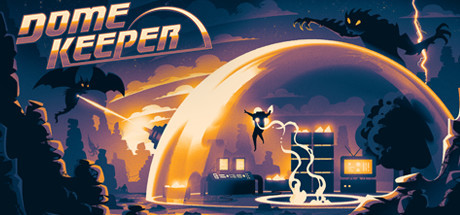
Dome Keeper is a score-attack mashup of Motherload and Space Invaders. I think it’s a good game. I don’t really recommend it, for reasons I’ll get into in a moment. I know it sounds weird to call a game good, and then not recommend it, but I promise it will make sense in a bit.
Anyway, back to Dome Keeper. You have a Dome, which functions as your little base. You venture out from it into the earth to mine minerals. And this dome needs to be Kept. Specifically it needs to be kept from being shattered into a million pieces by various spooky shadow monsters that show up in waves on timed intervals. This is the game’s core tension: mine resources, drag them back to your dome, and try not to get caught at the bottom of the mineshaft right as the next wave comes in to smash it.
You defend the dome with its weapon systems. There are two dome weapon base sets, the Laser Dome, and the Sword Dome. The Laser dome plays somewhat like a turret defense game. You have a big laser, you can rotate it alongside the outside of your dome, and you press another button to fire. The laser moves slower when fired, so it’s faster to move it into position, and then fire the beam. It has various upgrades, including moving the laser head faster, having the laser deal more damage, etc. Honestly, outside of a double laser upgrade, there’s nothing very exciting.
The Sword Dome is unlocked later. Instead of having a projectile weapon, it has a large sword that can be swung back and forth across the dome. It can also be launched like a harpoon to skewer long ranged projectile using enemies, or even to just tap melee enemies a bit before they reach the dome.
Personally, I very much think the game was designed with the sword dome in mind instead of the laser dome. Certain enemy behaviors and patterns interact in a much more interesting way with the sword than with the laser. As an example, one of the earlier enemies is a small bat-like creature. It flies onto the screen cloaked and unable to be hit, flies to an area on either the left or right of the screen, uncloaks, shoots a few projectiles, then recloaks and flies to the other side. Rinse repeat.
With the Sword Dome, there’s an element of skill to this. It takes the same amount of time to uncloak every time, and you can one shot it once you get a damage upgrade. There’s a sort of elegance to predicting where it’s going to be, pre-launching the sword, and steering it into the bat right as it uncloaks.
Another good example can be seen in the later game enemy, the launcher. It’s a large blobby snake that swarms out of the ground, waits for a moment, and then launches a large shadow projectile through the air. With the laser, there’s no real option other than to just blast it down. But hitting it with the sword before it launches the projectile will stagger it and force it back down into the ground.
However, both of these have the same problem. Despite having multiple options for upgrades and changes, there’s no real reason to experiment during a run. Enemies just show up randomly over time, so instead of building for a certain encounter or fight, it felt better to just do the same build each game, and play through. The end result? The fights kind of just feel all the same. Ramping intensity and difficulty, sure, but not changing how things feel mechanically between runs, unless you choose to take a risk and force it.
That’s only half the game, though. The other entire half is mining and digging for resources from under the dome. If you’ve ever played Motherload, this will feel familiar. If you haven’t, it works like this. The keeper is controlled with cardinal directions and will automatically mine walls and blocks if you walk the keeper into them. Different dirt has different strengths, but as you get deeper, the strength just increases overall. This means that it can be easier to mine deeper into weak dirt than to try to dig out stone at your current level. But generally you’ll need to get upgrades to go much further.
The goal of all of this digging is to get resources, of which there are three. Sulphur, Water, and Iron. Sulphur is the rarest, and is used to repair your dome’s health, and buy a single set of special resistance upgrades. Water is used in small amounts for most non-primary upgrades, i.e., anything that isn’t your shield, weapon, or keeper suit. Iron is used for pretty much everything else.
One thing I haven’t talked about yet is the win condition of Dome Keeper. There are two modes: the primary mode is Relic Hunt, and the secondary is Prestige. Relic Hunt is just a standard “Dig deep, find a special relic, and bring it to the surface to win.” Prestige is the primary mode, and is a score attack mode.
I’m personally of the opinion that Relic Hunt is an extended tutorial. Relic Hunt is relaxed, where Prestige is intended to be the primary game. Which is a bit unfortunate, because I’m personally not interested in Prestige very much. High scores are not particularly motivating to me as a factor, unless the entire game is designed around that as a core component, ala Hazelnut Hex.
In Prestige mode, you get points based on spending resources to increase a score multiplier. Then you get points after each survived wave. So it’s beneficial to spend resources early on increasing the score, at the risk of not spending those resources on upgrades. It is a interesting tension, but it’s not one that I’m very compelled by.
There are a few systems I’ve not covered here, like the semi-random relics and the upgrades they offer, but I think I’ve covered enough of Dome Keeper’s system to explain my problem with it.
Dome Keeper is a good game, but any single run can feel indistinguishable from each other run. There’s only a single unique relic that modifies combat, with every other relic modifying resource acquisition. The end result is a game that felt the same each time I played it. It was interesting, but it wasn’t fascinating, or ever really felt like it scratched the itch of something like Inscryption or Spelunky. It never really forced me into a situation where I had to really rely on an understanding of game mechanics or systems to pilot my way out. Instead, it was just more about “Oh, I should have just done X instead of Y.” There was no adapting, just learning, and some small improvements.
This is why I don’t really feel like recommending it. It’s good! It’s well made, it’s polished, and it has some clever mechanics. But I don’t get that vibe of it being a unique or super rich experience that stuck with me.
Anyway, if you think my opinion is stupid, or you really like games like Motherload, you can find Dome Keeper on Steam for $20.
Author Note 2: I played most of my 20 hours of Dome Keeper before the update that added a second playable character, with a different mining style. It’s a neat update, but I didn’t really like playing the Accessor.It’s also entirely possible that Dome Keeper becomes a much richer games with updates, but that’s not what was available when I bought the game on release day.


:strip_icc()/pic7000713.jpg)
:strip_icc()/pic2789766.jpg)