No Delivery

No Delivery has flaws and problems, but there are some really interesting ideas played with here that I haven’t seen in an RPG before.

I like to open reviews with a discussion of whether or not you should play the game I’m reviewing. No Delivery makes my life hard, because that recommendation is conditional. I think if you’re someone who has an interest in game design and the extent to which you can design interesting systems within systems, No Delivery is worth looking at. If you just play games to… well, play games, it’s a little more complicated. I’ve created a simple test below.

  1. Do you like classic turn based RPG’s?
  2. Do you like body horror/squick?
  3. Did you feel that the ending to Lost and How I Met Your Mother were well done and satisfying?

If you answered yes to at least 2 out of 3 questions above, I think you might enjoy No Delivery. It’s $5.00 and you can buy it here. For everyone on the fence, or quite possibly attempting to get themselves off the fence, I’ve written the rest of this article.

Let’s start with the setting shall we?

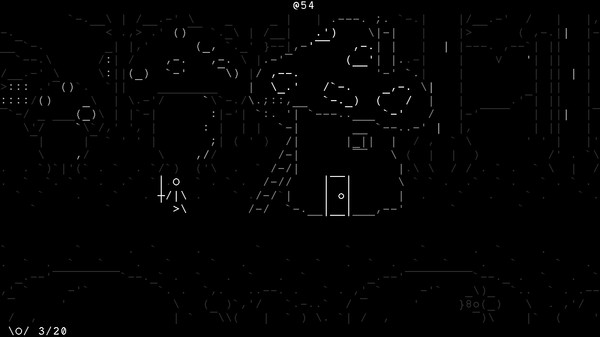
Not pictured: dead guest in claw machine, creepy animatronics, cursed arcade machines, piles of trash and plates.

Theme-wise, the game is… fine. It’s okay. It takes place in a haunted/infested/might-actually-just-be-a-giant-perpetually-animated-building-that-breathes-life-into-inanimate-objects-within-it-because-of-a-satanic-ritual Chuckie Cheese inspired shithole.

ED NOTE: The autocorrect above just suggested that I correct shithole to shibboleth, which is… wow. Amazingly on theme, and also why is that in the dictionary?

It’s not that the theme is bad, it’s just that if I had to compare the general tone and aesthetic of the game, it would be the bastard child of Five Nights At Freddy’s and Binding of Issac. All of the attacks that give the “Nausea” status usually involve shitting on things. You kill a man by baking him in an industrial microwave oven. This is an accident, not deliberate. There are a fair amount of slashed up corpses and news articles about missing children and families. There are gift boxes that try to eat you, and you fight cursed/broken animatronics. The horror and humor is much less subtle, and much more Cronenberg then Stephen King.

I don’t love horror, I don’t love FNAF, and I played Binding of Issac in spite of the artistic theme. I’m not sure I’m the right person to be looking at No Delivery’s theme. So take this with a grain of salt: while the theme grabbed me, I never liked it or enjoyed it. The best thing I can say about it is that it’s surprisingly well polished for what it is, with death screens, dialogue, and sprites working together to bring that old-timey rotting corpse of a entertainment franchise atmosphere.

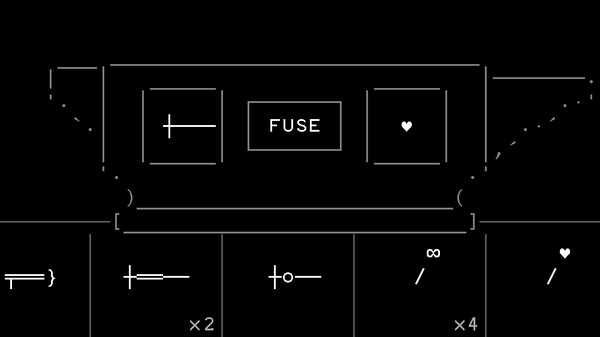
Now let’s talk mechanics. No Delivery is a fairly classic turned-based RPG, but with a few big twists. Your characters don’t level up, and you don’t construct a party. Instead, you are given a single random character, and each time you die (more on that in a bit), you get another random character from the pool of classes you’ve unlocked, and you continue on. In addition, there’s no mana or secondary resource. Almost all skills are powered by either health or items, and many of the items will give you other items when used. When you eat food, you’ll be given dishes and trash. Both can be sold for money, or used by attacks from some of the other classes (e.g., the waitress can throw dishes, and recycle trash). This can lead to some very neat resource engine moments, but often gets hamstrung by the way that the game’s dungeons, “Wrong Turns,” work. Outside of the leveling and items, it’s pretty classic “You take a turn, I take a turn” RPG stuff.

My biggest issue with the game’s combat mechanics is how party construction works, or to be more accurate, how it doesn’t. A large section of the game is spent running random dungeons, called Wrong Turns. You go from room to room, and some rooms have a chance to give you an extra Ally that you’ve unlocked, and add them to your party. While this would be fine, it’s entirely possible to go an entire Wrong Turn without getting one party member and the end result is a very screwed up action economy. I failed a boss fight several times before getting a party member with a stun, who I then used to stunlock and clear that boss without taking a point of damage on the next run. The biggest issue I have with the random party/lack of party is that it cripples the interesting engine mechanics I mentioned up above. Without a diverse enough party to use different items, many items you pick up will feel useless. (Looking at you Ammo, and by extension Batteries. I played 16 hours and rolled a Security Guard ONCE.)

The drowned waiter spends health for almost all their skills, but has no way of recovering it outside of items, or with any level of efficiency. The mascot though…
In theory, there’s some cool synergy between a class that can heal, and a class that must spend health as its primary resource, but because you never really know your party composition ahead of time, you don’t really so much get to “Build teams” as “Try to find some way to salvage your current situation before you’re eaten by a living trash compactor”.

The other thing to know is that once you clear a Wrong Turn, you lose the additional party members, and while there are a few other special party members you can get, they leave as soon as you’re no longer in the fights you’re expected to use them in. It’s kind of a bummer. The item transformation/resource mechanics are one of the coolest things about No Delivery, but they don’t get as much time to shine as they could.

There’s a lot of pixelated B-movie gore of this sort in the game.

So, if I don’t love the theme, and parts of the gameplay feel a bit hamstrung, why do I still think this game is very cool? Well, ultimately, it has to do with the engine the game is made in. Despite what it might be named, RPGMaker isn’t actually super easy to make interesting or good games in. Most of the time I’ve tried to make projects with it, I’ve either felt constrained by the engine, either mechanically or in terms of design space.

No Delivery utterly breaks that mold, though. Within what feels like almost entirely vanilla combat mechanics, it manages to build a really interesting item based resource system, even if it could be fleshed out a bit more. It manages to execute its “gross out” theme despite being built in a game engine that is made to create fantasy fluff. It even does some really neat things with enemy sprites, hiding information about them so that they appear as a single pair of eyes, but morph into a whole face when you select them as an attack target.

For me, this was the value of playing No Delivery: a reminder that really cool mechanics and systems can always be constructed, and that it’s a poor craftsman who blames his tools. No Delivery is not the most polished or clean experience, but there are legitimately really interesting ideas and mechanics at play here. For an almost entirely one-person project, it’s impressive.

While I wouldn’t play through the whole game again, I’ve spent a lot of time thinking about how neat the item mechanics are, and wondering what else you could with them in if you expanded them.

No Delivery is $5.00 on itch.io, and if you purchased the itch.io Racial Justice Bundle a while back, you already own it. Do yourself a favor and play it.

Spelunky 2

Spelunky 2 will beat me before I beat it.

I like Spelunky 2. With that said, using cheese and shortcuts, and having played 55 hours, I’ve gotten to the final boss twice, and died both times. So I don’t think I’m very good at it. On the other hand, the stats for steam achievements say that only 5% of players have actually finished building all the shortcuts. Maybe the game is just hard.

Spelunky 2 is the sequel to Spelunky. (Surprise, surprise) Having only ever played Spelunky very briefly, they feel rather similar to me, but I suspect someone who has played both could give you an extensive set of differences. Spelunky 2 has the classic roguelike loop: start the run, acquire power-ups and items, then try to go as far as you can without dying. The game itself is a platformer, with the main character starting out with a simple whip, a jump, and a duck/crawl. And that’s it! These are the tools you have to get as far as you can. Let’s talk about that “As far as you can” bit.

With Spelunky, the game is broken up into worlds, each consisting of one or more levels. A level is procedurally generated, which shouldn’t be confused with “randomly generated.” Rather, you’ll get used to seeing certain patterns and setups, and certain blocks of rooms, but the way they’re connected or placed together changes from run to run, as well as what they’re populated with. In addition, each world is populated with different enemies and traps.

Which arrow launching trap will our brave hero forget to trigger in advance, and be shot by about eight seconds after taking this screenshot?

To beat a non-boss level, you just have to get to the exit door. This is easier said than done, because not only are the levels populated by enemies, traps and problems, they’re also full of gold, gems, dogs (Yes, dogs, we’ll talk about them later), altars, shops, and other things you might want. Your primary resources are health, which if you run out of you die, bombs for blowing up walls, and ropes for climbing down large depths.

So far I’ve mostly just talked about what Spelunky 2 is, and not really why I like it, or continue to play it despite being very bad at it. The reason I’m still playing is that in close to 30 hours, there have been maybe only one or two instances where I died because of what felt like actual bullshit. Almost every situation in which you lose life or die, you can look back at what led up to that point, and see how you got there. In my case, for example, it’s usually because I get greedy, and press my luck on something stupid that goes horribly wrong. None of my failed runs are because of bad luck, they’re failed because I made bad choices, and it means I have no problem starting another run, confident that this time I’ll do better. (This will usually turn out to be a lie.)

Yes, the game does have more then two biomes, but I hadn’t seen them when I was taking pictures for this article.

To try to illustrate this, let’s talk about pots in Spelunky 2. A pot is a small item that shows up pretty much everywhere. Pots break when things hit them, and you can also pick them up and throw them. When you break a pot, it can have a variety of things inside, including gems, gold, or various enemies. They’re incredibly simple in that regard, but the flow chart of how you actually end up interacting with them is far more complex.

Pots can be used to set off arrow traps like most thrown items, and kill weaker enemies, but they also can have loot inside. They’re single use, so if you throw them early, you might find yourself without another projectile weapon in the short term future. So when you find a pot, the questions you really should be asking are things like, “Do I have space now to break this safely, and grab whatever comes out if it’s a good thing, or should I pick it up and carry it until I need it? If I’m already carrying something else, should I just throw that at the pot? Can I just smash it with my whip and call it a day?” And because you’re doing this all very quickly, if you’re me, you will inevitably forget some part of this flowchart, and do something stupid, break the pot, and have a snake pop out that hits for one of your limited health points.

And almost every item and enemy in Spelunky 2 has this level of twitchy decision making around it. Did you fire the shotgun near a ledge, only to forget about the knock back? Enjoy being launched into a pit of spikes. Accidentally whip the dog? Hope you don’t have to use it to get past a arrow trap, since now it only has two life left. Try to drop a bomb down a shaft, only to forget you have bombs that stick to walls, and now you have about two seconds before the floor under your feet isn’t? Better move quick!

And because the game is random, you can’t just memorize your way though. You’ll really have to learn how objects and enemies work and interact, discover how items function, and then remember to actually use that knowledge. You can’t faceroll Spelunky. And while the levels are different, the objects are not. Pots and Rocks will always be thrown the same, arrow traps will always trigger, and enemies behave the same.

I really like Spelunky, but if you don’t like platformers, and you don’t like rougelites, and you really, really don’t like bashing down brick walls with your face, you may not have as good a time. I’d buy Spelunky 2 again, and for the $20 price tag, I’d say it was worth it.

Ed Note: There’s no online Co-Op on PC yet, which is kind of frustrating, so hopefully that gets patched in soon enough. Apparently it released super janky on console, so maybe we’re not missing much.

Phasmaphobia

Fun with friends, less fun just on your own.

This article has been rewritten multiple times. After playing 5 hours of Phasmaphobia, my conclusion was, “I hate it, and it’s buggy, dumb and boring.” I’ve now played 20 hours, and as you might guess I no longer hate it. That said, I have some problems with it. In brief, Phasmaphobia is fun to play with friends, but many of the mechanics are unintuitive (Wiki Ahoy!) and the game is still buggy. For right now, I’d only say it’s worth getting if you have a group of people to play it with.

Phasmaphobia is a ghost hunting game, except it follows more of a lite-simulation route than a gamey experience. You and up to 3 other people go out to a haunted location. Once there, you use the equipment you brought with you to try and find the ghost, and determine what type of ghost it is. You do this by walking around real slowly in a traditional first person view.

The equipment itself is all “traditional” ghost hunting equipment, such as EMF detectors, thermometers, cameras, sound sensors, and spirit boxes. There are also a variety of other things, such as crucifixes, salt, flashlights, smudging sticks, and ghost books.

The equipment addition menu. In Co-op, each player contributes gear up to a cap.

One thing to keep in mind is that not all ghosts respond the same way to all stimuli: e.g., some types will drop temperatures to freezing, while others won’t. Some are more active if multiple players are around, and some are not. Some give off EMF readings, and some just don’t. The main gameplay loop is to try to determine which type of ghost you’re dealing with based on the reactions you get from your equipment.

Between missions, you level up from surviving, and acquire cash based on your performance, taking photos of the ghost, and some other bonus objectives. This allows you to buy more equipment to hunt the ghost in the future. Equipment isn’t lost if you drop it/lose it, but it is lost if you die during the mission. While I think this could become annoying, I haven’t acquired enough cash for it to become a problem. Some of the other random players I played with though mentioned it frustrated them, and another mentioned that the “strat” is to have one person buy all the equipment, and then stay in the van, so you can’t lose anything.

If you’re a coward, you’ll spend a lot of time in the car, watching your friends die. LIKE SOME PEOPLE KYLE.

Oh, and you can play Phasmaphobia in VR.

I can’t group my problems with Phasmaphobia into one big overarching chunk or theme, so I’m just gonna list off everything about the game that annoys me.

Ed Note: I’ve edited the original version of this list. The list is accurate to my experience of playing the game, but I’ve updated various points with more information.

  1. The game has all the thrills and excitement of real life ghost hunting, which is to say none whatsoever. I don’t know who thinks wandering around a big ass building with all the lights off and waiting for something to happen is interesting. It really isn’t. If you’ve ever watched a ghost hunting show of some sort, you have seen the primary experience of Phasmaphobia, which is a bunch of folks wandering around a dark building, shouting things out, and then getting scared when the floorboard creaks. And because not every single type of ghost reacts to every type of equipment, and the limited inventory slots, it is entirely possible to search the entire building, and not find the ghost, and then have to go back and grab more equipment. UPDATE: While this is true at the lower difficulties, it’s much less true on larger maps, and higher difficulties where the ghost can begin hunting you much faster. The bit about equipment is also not true, as with more players and a strong plan of attack, you can sweep faster and move quicker.
  2. The controls are miserable. With mouse and keyboard, the ability to pick up and manipulate things feels extremely limited, and makes it very frustrating to do things like get cameras in good positions. I don’t actually know how to even light a candle in non-VR, since you can’t have a lighter and a candle out at the same time; you can only have one thing in your hand. UPDATE: You need to have the smudge stick out and press F while the lighter is in your inventory. You can also light them by using the lighter on a dropped smudge stick.
  3. The VR has one of the single worst movement implementations that I’ve ever seen in a VR game, and commits the number one sin of VR camera movement: You DO NOT have the player move in a way where the in-game camera moves, and the real life player stays still. This is how you make people sick. And this is exactly how Phasmaphobia does it. I wasn’t able to complete a single round before having to take off my headset and lie down for like 15 minutes, making Phasmaphobia the first VR game I’ve played to make me feel ill.
  4. The VR controls suck. This one honestly might be because I’m using a Vive, but the VR controls use the thumbpads for movement, and this includes just touching the thumbpads, not actually pressing on them. Every time I did so, the game started spinning me around or lurching me forward. I found it insanely frustrating. If you’re thinking “Well, just don’t touch the thumbpads,” I’d like to point out that you have to be able to move around, and in addition, because of the way you grip the controllers, you will almost always be touching the thumbpads.
  5. The game is buggy. If you try to load into a game, and the game doesn’t let everyone from your lobby load in, you’re gonna have to restart the game, and remake the whole lobby. Same thing could be said for the voice recognition. It’s cool, but it doesn’t always seem to actually, well, work. There isn’t really physics for any of the objects, and I’ve had situations where ghost types that are supposed to create freezing temperatures just… don’t. I’ve had situations where I can go into the building, shout myself blue in the face about the ghost, and have nothing happen. The second my two friends walk in, the ghost shows up, locks the building, and strangles one of them to death. This is for ghosts that the guide tells us are “Shy, and will only react to one person”. UPDATE: I’d say that some of this is still true, but the game has gotten updates that have made some things show up easier, and I’ve had less instances of crashes when attempting to load in. Generally speaking, the game feels much less clunky, but it also might partly be I know what I’m doing at this point.
The game assets and general vibe are honestly pretty “Purchased off the Unity store at best value” but I’m not very bothered by it. If you are the sort of person who needs nice graphics… this may not be for you.

So here’s the thing. Despite that above, I’m still playing and enjoying Phasmaphobia, but I feel like at least to an extent, it’s because I have a solid group of 2-3 other people to play with. Strategizing, planning, and looking for clues cooperatively is a really neat experience when it works the way it should, and the game is still fairly challenging for us with the larger maps. With that said, there are also still issues. Taking pictures of ghosts is incredibly hit or miss, running away from ghosts and hiding is kinda “eh”, and I honestly have no idea how crucifixes are supposed to work.

For the $14 cost of the game, I’d buy Phasmaphobia as long as I had a group of people to play it with, but if I was going in solo, I’d probably pass.

The ghost models are much more detailed than the player models, and because of the way they move, you won’t really have time to think of things other then “Oh fuck, oh shit”

Didn’t Make the Cut – itch.io Racial Justice Bundle

All filler, no killer.

Another week, another set of games from the itch.io racial justice bundle. These are primarily games that simply didn’t get their own full article about them, either because there wasn’t really a lot to say (LAZAKNITEZ), I couldn’t play them (Troika), because I refuse to do so out of spite and dislike for the game (Oikospiel). Having said that, let’s get to the games

LAZAKNITEZ – PC/Multiplayer/Singleplayer
LAZAKNITEZ almost works for starting a trend of games with names that are nonsense words, until you boot up the game and realize that it’s just a very 90’s spelling of Laser Knights. And that’s exactly what the game is. You slide around a 2D plain, jousting on the back of your laser horse, and firing from your laser lance. I played this one for a few rounds and then put it down. It’s not bad. Just very light on things to do/see. Once I’d played a bit, and felt like I had seen most of the powerups, I was done.

Oikospiel Book 1 – PC/Singleplayer
I don’t like Oikospiel. I think that it’s stupid. It plays and looks like a fever dream made by someone who just imported every 3D model they could get their hands on into Unity and it should also probably come with an epilepsy warning.

Oikospiel is what you would get if you took Timecube and made it into a video game instead of a website. I have some questions for whoever made this game, and primarily they’re things like: “Are you okay?” and “Do you need help?”

TroikaPen and Pencil RPG
Mechanically, I didn’t see much in Troika that impressed me, but I also didn’t actually run a game. The initiative system seems neat, in which you randomly draw tiles from a bag and then whoever’s tile you drew takes a turn.

The flavor though, is incredible, and I honestly wish there was more of it. It has a very old-timey science fiction sort of vibe, and the closest thing I can think to compare it to is The League of Extraordinary Gentlemen by Alan Moore, or perhaps the sorta of weird science-magic of The Wizard of Oz.

For example: the book has stats for a sort of snake that doesn’t sneak up on you, but instead offers reassurances and a well placed “It’s alright, I’m here now” in order to get you between its coils so that it might crush and eat you. The starter adventure in the book involves convincing a sentient gas in the elevator with you that you would really like it if it could take up a bit less of the elevator, on account of the fact that it’s drowning you. The stat block for a “Tea Set” gives you a bonus on etiquette checks as long as you have time to prepare tea for the person you’re trying to impress.

The reason that Troika doesn’t get a larger section to itself is primarily that since this is a website for reviewing games, and I haven’t run a game of it yet, I can’t review it. But definitely worth a read.

Wrap-Up

Nothing this week that really jumped out at me. I loathe Oikospiel, LAZAKNITEZ reminds me of the sorts of things I’d play for 20 minutes before switching to something else on sites like Newgrounds. Troika is a fun read, but I feel like it would be tricky to pull off without a party that was really willing to lean into the weird-wonderness. If playing these games is the art of separating wheat from chaff, this week was all chaff, no wheat. Take care, and I’ll put more stuff up as events warrant.

What We’ve Been Playing – October 2020

It turns out that actually writing “reviews” for games when you’re employed full time doing something that isn’t related to video games is actually kinda hard. Who would have thought? In any case, I’m gonna try to start writing these little lists of stuff I’ve been playing, or people around me have been playing. There’s no particular order or anything to it.

For me, a large portion of last week was spent in attempted extraction of wealth in Spelunky 2. Key word is “attempted,” because more time is spent dying painfully than getting gold, gems, etc. I’d love to write a review of some sort of Spelunky, but given that I’ve only ever reached the first boss after 20 hours, I’m not sure I’d give the best feedback.

I may be switching over to Crown Trick though, another game in which you loot roguelike dungeons, albeit not in real time, and also in a different set of two dimensions. I saw the demo for this at PAX Online, loved it, and I want to love the full game more, but the “One More Run, Oh Christ It’s 1:00 AM” of Spelunky 2 has kept me from it for the moment.

In the larger demographic of “People who aren’t me,” it seems like every other person I know is playing Hades, which is apparently pretty good? I’ll see if I can cajole one of those folks to give me a write-up for it. Supergiant made Bastion which I liked, Transistor, which I own and have never played, and then Pyre which I played a demo for, and now Hades. I’m just not sure I need another rogue-lite at the moment.

In terms of co-op-esque stuff, the Genshin Impact is still impacting, and there’s some Monster Hunter World shenanigans occurring, primarily in the Iceborne DLC.

Oh, and I guess Dota 2, and MTG Arena. But, like, we’ve been playing those forever. So yeah, that’s what is currently eating our time, and hopefully we’ll have write-ups for Spelunky 2/Crown Trick/Hades later in the week.