Category: PAX

  • PAX Unplugged – Mythic Mischief and Klask

    Mythic Mischief and Klask don’t really have anything in common with each other. It’s not even like they had booths next to each other or something. Mythic Mischief is an action economy and movement-based game with victory points that almost reminds me of Chess. Klask is a skill-based dexterity game that feels like miniature air hockey.

    So why am I covering them together? Because I don’t have enough to say about them separately to fill writeup! Anyway, let’s get to it.

    Mythic Mischief

    Mythic Mischief is an asymmetric grid-based movement game, designed by Max Anderson, Zac Dixon, Austin Harrison, and published by IV Games.

    The best summary I can offer is that you and your opponents both control 3 miniatures on a 5v5 grid. Alternating turns, you attempt to spend your actions and use your abilities to place your opponent’s units in the path or directly on an NPC unit called the Tome Keeper.

    Editor’s Note: Tome Keeper not to be confused with Dome Keeper

    At the end of a player’s turn, the Tome Keeper moves towards specific locations. If there are units in its way, the Tome Keeper knocks them out, and the player who didn’t control those units scores points. Units that get knocked out can be replaced at the start of the next player’s turn.

    There’s a fair amount to the movement and action system, and how it plays with the game’s upgrade choices that I don’t think I can summarize effectively, so I won’t try. It’s a perfectly fine system, but I would not describe it as “Sparking Joy,” at least for me.

    It is worth noting that each player will be playing a different faction, with unique abilities and so keeping track of what your opponent can do is necessary to succeed.

    I only played one game of Mythic Mischief, and it was a combination of a demo and an ass beating. I wouldn’t say that I hugely enjoyed it. That might have been because I lost, and because I get salty easily. But I also struggled with two other factors.

    First up, just because of how the game works with scoring, it felt very difficult to make any sort of comeback once I fell behind. Secondly, the game reminded me of Chess in that it felt like a game of trying to find the “Correct” moves, and like a puzzle of chaining things together. That’s just not something I find very fun.

    So yeah, if you do like deterministic movement games, or things like Chess, maybe you’ll get more out of Mythic Mischief than I did.

    Klask

    Klask is a manual dexterity game by Mikkel Bertelsen.

    Honestly, it feels weird to be reviewing Klask here. It’s as if for some reason I felt compelled to write a review of Skeeball, or Soccer. The closest games I can think of as a comparison to Klask would be Air Hockey or maybe Foosball.

    Those chips look really good.

    All of this to say that the “Manual Dexterity” part of the game is absolutely not optional. Klask is played in an elevated square wooden box with sides. Each player has a magnet with a stick in the end that they hold under the box, and a pawn they place on top. The top pawn is moved by dragging it with the magnet from under the box.

    The pawn and stick aren’t the only magnetic pieces, though. Klask also has 3 small plastic beads with magnets in the center that are placed equidistant in the middle of the playfield at the start of a point. These beads will jump and stick to your pawn if you get too close, and if 2 of the 3 stick to a player’s pawn, their opponent gets a point.

    Points can also be scored by a player hitting the ball into the goal indent on the board, or if a player messes up and gets their pawn stuck in the indent.

    The interesting part of Klask for me is how the tiny white beads open up strategy. Without them, the game is pretty much just air hockey with a marble. But with the beads, you can do interesting stuff like hitting them towards your opponent in order to close off parts of the board.

    Overall, I like Klask. I just don’t like it enough to really want to buy it. That said, if someone asked me if I’d play, my response would be a semi-enthusiastic “Sure!”

    Conclusion

    I don’t think there’s any meaningful conclusion you can take out of things like both Klask and Mythic Mischief being present at PAX Unplugged. Maybe there’s some sort of testament to the diversity of mechanics and games present. Maybe there’s something to be said for the sorts of games you’d play if someone else is footing the bill.

    And maybe there’s nothing. Maybe there is no purpose. Maybe the real journey was the friends we made along the way.

    If you want more nonsense and to be notified whenever I write new stuff, maybe consider following me on Twitter? The site still seems to be up and functioning, at least for now.

  • PAX Unplugged 2022: The Adaptations

    I don’t have anything good to put in this opening paragraph. Maybe I should just talk about how good the food is in Philadelphia? It’s really tasty. Reading Terminal is delicious, even if PAX Unplugged does pack it to the brim. Even if it can take 40 minutes for someone to get you an egg and cheese on a roll.

    Anyway, enough about sandwiches. Let’s talk about board games. Today I’ll be covering the board games at the show that are either adapted from, or licensed from video games. It’s an arbitrary category, but one with a fair number of entries. Also, interestingly enough, all of them are based off games I’ve played.

    Shovel Knight: Dungeon Duels

    I want to open this part of the writeup by noting that I love Shovel Knight the video game. I did a writeup on it where I said as much. Which makes it a bit hard to say the next bit.

    Shovel Knight: Dungeon Duels feels like the literal definition of overproduced Kickstarter Ameritrash.

    That’s kind of a bold claim, so let me make some observations to back it up. From a mechanical standpoint, the game is incredibly uninspired. The goal is to get the most victory points. You do this by defeating enemies, and clearing out a boss. This, in turn, is done by moving across a board.

    You have three actions per turn: moving, attacking, and jumping. Of those actions, only moving doesn’t require you to roll dice. You can’t just move your way to victory, because the board is covered in spikes. You’ll need to roll to jump over those. And if you fail? Fall into a pit, and lose half your victory points. You want to attack something? Roll dice, and hope you get enough successes to do something valuable. Because if you don’t, you might die, and lose half of your victory points.

    Should you manage to survive long enough to get to a shop tile, you can spend your victory points to buy a completely random upgrade. It could be +1 dice to all your rolls! It could be the ability to make ranged attacks. It could be a worse item for a slot you already have filled, because it’s a random draw from a deck. Upgrades are frequently utterly worthless and get thrown away immediately.

    Of course, dying doesn’t knock you out of the game. You’ll get to replace your wonderfully crafted miniature at the start of the next round on the far side of the board. And that’s good, because aside from the aforementioned falling into pits by missing a jump, or just taking enough damage to die, you can also get pushed back into pits by enemies if they damage you.

    Now, this can’t happen during the boss fight. Instead, if you get knocked off the board during a boss fight, your character goes prone, and has to spend an action to get back up. If you get unlucky, the boss can do this to you before you even get to take a turn. And yes, someone in my demo was on the receiving end of this.

    These are all the mechanical reasons I have for calling Shovel Knight: Dungeon Duels “Ameritrash.” The game is incredibly random with a focus on dice rolls for resolving most meaningful interactions. You have minimal capacity to make meaningful choices around upgrading or building your character.

    This game was Kickstarted. It has 44 miniatures. And they are very nice minis! I like these characters so much from playing the video games, that I was and am still tempted by them because of how much fun they would be to paint. But those minis are also probably a large portion of why this game costs $125. It has a 58 page rulebook, apparently? It has custom dice, and tokens, and lots of playable characters.

    My personal verdict: cut down on the minis and include a fun game. Or even keep the minis and include a fun game! Or, scratch that, screw the game, just let me buy the minis from you directly. Because they’re the best part about what I played here.

    SolForge Fusion

    Continuing a trend of writing things that guarantee I will never end up on a press list for prerelease copies of anything, let’s talk about SolForge Fusion. Like with Dungeon Duels, I really liked SolForge Fusion’s parent game, SolForge. Also like with Dungeon Duels, I really don’t like SolForge Fusion. It’s for a very different set of reasons though, and to explain them, we need to talk about SolForge briefly.

    Or perhaps it would be more accurate to talk about what SolForge was. You see, SolForge is dead. And unlike many games that I’ve written about in my end of year wrap-ups, SolForge didn’t really do anything to deserve to die. It just didn’t make enough money for the company to continue supporting it. Which honestly kind of sucks, because SolForge was one of the best digital CCG’s to exist.

    The key word in that sentence, and the root of a lot of problems we’re going to be talking about, is “digital.” SolForge’s key mechanic was digital-only, and it worked like this: whenever you play a card, an upgraded version of the card is added to your discarded cards. When you run out of cards in your deck, you shuffle your discarded cards back into a new deck, and continue the game, now with some of your more powerful cards. It also had a reliance on triggered effects. Also damage and buffs on creatures didn’t wear off between turns.

    All of these were good and interesting designs that worked well digitally. The computer could manage resolving triggered effects, tracking stats, and upgrading your cards. Because all of these were handled by the computer, games were quick, fun, and could allow for ridiculous numbers and scaling.

    Perhaps you see where I am going with this.

    Works great with a single digitally managed card. Works less great when it’s 3 physical cards that have to be swapped out.

    You see, all of these mechanics technically could work in a paper card game. Each paper deck would need to have three times the cards, forcing you to keep track of which ones you played. And because damage and buffs don’t wear off, you’d have to have a billion tokens for keeping track of damage. And you’d need to manually track all triggered effects, and also manually resolve the full combat step for the board.

    This is all technically possible in the same way that it is technically possible eat an entire card board box. You can do it, but I don’t know why you would, and it probably wouldn’t be a good time.

    All of this is to say that SolForge Fusion is effectively a port of the aforementioned mechanics to tabletop. It’s not a straight port by any means, with many cards being heavily changed around, and the numbers having been rescaled a fair amount. But it’s still a port!

    Anyway, as if this wasn’t funny enough, two days ago I got this in an email:

    So yeah. They’re planning to make a digital version of a physical card game based off the mechanics off a digital game that was shut down for ultimately just… not really making enough money.

    It would be cool if this went well, but I’m not exactly holding my breath. And again, the digital version doesn’t exist yet. Until a digital version exists, playing SolForge Fusion requires managing a set of decent mechanics that are fundamentally flawed in meat-space.

    Storybook Brawl Unnamed Deckbuilder

    I’ve debated whether to put Storybook Brawl’s unnamed deckbuilder here with the other video game adaptations, or with a later page on games I played in the Unpub hall. Ultimately I decided to place it here.

    I’ve written about Storybook Brawl before, but you don’t need to read that writeup now. Unlike the other games on this list, this board game is its own game. It’s also in the rawest state, if the fact that it doesn’t even have a real name wasn’t enough of indicator.

    Unlike Storybook Brawl, instead of building a set of characters that you play out onto a single large map, it’s much closer to a deck builder with simultaneous play competitive elements. And while it maintains some mechanics (such as the idea of tripling, and playing a single spell per turn), this unnamed deckbuilder mostly puts its own twists on the video game’s mechanics.

    I wouldn’t say that I love this as-of-yet-unnamed game. But given that it’s still an alpha, there’s both time to improve and tweak things, and also to refine the game as a whole. Despite its flaws, Storybook Brawl’s unnamed deckbuilder is probably the most interesting of the three games on this list, despite not being a full game yet.

    So in summary…

    What have we learned today? Well, mostly that Panda Cult and Stone Blade Entertainment are incredibly unlikely to send me review copies for any reason whatsoever in the future. And the same is probably true for Storybook Brawl, if for no other reason than the fact that their parent company lost $16 billion dollars.

    On a less sarcastic note, I think the main takeaway should be that if you’re going to adapt anything, it’s probably a better idea to try to work with the strengths of the target format than to just try to port things straight across.

    More PAX Unplugged writeups in the week(s) to come! And in the meantime, why not follow us on Twitter, assuming it hasn’t burnt to the ground yet.

  • Everything Else We Saw At PAX East

    Over the last several weeks, I’ve written up a few posts for the various games we played at PAX East. I covered the games with demos you could play at home. I covered the party games. I covered the board games.

    This leaves us with just one final category: The games that I don’t have strong feelings about. Here they are, in a great big list, with brief summaries, some info about release dates/status, and links if you want to learn more.

    Name – Guts’N Goals
    Type – Video Game/”Sports” (The Quotes are on Purpose)
    Status – Released
    5 Second Version – Just not really my thing. Sportssss. Kinda fun at least.
    More Info – https://gutsandgoals.com/

    Name – Super Marxist Twins
    Type – Video Game/Platformer
    Status – Released
    5 Second Version – Super Mario Parody, has level creator, felt kinda wonky to play, no strong feelings.
    More Info – https://type3studios.com/

    Name – Stellar Seige
    Type – Board Game/Card Game
    Status – Released
    5 Second Version – Placement Card Game, did not love it.
    More Info – http://www.paw-warriorgames.com/stellar/

    Name – Togges
    Type – Video Game/Collectaton or Puzzler?
    Status – Unreleased
    5 Second Version – Just not feeling it. Maybe I’m the wrong audience.
    More Info – https://togges.com.br/

    Name – HOA
    Type – Video Game/Platformer
    Status – Released
    5 Second Version – Looked very nice, but did not feel good to play. Not super interested.
    More Info – https://www.hoathegame.com/

    Name – Depths of Sanity
    Type – Video Game/Self described Metroidvania
    Status – Available in Early Access – 85% content complete according to Dev’s
    5 Second Version – Didn’t play. No strong desire to honestly. May need to research.
    More Info – https://bombsheltergames.com/

    Name – Cuisineer
    Type – Video Game/Dungeon Crawler + Resturaunt Sim I think?
    Status – Unreleased
    5 Second Version – Couldn’t play. Not sure on genre. Don’t have much real info on this one yet.
    More Info – https://twitter.com/cuisineer Look, the twitter has more info about this game then their website. I don’t know what to tell you.

    Name – KAO THE KANGAROO
    Type – Video Game/3D Platformer
    Status – Released!
    5 Second Version – 3D collect-a-thon that appears to be in the vein of Crash/Spyro
    More Info – https://kaokangaroo.com/

    Name – Demon’s Mirror
    Type – Video Game/The lovechild of match-3 and Slay the Spire
    Status – Unreleased
    5 Second Version – I can’t tell if it’s a Slay the Spire like or not, it seems like one, but the match 3 but not quite elements are throwing me off. Requires more research.
    More Info https://be-rad.com/games/demons-mirror/

    Name – Mythic
    Type – Video Game/Procedurally Generated Roguelike MMO? The Fuck?
    Status – Has a Demo?
    5 Second Version – Didn’t play it. It could be good, or it could be Buzzword soup.
    More Info – https://store.steampowered.com/app/1752260/Mythic/

    Name – Ikonei Island
    Type – Top Down Adventure/Crafting Game
    Status – Unreleased
    5 Second Version – Seemed like a fairly simple game for kids? Didn’t quite click for me. May need to do more research.
    More Info – https://store.steampowered.com/app/1550730/Ikonei_Island_An_Earthlock_Adventure/

    Name – Writers Block
    Type – Video Game/Spelling Game
    Status – Unreleased
    5 Second Version – If you read this site, you’ve seen how I spell. Not for me.
    More Info – https://store.steampowered.com/app/1841380/Writers_Block/

    Name – Valley Of Shadow
    Type – Video Game/3D Puzzle Game
    Status – Unreleased
    5 Second Version – Might be Great. Might be artsy garbage. Can’t tell yet. Might just also not be for me. At least it’s not bad.
    More Info – https://store.steampowered.com/app/1414030/Valley_of_Shadow/

    Name – LOVE3
    Type – Platformer
    Status – Released
    5 Second Version – Weird. Hard. The hell did I play? They had other games as well, one looked like Bomberman with Dragons
    More Info – https://store.steampowered.com/app/1604300/LOVE_3/

    Name -Pathless Woods
    Type – IDK
    Status – ????
    5 Second Version – Didn’t play.
    More Info – https://store.steampowered.com/app/1726130/Pathless_Woods/
    or @PathlessWoods1 on twitter presumably

    Name – Back to the Dawn
    Type – Video Game/RPG-Simlite?
    Status – Unreleased
    5 Second Version – Might count as a CRPG? All the characters are animals, and it seems like your end goal is to escape prison.
    More Info – https://store.steampowered.com/app/1735700/Back_to_the_Dawn/

    Name – The D.Team
    Type – Video Game/Tank Shooter + platformer?
    Status – Unreleased
    5 Second Version – Not great yet, better then expected. A first time project by a single dev.

    Name – Below the Stone
    Type – Video Game/
    Status – Unrelased
    5 Second Version – Not sure how good it is. Enemy AI is not currently interesting. There’s potential here though. Keep an eye on it.
    More Info – https://store.steampowered.com/app/1170230/Below_the_Stone/

    Name – Demeo
    Type – Video Game/Turn Based Dungeon Crawler
    Status – Released
    5 Second Version -Literally made for Kyle. Potentially good.
    More Info – https://store.steampowered.com/app/1484280/Demeo/

    Name – Rightfully, Beary Arms
    Type – Rougelike where your upgrades upgrade your enemies as well.
    Status – ???????
    5 Second Version – Made by Daylight Basement. Seems weird as fuck.
    More Info – https://store.steampowered.com/app/1928030/Rightfully_Beary_Arms/

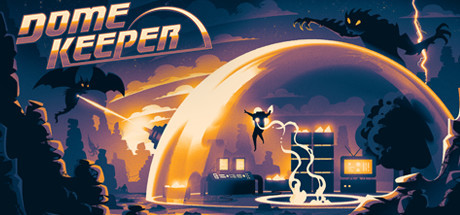
  • PAX East – Dome Keeper

    I was going to title this post the “Good Stuff” post. It was going to be a nice big list of everything from the show that I liked, but hadn’t listed out yet.

    Then I ran into a slight problem. See, that list was a grand total of one item long. I already covered most of the games from the show that I liked in the “Games From PAX With Demos you can play at home” post.

    So instead, you get a super short post about Dome Keeper, the single remaining entry on that list. So I say to Dome Keeper: congrats! And please don’t disappoint me when you actually release.

    Published by Raw Fury! Who also published Atomicrops, which I loved.

    So what is Dome Keeper? Well, two things, sorta. It plays like a combo of Motherload, and Space Invaders. You are a small space person, living in your tiny little dome. You can leave the dome to dig down, and gather various minerals and ores, which you then drag back to your base and deposit. Different ores are used for different types of upgrades, which range from increasing the speed at which you move, your carrying capacity, and how quickly you dig. They can also be used to upgrade your dome. And you’re going to want to do that, because there’s a timer, and when it ticks down, your dome gets a attacked by a wave of monsters.

    Of course, even if you clear that wave, the next wave will be stronger. So back into the mines you go to search for more minerals. Rinse, repeat.

    The demo itself was a ton of fun, and the game is supposed to release later this year. The Steam page has it listed as a roguelike, so I’m curious to see how that gets implemented, and what other features the game has.

    But like I said, the demo was fun. And really, that’s the most important thing. So cross your fingers with me, and let’s hope it’s good.

  • PAX East Party Game Post

    I mentioned in another post-PAX writeup how I’m hesitant to recommend boomer shooters based off demos. This is because boomer shooters almost always demo well, even if the final product is subpar.

    Well, this week, we’re talking about another genre that almost always demos/plays well at a convention: The party game!

    Combine the excitement of being at a con with anything competitive, and a large number of people to play with, and just about everything can be fun for a bit. So here are the party games I saw at PAX East.

    Starting with…

    This image does not do a good job of capturing gameplay mechanics.

    From what I played, Orbitals felt like a Smash Bros style 2d party brawler. The game had two mechanical twists though. The first is that the whole thing takes place in a gravity free area. You have to move from area to area Super Mario Galaxy style. The second is that after each round, you get points to spend to upgrade your character.

    When I played, I found the gameplay a bit floaty. I couldn’t tell if that was just because it was my first time playing. The gameplay seems interesting, and Orbitals is on my watch list because of that. If you want to find out more about the game, click here.

    Next up:

    I guess this one does slightly more?

    Match Point by Jolly Crouton is effectively multiplayer super Pong. It supports up to 4 players. Unlike Pong, you have a few other abilities then just bumping into the ball. By pressing certain triggers, you can magnetize yourself to pull the ball in, or do harder shots. Also, the goal requires you to hit it twice in semi-quick succession to score.

    After reading my notes, I have written down that I thought it was “Fine” and “Not really my thing”. Also “Good Party Game???”. I think those notes are pretty accurate. It’s well made, but it’s still mostly Pong. I think it might be fun with the right crowd. But if it seems like your thing, you can learn more about it here.

    Which brings us to our last entrant…

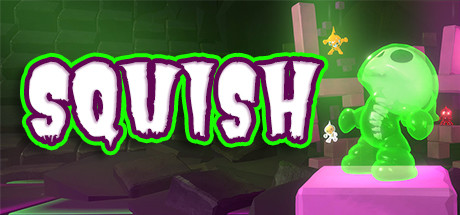
    Finally, someone made a header image where the image is from the game!

    Squish is fairly straight forward. It’s a survival versus game for up to 4 players. You play as a small blob skeleton, and try to be the last one standing while blocks constantly fall down onto the field. You can push this around, but if you get crushed by one, you die. Get killed, and you’re given one last chance to control a falling block. Take out another player with that block and you’re back into the game.

    Squish feels like a extended release of a Mario Party minigame if I’m being honest. I don’t dislike it, but it wasn’t amazing. The full game does promise more modes, which might change things up a bit. If you want to find out more, you can click here. It actually has a scheduled release date of May 31st, so pretty soon!

    And those were all the party games I played at PAX East. Like I mentioned before, it’s a genre that does well at conventions, and always makes me pause for a bit. My personal favorite was Orbitals, for both having the most potential and being the most interesting.

    In either case, join us next week as I attempt to keep writing these summaries because I played a ton of stuff! Not sure what the theme will be then, but I’ll figure it out.