What is… Deep Rock Galactic?

Rock and Stone, Brother!

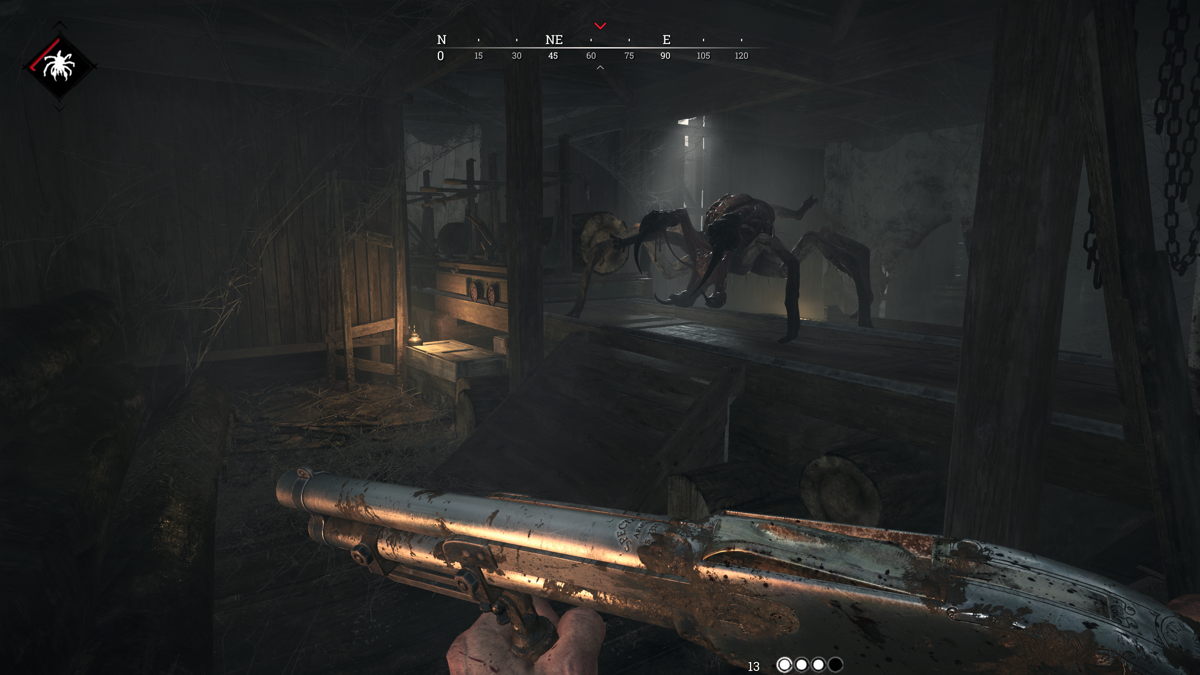
Deep Rock Galactic is a cooperative PvE first-person shooter. You and your friends are a team of space dwarves, mining ore among the stars. The core game is about you and your team of up to four other players trying to complete whatever dig you’ve signed up for this time. While the game does have procedurally generated maps and a variety of mission objects, the thing that sets it apart is how it handles its classes.

Deep Rock Galactic breaks away from the Holy Trinity of Heals, DPS, and Tank. Instead, any player can play any role when needed. The added spice is that each class also excels uniquely via pure utility by environment interaction.

The game’s four classes are the Engineer, Scout, Gunner, and Driller. Each of the four classes can do great damage, great support, and some form of escape or defensive mitigation for the team. For example, the Engineer has a platform gun that can create platforms in the environment. You can use these platforms to build choke points to funnel glyphids (the game’s bug enemies), or as a safe pad to land on in an emergency escape, or to make a bridge across great divides.

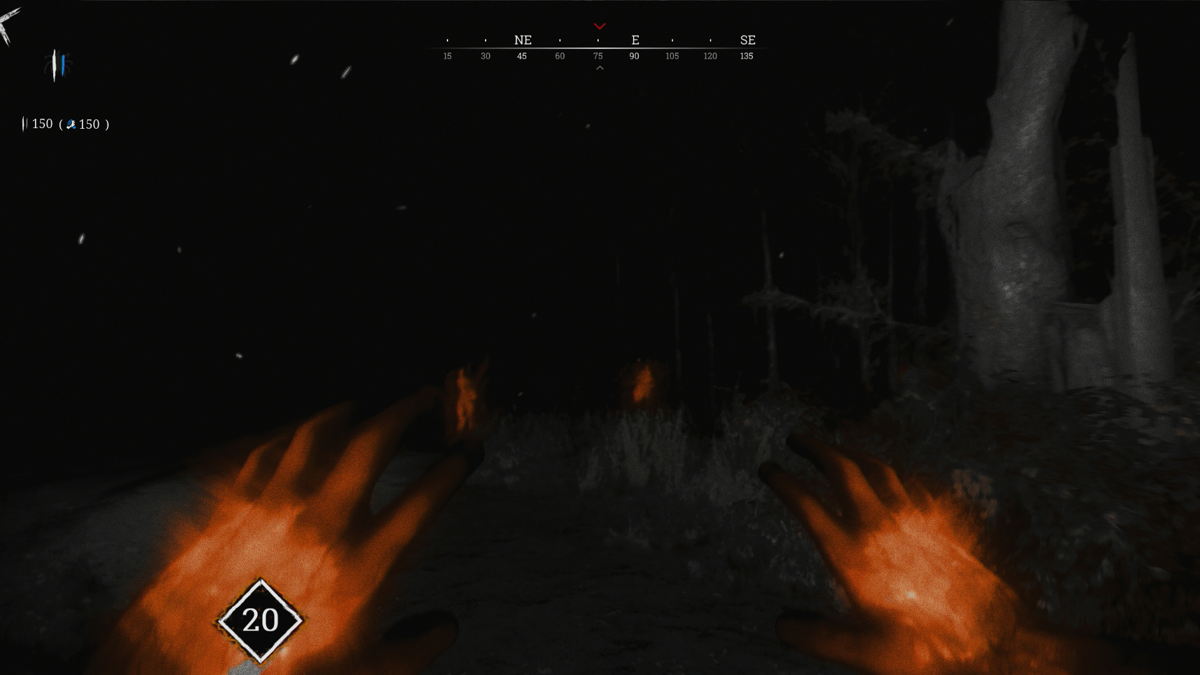
The Scout’s specialty is to provide vision to the team via his flare gun. Without his flare gun you could get surrounded by unseen glyphids in the dark at a moment’s notice. He is the most mobile role of the squad, best for filling in any gaps of defenses or daring rescues. Gunner has the highest sustained firepower, and also the best defensive ability in the game: the bubble shield which blocks projectiles as well as regenerates allied shields. Driller’s specialty is obliterating wide hordes of small glyphids through bombs or fire, or freezing boss enemies, making them stunned and vulnerable for the team to destroy. Driller’s drill gauntlets allows him to make tunnels straight to evac, or shape the terrain to his advantage as well.

There are also general character perks that you can earn that apply to all classes. These upgrades are generally straight increases to damage, survivability or cool new ability that’s always good. When choosing between upgrades of the same tier they are mainly trade offs or side-grades. Deciding which upgrades you want allows you to tailor your dwarf to play your way—which is really fun. If you are a min-maxer, you can look up guides for best upgrade paths to unlock first, but I’d recommend against it. Overall, experimenting with all of the upgrades and discovering what works for you is the most fun for getting longevity from Deep Rock Galactic. It’s a slow burn of a journey and not about getting max power ASAP.   

The game can be played in single player mode but I wouldn’t recommend it. Thankfully, the game enjoys a large player base where you can always find a lobby for whatever mission you want to do.

That said, I found the end game raid missions difficult to do with just random players. These missions are called “Deep Dives” and give out unique loot that can change your class by modifying what your guns do. Some modifications just swap the elemental damage type of the weapon, but others fundamentally alter your gadgets to do something entirely weird and new. For example, one piece of loot makes it so when you shoot your shotgun at the ground, you jump higher. This is just one of tons of possible changes you can apply to your gear, although the limit is one per gear piece so you can’t stack a bunch of modifications on one gun.

Deep Rock Galactic has limitless stuff to unlock, and I imagine it’d take hundreds of hours to unlock all the talents, gear, and cosmetics the game has to offer. The available missions are rather diverse, but you’ll probably find some you like more than others. The game has consistent updates, and is currently in the process of adding a 3rd weapon choice for all classes, as well as doing balance revisions to all current weapons and talents, with an estimated patch release in quarter 3 2021 (sometime between July and end of September).

If this sort of thing sounds exciting to you, here are some my tips for starting off:

  1. Feel free to mix up team compositions. For the most balanced gameplay, 1 of each class seems best, but for some mission types you may feel like more than one of a class might suit it better.
  2. Nothing wrong with taking it slow. When starting out I’d recommend a hazard level 2 or 3 mission at most (hazard levels are just difficulty level: 1 is easy, 2 is normal and so on). Then when you feel like you can handle it, increase hazard levels for better rewards. I’ve played about 90 hours since the launch and promoted each class about once. Personally I wouldn’t recommend trying hazard 5 or higher till you’ve promoted a class… but hey, you do you.
  3. Take advantage of those credits! Deep Rock Galactic has a deep character progression system where the credits and materials you earn from missions can buy tons of upgrades to specialize your class a lot.

I think it’s a gem of a game, and if you had to pitch it to a friend in like 10 seconds, I’d say, “It’s like a co-op shooter like Left 4 Dead, fused with looter-shooter talent leveling and survival game terrain manipulation like Minecraft, but you are an awesome high tech space dwarf squad, killing the zerg Glypids.”

4.5/5 Etrodons is my overall rating. And when you do play the game, remember to hit “V” to ROCK AND STONE, BROTHER!
Magic: Legends is Dead After 4 Months

Goodbye, and good riddance.

I don’t think there’s anything positive or noble about kicking dead horses, or beating men while they’re down, unless they’re into that, and you okay it beforehand. That said, I find the state of Magic: Legends so incredibly funny that I’m gonna do both of those things. Hopefully this will get it all out of my system so I stop talking about Magic: Legends over and over to my friends.

So yeah, Magic: Legends is dead. It lasted just about 4 months, and didn’t even make it out of open beta. Also, the studio behind it is apparently laying a bunch of people off, which sucks. But holy shit, 4 months, and not even out of beta? Misbits lasted longer then that. HEX lasted longer then that. This is a multi-system ARPG, licensed off an incredibly successful game for its world, lore and background, and they couldn’t even keep a beta alive?

What the fuck guys.

We could spend a lot of time speculating about why Magic: Legends failed so incredibly hard. I’m sure someone over at Cryptic is doing that right now, in-between shots of vodka and wondering how much they can pawn the office furniture for. It’s way too easy to construct a narrative that you want to believe, and there are so many things that could have caused the game to fail that it’s an exercise in futility. So let’s do it anyway! Here are a few of my favorite pet theories:

  1. If you make a F2P PC/Console ARPG, you are competing with Path of Exile, which is also free, has no P2W mechanics, and has 8 years of lead time on you. Maybe your game should do like… one thing better then them. Just one. And “Having a licensed property” doesn’t fucking count.
  2. Linking the PC release exclusively to Epic Game store for a GAAS release might be a bad idea. Epic has a lower overall player count, and Epic probably isn’t gonna subsidize a freemium game the same way they can for a game that players just buy once.
  3. MTG is a very successful game. It also has lore. Is that lore as important to its players as, say… the actual game mechanics? My guess would be “No.” Pornography also has a plot and lore. I’ve yet to see a successful non-porn offshoot of Lemon Stealing Whores. (SFW)

Of course, it could be all or none of these! So next, I’m just gonna make a list of things I personally thought were shit about the game:

  1. Graphics and performance. It takes a lot to make me care about graphics. Multiwinia is one of my favorite games. I hated how Magic: Legends looked. And ran.
  2. Awful Gameplay Loops. For real though, the core gameplay loop is an ARPG, a genre where getting cool loot is an important part of the feedback loop. The core feedback loop was “Getting more copies of cards you already own, to fuse them into cards you own, and make the cards slightly better” with incremental scaling a la Clash of Clans. It was garbage.
  3. Warp Points. Hey, what if we made it so each area is instanced with other players? And they showed on the map? And if another player was on top of a warp point you wanted to go to, you couldn’t warp to it, because you would click on their name instead? And what if players spawned into maps near the quest givers, and went AFK, every time you wanted to go back and turn in a quest, YOU HAD TO WALK THE ENTIRE FUCKING WAY THERE FROM THE OTHER SIDE OF THE MAP, BECAUSE XX_PLAINWALKERX_XX69 WENT AFK ON THE SPAWN POINT? And before I hear any “It (was) a beta” whining, if they hadtime to release the game with a fully functional cash shop, then they had time to test it with 10 people, and see what happens when one of them disconnects at the starting zone.
  4. The Worst Kind of F2P. Randomized booster packs of what amounted to in-game loot, and extra classes/characters. In a genre of game about building cool characters and acquiring loot. It was as shitty as it sounded.
  5. Capping Farming. I’m running out of steam at this point, but I wanna get a few more jabs in, so what the fuck was with the capped mana system? “You can play this much, but then you have to come back tomorrow, and you can’t get anymore loot until then!” In a genre that often ends up about farming for loot. I’m sure some incredible business genius in the backroom went “Oh, lots of mobile games have daily check-ins or something, lets do something like that!” Well, shit for brains, this game ain’t on mobile. They could have gone the Blizzard route, and added a mana charged buff and then after the cap, drop it way down, but they chose to implement it in the worst way possible.
  6. Gameplay. The gameplay just wasn’t fun. It just wasn’t. The idea of an ARPG with cycling abilities is cool, but it only works if there’s some reason to think about what abilities you’re using. As it was, there was no reason to not just spam everything the moment it was off cooldown and you had mana for it.

    So yeah. RIP In Peace, Magic: Legends. This Frankenstein’s monster attempt of combining an existing genre with some of the shittiest freemium mechanics ever to crawl out of mobile games, and a core game mechanic crippled by the aforementioned freemium bullshit will not be missed.

It should lie in its grave and rot.

Hunt: Showdown

Hunt is pretty great.

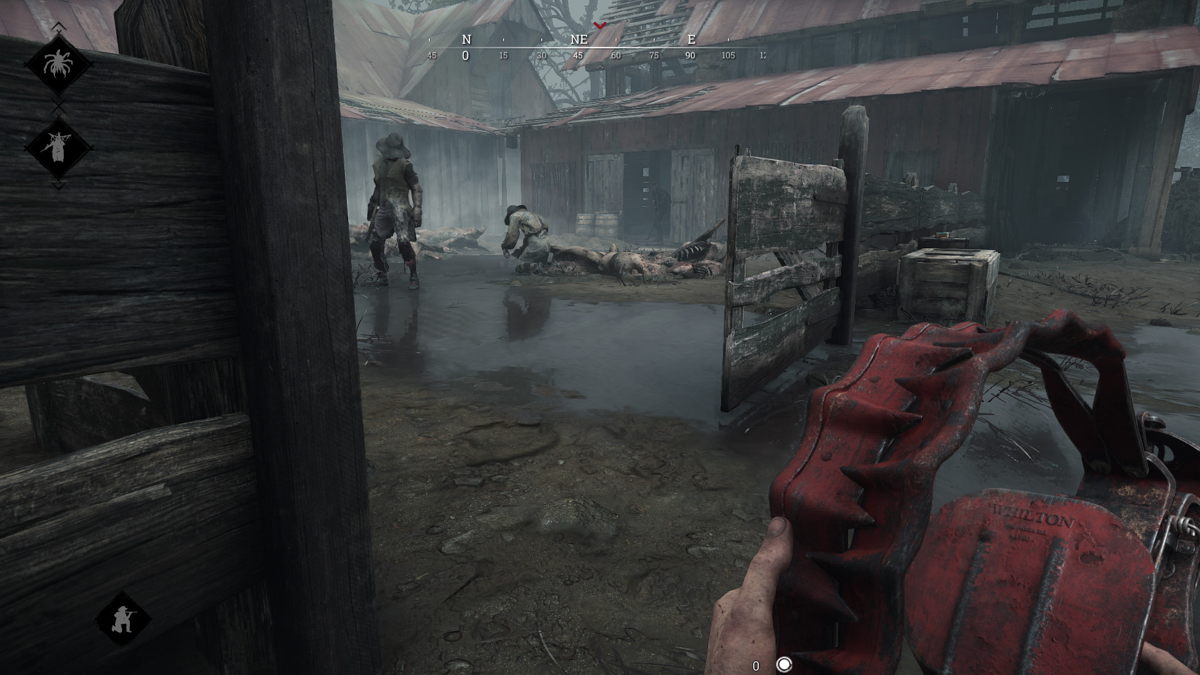
Ed Note: The screenshots in this article are from the Hunt: Showdown press kit. Getting good screenshots of the game is kind of tricky, because any time you’d want to get a screenshot of something cool, it’s usually trying to kill you. With that said, in my opinion, the game doesn’t look as good as its marketing material, but I also don’t care because the gameplay is what sells it.

Today, I’m gonna be talking about Hunt: Showdown, also known as “That Other Game Crytek Made” and “Wait, Crytek Makes More Than Engines?” I like Hunt: Showdown. A week ago Steam said I’d played about 70 hours, and I’ve played another 15 or so since then, so I feel fairly confident in that recommendation.

If I was forced to stuff Hunt: Showdown into a neat little box to characterize it, it would probably go in the “Battle Royale” box, with Fortnite/Warzone/PUBG. You can play with a squad of up to three folks, you want to shoot people, and you start on a massive single map. I don’t think this is entirely fair and accurate, though, because while the general intention of Hunt is similar to those other games (forcing interesting FPS based fights on a massive open map against other players), the way it goes about making this occur is pretty different.

For starters, there is no “looting phase” or “drop phase.” Instead, you create a loadout of items and weapons prior to starting a hunt, and once the hunt begins, you just spawn with your team on a random edge of the map. While you can pick up additional ammo and supplies from caravans around the map, and also other dead players, you don’t get to choose what you get from these, and so you mostly just have to make do with what you brought with you. Generally speaking, you’ll bring things like bolt action rifles, six-shooters, shotguns, and sticks of dynamite.

Also, unlike most Battle Royales, your goal isn’t to wipe out all other players on the map. You can leave more or less whenever you want by getting to an exit point, and waiting out the escape timer. And if you want to save your character (we’ll get into why you might want this in a bit) escaping like this can be the smartest choice.

Behold, the zombies. Stupid, slow, and not a problem until one that you miss stabs you with a meat cleaver.

Instead, the goal of a round of Hunt is to escape with a bounty token, an item that you get from either killing an AI boss monster, or prying it from the from cold dead hands of someone else who did. You locate the boss by picking up clues. Each time you pick up a clue, a section of the minimap gets closed off, letting you know the boss isn’t in that zone. After 3, you’re given the boss’s location.

And this is where things get interesting, because you’ll note I said “Boss.” See, Hunt’s map is fully populated with AI enemies, fairly basic trash mobs. And while these enemies are dumb as bricks, if you’re not careful, or a little too gung-ho, they can easily get you into trouble. Not because they do massive amounts of damage (they don’t) or can kill you quickly (most of them can’t), but because they force you to spend time or ammunition dealing with them.

It’s a spider made out of people! And yes, it looks just as horrifying close up as you might expect.

Okay, so I’m bored of writing about the general mechanics. This is enough to explain the general tension and what makes Hunt: Showdown interesting. In brief, all of the game’s systems are built to force you into fights, and the lower player count means that you only need to win 1-2 of these fights in order to “win” a match. The boss objectives mean that despite starting at different locations, players are funneled together, while the game’s sound design and AI means that if you find yourself using non-silenced weapons against monsters, enemy players can quickly locate you. The bounty mechanic puts a target on your head once you’re trying to escape, but it also gives you dark sight, a very minimalist wallhack sort of thing that lets you spot folks trying to ambush you, and make those end game engagements more even.

The one big thing I haven’t talked about yet is how loadouts and perks work, and while I don’t have too much to say, here’s the five second version:

Your “Hunters” have a level from 1-50, and whenever they successfully extract from a hunt, they get some more experience based on how they did (mob kills, boss kills, bounties, player kills). Each time they level up, they get a skill point that can be used to unlock passive perks, things like walking quieter, taking less damage from falling, that sort of jazz. If your team wipes in a mission, your Hunter is permanently dead, and there’s no way to bring them back, and you lose all the gear they had on them.

Gear is somewhat similar. Various actions during a match will pay out Hunt Dollars, which you use to buy gear. Different types of gear are unlocked as you level up your bloodline, and when you buy hunters they come with some of their own gear.

While you always have access to a pool of Hunters that includes at least one free Hunter to recruit, this free Hunter has random weapons and equipment, and no perks.

And this is one of the reasons you might choose to extract early: saving your gear and Hunter, and living to fight another day. It might not be worth much, but it can take 2-3 successful matches to get a Hunter to the cap, and losing them feels bad.

The end result is a game with some interesting character building systems outside of the actual gameplay, and solid FPS mechanics with a set of much older weapons. For me, the game feels like it’s built in a way to encourage and cause interesting gunfights, as opposed to being shot in the head by someone hiding twelve miles away in a cornfield, or simply losing because you couldn’t find a gun when you dropped.

This doesn’t mean Hunt is flawless. The loading times are incredibly frustrating and long. There are no death cams, just death views, which make it difficult to learn from your deaths, or if the person who killed you was hacking, which it can feel like even if they weren’t. For me, though, these downsides are annoying, but not enough to make the tense gunfights less fun, and the game itself less enjoyable.

Hunt: Showdown is $40 on Steam, and it’s also on PS4/XboxOne, but it looks like there’s no crossplay between consoles and PC. So if you do want to play it with friends, make sure everyone gets it on the same platform.

Chess Evolved Online

Did you ever look at Chess and think “Wow, I really wish Chess was more complicated, and that you could power up your units?” Well boy do I have the game for you.

I think Chess Evolved Online (or CEO as I’ll abbreviate it) is neat. If you like Chess, it’s worth checking out. If you don’t like Chess, you can save yourself the time of reading this article by closing your web browser and doing something else. Okay, lede dealt with. Time for a diatribe.

I write this blog about games at least in part because I consider myself pretty good at them, though in retrospect, “Experienced” might be a better word. I play a lot of games. There are many things that I’m not very experienced with, and so I don’t really comment on them, such as international relations, and agricultural policy. I still have opinions on them, but I don’t think they’re valuable to share.

I mention all of this because CEO has reminded me of something I forgot: I really, really suck at Chess. Or at least I really suck at it relative to people who play Chess at any level of actual competition or play.

I bring this up because after playing 12 hours of CEO, I couldn’t tell you if the game is balanced, or fair, or a good Chess equivalent or what. I could probably play 100 more hours, and I still wouldn’t have a good idea.

So instead of talking too much about that aspect of the game, I’m just gonna quickly list a few of the mechanical innovations CEO makes vs an ordinary Chess game, talk about the game’s meta progression structure and my thoughts on that, and then wrap up with a link to the game. I’m not gonna talk about balance or fairness, or whatnot, because I don’t think I’ll get any of it right. I’m also going to assume anyone reading this knows how Chess is played, and if you don’t, allow me to link you to the Wikipedia page on the game.

I did not win this.

So, new mechanics. Unlike in Chess, CEO has a different set of win/loss conditions: Morale. Each of your pieces has a value associated with it, which as far as I can tell, generally scales to its power/utility. The queen is worth 21 points, a bishop is worth 12, a rook is worth like 13. You get the idea. When your piece gets taken, you lose that much morale. If your morale hits zero, you lose.

Your king, on the other hand, is special. When your king gets taken, you lose an immediate 25 morale, and then an additional 3 morale per turn. The fairly obvious result of this is that while losing your king will eventually lead to a loss, unlike in standard Chess, it’s not an immediate loss. This has some interesting implications, like being able to trade kings, and also ending up in situations where you have to decide if sacrificing your king might be worth it.

The other special factor controlling the game is “move decay.” After turn 50, each player loses 1 morale at the start of their turn. This effectively puts a cap on how long games can go, and also means that in a game of attrition, whichever player can take a take an early advantage is likely to win. As far as I can tell, there are no draws in CEO.

There’s one last big mechanic in CEO: time. I’m not familiar with professional/semi-pro Chess, but a few quick google searches make it look like the game is limited is to about 90 minutes for your first 40 moves or so.

As you might guess, CEO doesn’t really go in for that. Instead CEO has two formats: CEO Blitz and CEO Standard. Standard gives you 30 seconds a move, after which you have a pool of 4:00 minutes. Blitz gives the same 30 seconds but with a pool of 2:00.

The result of all of these changes, at least to me, is the game feels far faster paced and bloodier than standard Chess. At the same time, the fact that losing your king isn’t a loss means that games can turn into brawls far faster than standard Chess.

So, those are the general changes to the game’s structure. Now let’s talk about the army building. Yes, CEO has army building.

There are a few factors that go into army building. The game has two types of pieces: champions and minions. In general terms, you can only place minions in the front row, and only place champions in the back row. Minions are weaker than champions, and usually (but not always) have a promote ability. This is where another interesting change comes into play: pawns always promote to bishops. This opens up some interesting space for weaker minions with stronger promotions.

Pieces also have a supply cost, and your army has to be under your supply limit. You increase said limit by reaching a higher rank. I don’t love this too much, but I’ll talk about why later.

Everything else about the game feels like a fairly unique attempt to fix some of the problems that Chess has. But how you obtain and upgrade pieces for your army feels fairly standard. Because, of course, pieces can be upgraded.

The game has two currencies, gold and gems. You earn gold by playing games, and you earn more by winning. You get gems by either exchanging gold for gems, completing various objectives, or opening random boxes.

Or spending real money.

And this is why I say it feels standard: The game loop becomes a pattern of grinding for currency to either buy units straight up at a in-game shop, or buy random booster boxes of units in the hopes of getting something you want. At the same time, you use duplicate units to upgrade your existing units.

Tell me this doesn’t look like a mobile game UI.

And this is where the game started to annoy me. Perhaps it’s because I’m not great at Chess, but all of a sudden the game starting feeling like a mobile game. I was no longer logging on to build unique armies or try interesting strategies. I was logging in to open daily boxes, playing ranked for currency to try to grind more boxes, and just generally playing the game solely to get more units. Instead of trying to build unique armies and innovate, I played the standard Chess army because I was more familiar with it, and I cared more about winning than experimenting.

Now, if I was better at Chess, this might not be true. Perhaps if I was a stronger player, I would find it easier to win, and as such be more interested in some of the other systems that make up the game. As it was, though, I ended up feeling like I wasn’t playing for fun, or to use the game’s unique systems, but to just grind to get more pieces. And this is where I stopped playing.

In summary, CEO’s actual gameplay containes a bunch of massive changes to the core structure of Chess, to try to make it more exciting and interesting, while also speeding up the pace of the game. But the meta-progression structure that exists around the gameplay feels like a standard mobile game, and it feels bad. If you end up matched against AI or players with higher ranking than yourself, in addition to likely being better at the game than you, they also have a larger supply pool to pay for their army. Even if you’re both playing identical armies, if they’ve upgraded their pieces, they have access to options and moves you don’t.

And that doesn’t feel great. And while I suspect that the actual mechanics of things like supply/value on units are probably balanced, it still feels bad to get decimated by someone with a unit you just don’t have.

Ed Note: The poster child for this particular experience is the ninja, a unit that feels like a knight on steroids, with the ability to take pieces in all directions that are adjacent, while also having a unblockable jump.

This just feels like bullshit.

Chess Evolved Online is free on Steam, with in-app purchases to buy additional rubies, which in turn get spent on buying units/random booster boxes of units. The game makes a bunch of really interesting mechanical changes to the base game of Chess, but it makes them parallel to a meta-progression structure that, for me, made the game feel like a grind. I still think it’s interesting enough that folks should check it out, but I feel like without a strong interest or background in Chess, you might end up having a similar experience to me.

Legion TD 2

The gameplay is really interesting, even if everything else is a bit lackluster.

I like Legion TD 2. As of writing, I’ve played about 84 hours of it, and I haven’t quite burned myself out yet.

Ed Note: In the time between starting writing this article, and finishing this article, that number has moved up to 120.

Legion TD 2 is a sequel to Legion TD in the same way that Dota 2 is a sequel to DotA, which is to say that it isn’t. If that last sentence didn’t make any sense to you, I can put it a different way: “Legion TD 2 is a remake of Legion TD in a new engine, as a standalone game, with better graphics and support.” So if you’ve ever played the Warcraft 3 mod that was its predecessor you already know the structure of the game.

If you haven’t, here’s a quick crash course in the general flow and structure of the game.

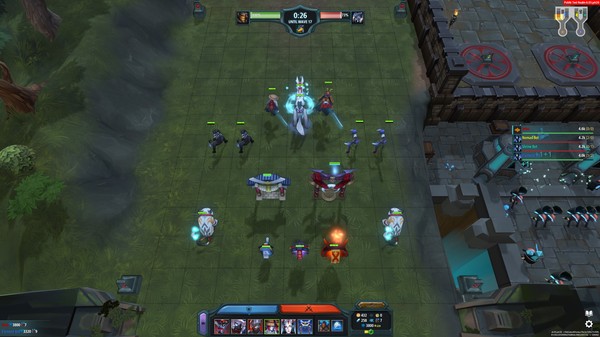
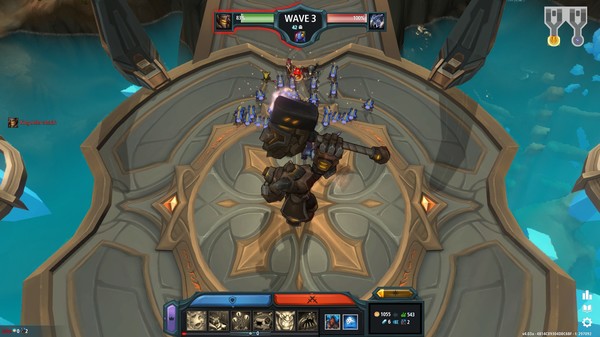
Legion TD 2 is a competitive unit placement/builder. It’s not really a typical tower defense, at least in the standard way of thinking about things. Instead, you spend gold to place and upgrade units onto a grid, before each wave. At the start of each wave, your placed units turn into actual units, and go to fight the incoming wave of units. Units have a damage type, an armor type, and the game has a somewhat Pokemon style matchup for what beats what. So in order to do well, you need to know in advance what wave you’ll be facing.

If all your units get killed, the remaining enemy attackers go and fight any units that your teammates might have had remaining after clearing their own set of waves, and then go and attack your king. If your king runs out of health, the game is over and your lose. If your opponents’ king runs out of health, you win.

There are two big things I haven’t mentioned yet that provide a lot of the meat of the game. First off, the units you can build in any given match are semi-random for that given match. So unlike most other tower defense games you can’t just make a perfect build and roll with it; you have to be able to look at your choices, and make judgements about what you’ll need, and when you’ll need them.

The second is a mechanic called sending.

Sending is when you spend a resource to add additional units to an enemy wave that is attacking one of your opponents. The resource in question is called mythium, and you get it over time based on the number of workers you have. Workers cost gold, the same resource you use to buy and upgrade units, which means money spent on getting workers is money that isn’t spent on upgrading your actual defensive line. Sending also gives you permanent gold income based on the units you sent to attack, so holding all your mythium just to blow it at once can actually end up costing you money.

There are a few other mechanics I won’t go into too much right now, but this is the general gameplay a match of Legion TD 2. The game is about keeping a balance between investment and long term economy. On waves when your units are having a bad matchup, you might need to commit more to building up your forces, and on waves where you’re strong, you choose to sink money into workers instead.

At the same time, you’ll be trying to read your opponents’ builds, and make guesses about when they’ll be weak, or when they’ll decide to apply pressure. If I have any gripes with game, it would be that once you fall behind, it can feel very difficult to fight your way back in. There just aren’t any comeback mechanics. “Leaking,” or allowing waves of attackers to get your king, means you’ll have less gold to work with for future waves. As a result you can end up in a situation where if you overspend on building units, you can’t scale in the long term, but if you don’t build enough units, you just die.

Legion TD 2 appeals to me in the same way that a game like Dota does. Like Dota, in Legion TD 2 you play the game in short matches, and over a match, you feel the fun power curve of playing a longer RPG or tower defense game. It feels fun to finish and build up some of the bigger towers, and to watch them wreck incoming waves, at least for a bit. At the same time, there isn’t really any out-of-match progression. Each match you restart at nothing, and go through the whole process again. The main power progression lies in learning about mechanics and edge cases, trying different strategies, and just generally improving bit by bit.

Legion TD 2 is surprisingly relaxed for a fairly competitive game. You can’t exactly play it and do something else at the same time, but as far as games go, it doesn’t require require massive amounts of micro or clicky clicky. Instead, it just requires focus, and a bit of patience. It’s far more mellow than something like Underlords or TFT.

At this point I’ve played a lot of Legion TD 2, and while I really like it, it’s not going to be to everyone’s tastes. It’s highly competitive, and while the toxicity isn’t as bad as what I’ve seen in other online games, it is present. Everything that isn’t the gameplay is fairly underwhelming, with art and music that feels very “generic fantasy.” But the mind games and push-and-pull resource management are unique—if what you’ve read interests you, and you have $20 to spare, I’d encourage you to check it out.

Click to go to the Steam Page!