Loop Hero

Whelp, this is gonna hurt.

Ed Note: We received a review copy of Loop Hero prior to release. The only condition we were given was not to release the review until after the embargo for the game.

So I mentioned a while back that I was gonna try to get a copy of Loop Hero to review. And to my surprise, the whole thing actually sorta worked. I’ve been playing it for just under about two weeks at this point. And right now I wouldn’t recommend it.

That probably sounds kind of strange, so let me give a little bit of context here: I’ve played about 30 hours of Loop Hero. After about hour 25, I said “Fuck It” and modified a few configuration files to give myself effectively infinite resources, bought out the rest of the tech tree, and went back to playing the game.

So when I say I wouldn’t recommend Loop Hero, it’s not that I haven’t had a good time with various parts of the game. The opening few hours from the demo were very good, enough to make me want to get the game. The last few hours after cheated to unlock everything were also much better.

The middle 25 hours were one of the most painful, grindy slogs I’ve ever tried to push through, and I ultimately gave up, and cheated. I would not have even tried to power through them if I hadn’t been given a review copy, and felt like in order to actually write a review, I needed to see the entire game. I would have just uninstalled the game, and called it a day.

So let’s talk about the game’s mechanics a bit, in order to explain why I struggled to enjoy myself.

I’ve seen Loop Hero described a lot of different ways, including: idle game, auto-battler, and rougelite. I’m not sure any of these labels quite sticks for me, but it is a game where combat happens automatically, and you as the player don’t have any input over what your character actually does.

What Loop Hero does give you input on is the items your character wears, and the the world they travel through.

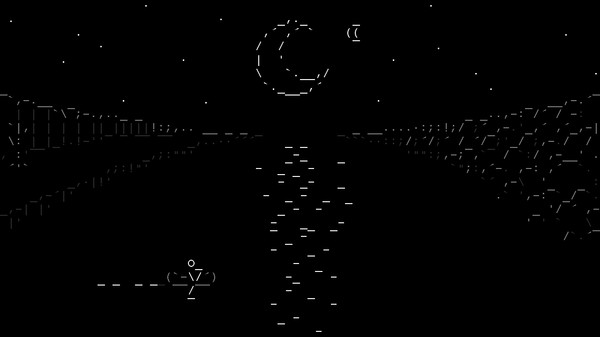
As the name might suggest, a Loop Hero run consists of, well…. loops. Each run starts with a blank world map, as pictured below.

And as a run proceeds, you’ll get two types of drops from enemies. Gear, which works exactly how you think it would, and cards.

We’ll quickly talk about gear first. Characters have a limited number of gear slots, and the three classes each use slightly different types of gear, with a few things in common. This doesn’t actually matter, because once a run starts you’ll only get gear that you can equip.

All in all, there isn’t anything in the gear that feels super special or innovative. It isn’t bad, by any sense, it’s just nothing that you haven’t seen if you’ve played an ARPG before. Vamp, attack speed, crit chance, crit damage, etc. Higher rarity gear has additional stat rolls, again, much like a traditional ARPG. Unlike a traditional ARPG, once you put a piece of gear on, you cannot take it off, and any new piece of gear replaces it.

One of my few minor gripes with the game has to do with the fact that the UI display for gear isn’t fantastic, and it isn’t additive. This is fairly minor though, and not actually a big deal.

My second gripe with gear is that as far as I can tell, it’s completely random. I couldn’t find a way to influence the rolls that I got, and as such, it turns into a crap shoot. You either get gear with stats you want, or you don’t. A string of bad luck early can absolutely ruin a run, even if you make all the right decisions, and it’s one of the things that makes the game feel like less of a rougelite to me. So since you can’t influence gear, the extent to which you can do anything with it is just making quick judgement calls on if you should swap your current gear for something new.

So let’s talk about the part of the game you have a bit more influence on: the cards that make up the map.

Cards are (mostly) all from a pool that you choose beforehand. This is the deckbuilding aspect of the game.

Of the different categories, you’re required to have at least a certain amount of cards selected. And while this is purely a guess from my side, it at least feels like the cards have different drop rates.

Individual cards have rules about their placement and effects. I want to look at two cards, the Mountain and the Grove, as examples.

The Mountain is a fairly straightforward card. The more you play of them, the more HP your hero gets. One thing the mountain also does that the game does not tell you, is that after you play 10 mountains or rocks, it will spawn in a goblin camp at a random location near the road. So, after you’ve played 9 mountains, you may want to reconsider playing a 10th unless you want to add another problem to the map for yourself. In addition, you can only play the mountain on spaces at least two places away from the road.

The Grove is even simpler. Every 2 in-game days that pass, the Grove will spawn a Ratwolf enemy, which will either stay on its current tile, or move left or right. It can only be placed on the road.

Now how do these cards interact with each other?

Well, uh. Actually, they don’t.

In fact, a surprising number of the cards in the game don’t interact with each other, or at least don’t interact in interesting ways. And this brings me to my first big problem with the game: Basic Terrain Tile configuration isn’t actually all that interesting or exciting. At the same time, it’s what you’ll be spending a majority of a run doing.

The game has about 26 cards to build your deck , and almost none of them interact with each other in particularly interesting ways. In fact, only one of them really has a large number of interesting interactions: the River card. It’s also one of the very last things you’ll get access to.

And I think this is my primary problem with the game: the “Loop” of Loop Hero isn’t one of interesting runs, where you have to solve tile placement puzzles. It’s a game of perpetual grind, where you make tiny amounts of incremental progress via upgrades, gear and other small stuff, while hoping this is the run where you get the gear you need to kill the boss.

I have some other gripes with the game as well, but they’re ultimately much smaller things, and changing them wouldn’t change how I feel about the game.

There are a lot of good things about Loop Hero. The art is gorgeous, the game has a bunch of text display options, including a dyslexic setting, and the soundtrack is solid.

The core gameplay, though, of a roguelike auto-battler never really clicked for me. The game felt far more like an idle game by the very end. And that’s not what I was hoping for from the demo. I was hoping for a different type of roguelite, one where you build the world instead of just fight it, a game where learning about the interplay of mechanics, and not just farming and numbers was the key to success. And while Loop Hero might be one of the more complex idle games out there, it’s not quite the roguelite I was hoping for.

Loop Hero is available here on Steam. I should mention that at time of writing, the game has been rated “Overwhelmingly Positive” by other people who’ve played it. So I may just be the odd-man out here. But right now, unless you’re looking for an idle game, I wouldn’t recommend it.

Stone Story RPG

Stone Story RPG is great, with some really neat mechanics, but it ends a too abruptly.

Disclaimer: Photos of this game are from the Steam Page, as I was having some issues getting photos in game without spoilers. I highly, highly doubt this will bother anyone, but just putting it out there.

Overall, I like Stone Story RPG. I had fun with it. It does a bunch of really neat stuff I haven’t seen a game do before. At the same time, though, after around 40 hours in game and 10-15 hours played, I think I’m done with it for the moment. So let’s talk about why I like it, why I’m done with it for the moment, and what it would take for me to come back.

Stone Story RPG is kinda hard to pinpoint genre-wise, but I’d say it shares the most in common with idle games. However, I think calling it an idle game would be inaccurate. While you can get to the point where you run the game in the background or even play with the game closed, it doesn’t really utilize what I’d consider to be two of the big mechanics of idle games: restarting the game to go faster, and logarithmic scaling of difficultly clicky numbers. Fundamentally, the game mostly feels like it respects your time. There are a few instances where it doesn’t, but they’re super minor, and we’ll get to them later.

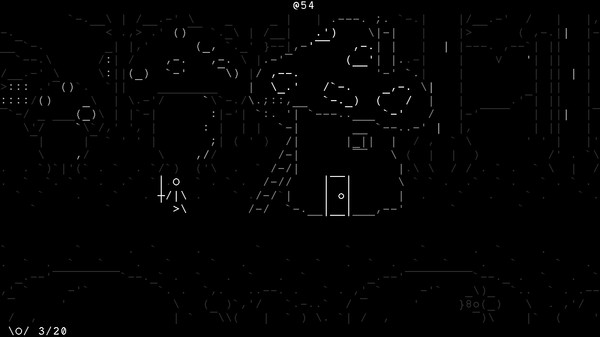
Stone Story has two main sections to playing the game. One is effectively the hub menu, where you craft items, select areas to visit, and do… other stuff. More on that in a bit. Then there are the locations you visit, and these are the actual meat of the game. Once you enter a location, your little dude proceeds forward, fighting enemies until they either get to the end of the area, or die. When you first play a location, your goal will be fairly straightforward: get to the end, kill the boss, and collect one of the titular stones that Stone Story is named for.

I want to talk about those stones now, and as such, from this point on, this review is going to tread into spoiler territory. You have been warned. If you want to experience what Stone Story RPG has to offer on your own, now would be the ideal time to turn back, buy the game, and play yourself.

Go! Be free!~

So lets talk about the Stones. I’m giving them a capital S to emphasize their importance, and also to differentiate them from stones which you just pick up off the ground. There are quite a few of them, and they do far more then the average McGuffin, with each one generally either unlocking an additional system to use, or having some sort of property when held as an active item, or both.

So why are we talking about the Stones under spoilers? Well, some of them fundamentally change how you play the game, along with one other item that you craft. These are the Utility Belt, the Orobourous Stone, and the Mind Stone.

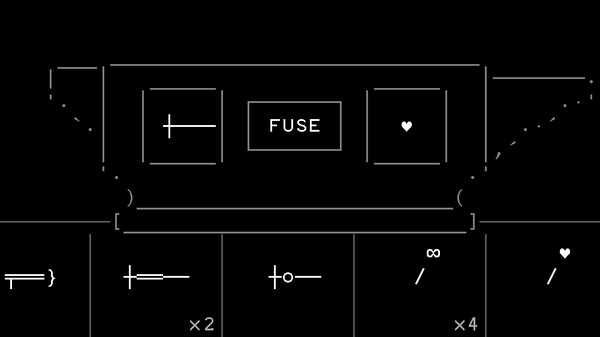
The Utility Belt isn’t a Stone, but once you craft it, you’ll unlock the primary meat of the moment to moment gameplay of running levels. Prior to crafting the pouch, you can only bring in a single set of items, a left hand and right hand slot. Once you unlock the pouch, you can bring in up to 10, binding them to the 1-10 keys, and switching between them whenever you please. This becomes necessary very quickly, as taking advantage of elemental matchups on your weapons is required at higher difficulties, and each item in the game serves a different purpose. Wands can do splash damage to clear packs. Hammers shred armor. Shields give you what amounts to slowly regenerating HP, and crossbows let you shred threats before they get close. And that’s before discussing the other aspects of crafting.

Later, you’ll get the Ouroboros Stone. This Stone makes it so that when you complete a level you’ve beaten before, the level loops around again. You’ll keep your current HP, but everything else will be reset, meaning that if you can create a build that can clear a level without taking damage, you can just loop and farm them to your heart’s content. Now it probably sounds like this would work badly with the above system where you have to actively monitor and switch items all the time. And it will. For a little bit.

And then you’ll get the Mind Stone, at which point the entire game cracks wide open. You see, the Mind Stone unlocks a scripting language.

No, really. Here’s the documentation and here’s the tutorial.

Ed Note: You can just skip these next few paragraphs if you know how to program or know the difference between high and low level programing languages. The writer got a bit too enthusiastic with this section, and I simply don’t have the heart to cut the entire bit. TLDR: high level does NOT mean complex. They actually tend to be simpler a lot of a time. So don’t be scared off by the idea of writing code.

If you’re not familiar with programming or terms used to describe programing languages, either because you’re a luddite who fears the future and lives under a rock, or your a strong independent person who thinks that maybe the precious gift of life should be spent on something other then sitting in a chair, moving their fingers, and staring at a glowing rectangle then:

1. Why are you on this blog?

2. Here’s a brief summary of what is meant by high vs low level. It’s a bit counterintuitive.

Generally speaking, low level programing languages refer to languages that operate closer to the machine. These languages require you to do things like be very specific with defining logical types, allocating memory, and other stuff.

High level languages tend to hide all of that, and just require you to understand general logical operations.

Ed Note: We now return you to your regularly scheduled writing about video games.

This is where the game really starts to open up. With Stonescript via the Mind Stone, you now have the ability to write switching macros, activate potions and items, and just generally speaking automate the game to play itself, and to do so with a level of skill that a human player cannot.

This is where I think a large majority of my time spent “playing” Stone Story RPG was actually spent: in running the game in the background to farm areas and zones, while planning out how to automate and script the other zones of the game in a text editor. It’s also where a large number of the game’s systems finally come together: the crafting, grinding, and planning. Tweaking levels until you get your clear script working exactly as you want is very satisfying. Many of the bosses also have gimmicks or cheesy strats that can be discovered, and are easy to exploit when you control things manually, but can be much harder to script around.

And this is where I just ran out of things to do. The game has a story that I was surprisingly curious about by the end, as it’s primarily told in snippets of lore on descriptions of various boss monsters you fight. But the story “ends” right at a point that feels like it would be about to really kick into higher gear. For a world made purely of ASCII, I’m incredibly curious to learn more about it, but when I learned there wasn’t much else to do but farm and craft items, I lost interest. It’s not that the systems are bad, but by the time I had seen all of them, I was more curious about seeing new content, and subversions of various mechanics to try to program around, than I was about farming harder versions of the same areas.

Now, the game is still being updated, and the developer did say on Discord they’re planning a story expansion at some point in the future. But until then, I think I’m done with Stone Story RPG. I’ve beaten what it has to offer, and I’m more curious about the world the game takes place in than I am in a pattern of farming, optimizing, and farming again.

Stone Story RPG is available on Steam. It’s like $20. I liked it. Perhaps you will too.

P.S. If you do, here’s a link to my script that I wrote for the game, designed to farm a few of the first few levels. Sharing is caring after all.

Beglitched

A really good puzzle game with some twists on match 3 gameplay I’ve never seen before.

Ed Note: I did my best to take screenshots that don’t give anything about the game away, but some of the screenshots below might give small peeks at things that aren’t immediately obvious. If you want to avoid spoilers at all costs, just know that Beglitched is good, you can buy it here on Steam, or here on itch.io, and you should play it.

Does anyone else miss the adorable little bootup faces on really old macs? Or is that just me?

Beglitched might be the first real piece of gold I’ve personally found in the itch.io Racial Justice Bundle. The bundle has a ton of other great stuff in it as well, like Celeste, or Quadrilateral Cowboy. And there’s others as well. But it’s the first really good one that no one else had mentioned to me or told me about beforehand, which at least to me makes it the first real “Find” in the bundle of games. So let’s boot up our OS/HEX and talk about why that is.

Beglitched’s Level Select screen. And sorta inventory management screen. And other things.

So why do I like Beglitched so much? The game is a really unique sort of puzzler. While I’ve seen some of the game mechanics before, Beglitched uses those mechanics to do something pretty different by breaking a few of the key rules about how those mechanics usually play out. We’ll talk about that more in a second, but first let’s talk about how playing through a level in Beglitched works.

The little egg icons, for example, indicate that there are 3 small scramblers connected to the block our little cat is on.

There are two main sections to most Beglitched levels, or as the game calls them, “networks.” Each section of a network consists of a bunch of linked machines, as seen above, and plays out like a combo of Minesweeper and RPG exploration. Each computer displays a set of symbols which tells you what is in the computers next to it. Your goal in most cases is to make it to the end of the network by finding the computer with the exit doors, and logging in. However, you can log into the other computers too. They can give you extra resources, like money or health, or also just blow you up a bit, a la Minesweeper. And sometimes, they’re hiding extra enemies. So what happens when you run into these enemies? Well, then it’s time for combat.

I don’t know if the elephants are some sort of elaborate computer pun or something. I don’t think they are? They’re like… the most basic enemy in the game.

Combat in Beglitched is done via a match 3 style grid. Unlike many other match 3 games, however, every single type of shape on your grid has a different property. Some are fairly obvious, like the green cubes that give money, or batteries that give you energy. Where things get interesting is how you actually damage an opponent.

Most enemy hackers have fairly low HP, and only take one or two hits to defeat. The issue is that unlike many other match 3 games that use the size of your combos to do damage, in Beglitched you do damage by detonating bomb squares. The enemy hacker hides somewhere on your board, and you have to activate the compass squares and pink cycle squares to get information about where they’re hiding. So not only do you have to find your enemy, you then need to actually get a bomb sector over, and to detonate it. And each move you make takes cycles, and when that hits zero, the enemy gets to take an action. Most attack you and do something else, but some have their own specialties.

The one other big thing about Beglitched that I haven’t previously seen in a match 3 game is how it handles your board state at the end of a fight. When you defeat an enemy, your board doesn’t reset. Instead, the location of any tiles remain, and can be used in the next fight. It’s also worth noting that some of the better combo pieces, like blue compass sectors, are actually re-usable.

And the game plays into this. It actively encourages you to use weaker enemies to set up to beat tougher enemies by prepping compasses, bomb sectors, and farming money. It’s a fairly unique twist that can mean beating an enemy as fast as possible may not actually be the best move.

In addition, Beglitched is more than happy to subvert and play with these mechanics, and does so through almost every single one of its levels. Every time I thought I had the game solved, Beglitched pulled out another clever twist or trick for me to contend with.

I think this is one of the things it does best, and the reason I’m not talking more about it here is that these moments are best experienced fresh. I don’t want to spoil them.

Beyond the mechanics, Beglitched does almost everything incredibly well. It has a unique and interesting narrative that I actually ended up fairly curious about, and presentation and art is great. The only big gripe I have with the game is the audio, and it’s not even the audio itself. My problem lies in the lack of any sort of audio/options menu. The default audio is incredibly loud, and as such I ended up playing most of the game with it muted.

Beglitched is really good, and on occasion, really hard. It’s a puzzle game with excellent mechanics, and willingness to subvert them and tweak them into interesting challenges, without ever really going too far, or asking you to do the impossible. Other than my minor gripe about the lack of audio settings and sound, it has virtually no flaws. If you bought the itch.io racial justice bundle, you should play it. If you didn’t buy the bundle and like puzzle games or a challenge, you should pick it up anyway.

Sea of Thieves

While suffering from some flaws, Sea of Thieves is also an incredibly fun co-op game.

I really like Sea of Thieves. I’ve been playing it at least every other day for the last few weeks. Usually, I’d have no problem recommending something I like this much or have played this much, but Sea of Thieves is special and so I have some caveats attached to that recommendation. Or perhaps it might make sense to think of them as warnings. I’ll go into them in more detail in a bit, but here they are in short.

Sea of Thieves isn’t an MMO, it’s a playground. I’ll write more in depth on this later, but the game has no in-game mechanical progression. I think it’s easy to look at this and see a bad thing, especially if you’re used to having leveling and progression systems that make the game easier for you as time goes on. The positive side to having no mechanical progression is that you will always be mechanically equal with your friends, no matter who has played the most. Someone who has never played before can jump in, and be a contributing member of your crew from minute one. The only increase in “Power” that you get is a more solid understanding of the game’s mechanics and systems.

Multiplayer is more or less required, friends are best, randos can be passable, but playing solo is an exercise in frustration. There are a set of people who do a thing called Solo-Slooping, but I think for most of us, the joy of the game is doing stuff with your friends. Outrunning the Kraken, fighting off ghost ships, and booking around an island to dig up treasure are all things that are best done with other people, and the game’s mechanics actively encourage you to play with others. As just a quick example, almost every ship outside of the two player ship has the capstan (boat thing used to drop the anchor) fairly far from the steering wheel, so good luck docking your boat at the dock without multiple people. The way the sails work means that in fights, you’ll want to be constantly changing them to actually get your boat where you want it, and not crash into things. Same for firing cannons, fixing the boat, and more or less every other mechanic.

Finally, the game isn’t super cheap. Most of the folks I’m playing it with got it at $20 on a Steam sale, but that’s still a hefty chunk of change. This might be a bit less of a deal breaker for the anyone with a Windows 10 PC, since you can get Gamepass for PC for like $5 a month, and a month of playing Sea of Thieves is most likely enough for you to figure out if you like the game or not. I debated keeping this section, but I still think it’s worth the callout.

Ed note: The game does have cosmetic microtransactions, and at time of writing, apparently will be adding a battlepass system in it’s next update. I have mixed feelings about this, since a friend already got me the game for $40 as a Christmas present, and cosmetics are the only thing to actually spend in game gold and doubloons on.

Okay, here’s the thing: I love the moment-to-moment gameplay of Sea of Thieves, and if that’s the case, why did I feel the need to put three paragraphs of warnings ending in “Here there be Microtransactions?”

Well, it’s for two reasons. I do love the game, but I suspect there are a fair number of people who won’t, for one or more reasons. I don’t think these categorizations of people who play games are hugely accurate, but I still want to toss them out there for a moment: if you’re the sort of person who plays games in a fairly “hardcore” manner, min-maxing, following meta guides, and going for every inch of DPS you can get, I’m not sure there’s much in Sea of Thieves for you. The only things you get are cosmetics, the “optimal” gold/time quests are fairly dull, and large portions of the game if you look at them from the standpoint of “How much progression does this get me?” are purely grind. On the flip side, Sea of Thieves is not a “Casual” game, but for a different set of reasons: play sessions in which you actually get stuff done can amount to several hours in length, the game can be brutally punishing and wipe out those invested hours quite easily if you get a bit unlucky or stop paying attention, and of course, there’s always the chance to end up in a PvP situation and just getting blown to smithereens.

So why do I play it? Simple: I find it fun. I talked about Sea of Thieves as a playground up above. What I mean by that is Sea of Thieves is primarily a place to be, and a place to play above all else. Everything about it is designed to function in that way, and I can’t actually think of any other games that provide that experience. The fact that everyone is on equal footing each time you log in means that no matter how experienced you are, your friends can always join in and contribute. There’s no DPS checks, no being carried through raids, no dodging queues.

I do have one last gripe though: The fact that you can’t change ship size, which is effectively player party count without remaking your party is a complete bummer. I would really like them to change that. I won’t stop playing if they don’t, but if there was a way to change ship size, it would be a massive improvement.

While the hand to hand combat for both PvP and PvE is clunky, I really enjoy almost every other moment of the game. The clunk of hitting a treasure chest with your shovel is awesome. Working with friends to run around an island working on a riddle is great. The tension and relief of running vaults, and looting them is fantastic, and boat combat is mostly solid.

Like a playground, though, you will occasionally get knocked down and bullied. It’s an unfortunate part of the experience. In terms of pure, primal frustration and rage, Sea of Thieves made me feel a way I hadn’t in quite a while, and when that happened, I had to take a break from playing for a bit. But after that break, I was ready to return. The game is just enjoyable.

Fighting megalodons, trying to outrun other players, and looting bosses are all fun. Like I said above, Sea of Thieves is a playground, and as such it’s more than the sum of its parts. It’s not just treasure hunting, or riddles, or cargo delivery, it’s all the small moments that make up doing those things, from having someone stand lookout, to having one person call out directions, while another steers, and a third person tries to keep you from crashing into the rocks. It’s a place to be together with other people, and enjoy their company, and do things with them. To cook shark, to play silly songs, and to generally mess with each other.

And to Sail Together

Pummel Party

Mario Party minus bullshit. It’ll still make you rage at your friends, though.

Ed Note: I grabbed the images for this article mostly from the Steam Page. I doubt this will ever be an issue, but I do like to make sure people are aware of the differences between images I take, and stuff that is effectively marketing material.

It’s easy to look at Pummel Party and think “Oh, it’s a Mario Party clone, but for PC.” But while Pummel Party does feel heavily inspired by Mario Party, after playing quite a bit, I think it’s actually a much better game. With that said, just like Mario Party, you will need friends to play it with, because playing Mario Party by yourself is incredibly sad. So let’s talk about why Pummel Party is good, and why it doesn’t feel like the 50 minute exercise in coin flipping that is Mario Party. Oh, and it supports up to eight players, instead of just four.

So, first let’s talk about the general structure of the game. If you’ve played Mario Party before, you already know most of this, so you can skip this paragraph.

All players are placed on a large board, and a game consists of a series of rounds. During each round, players can choose to use an item if they have one, then they roll a die to move across the board. Based on where you end your turn, you might get items, coins, or some sort of special event might happen. After everyone has taken a turn, players play a mini-game of some kind, and are rewarded with currency. Currency (Coins/Keys) can be spent to buy victory points (Goblets/Stars), but they can only be purchased by reaching specific areas on the board. Whoever has the most victory points after a given number of rounds, or reaches a threshold first ends the game, and is (probably) the winner.

Okay, boring introductory stuff out of the way. Let’s get into the big differences between the two, and talk about the idea of player agency for a bit.

The biggest things that Pummel Party adds to this formula are a second stat called health, better items, and different turn order mechanics. Lets start with those turn order mechanics shall we?

In Pummel Party, turn order is decided each round by placement in the last round of mini-games. Winners go first, losers go last. This is important because it means that actually being good at the mini-games is important. If two players are neck in neck trying to reach a Goblet, whoever wins the mini-game is likely to reach it first, as they get to move first. In addition, doing well in mini-games rewards items, which are far more useful for interacting with other players than anything in Mario Party.

So let’s talk about those items and health. Health is a secondary stat that caps out. If it hits zero, you lose 30% of your currency (according to patch notes) and get placed back at a graveyard. You might lose health because you ended on a damage spot, or another player’s Reaper Spot (TLDR: First person to touch them chooses either health or keys. Every player who steps on them after that loses that resource, and it’s sent to the spot claimer). More likely though, you’ll lose health because another player has opted to pull out a shotgun and blast you in the face. It’s one of those items that you can get for winning mini-games, or by picking it up from the map.

The big thing here for me is that in Pummel Party, you actually have the ability to stop someone who is starting to cruise their way to victory. You can team up in mini-games, you can work together to drop wrecking balls onto their head, or you can just blast them with a cross map orbital laser. Winning mini-games lets you pull ahead and act first, before your opponents can take action, and losing means you have less resources.

Okay, so now that I’ve sung the game’s praises, lets talk about the elephant in the room: the mini-games.

Some of the mini-games are very good.

Some are okay.

And some are just not fun.

While the game does let you turn off mini-games you don’t want to play before the game start screen, it’s undeniable that some of these games are just… garbage. There are also quite a few that seem to give host advantage, and others that feel buggy or glitchy. (Looking at you, laser train game.)

This doesn’t bother me enough to stop playing Pummel Party, but it does mean that I usually want to actually play the board game mode instead of just mini-games.