Tag: VideoGamesWeLike

  • Prinny: Can I Really Be The Hero?

    Ed Note: Images are from theSwitch re-release press kit.

    “Prinny: Can I Really Be the Hero?” was re-released for Switch back in 2020, after originally being released on PSP. It’s a game that I first played on a whim, but grew to love and play religiously. And what with this being Disgaea Week, I figured now is as good a time as any to talk about it.

    I was still in high school when I heard about its release, and while I thought the animation looked good, and the gameplay seemed cool, I knew nothing about the Disgaea series. Still, I grabbed it anyway, and on a cold day after class while waiting for the bus, a friend passed me his PSP and I was off on a journey where I learned the most important lesson in life: “Gotta be smart, dood!” 

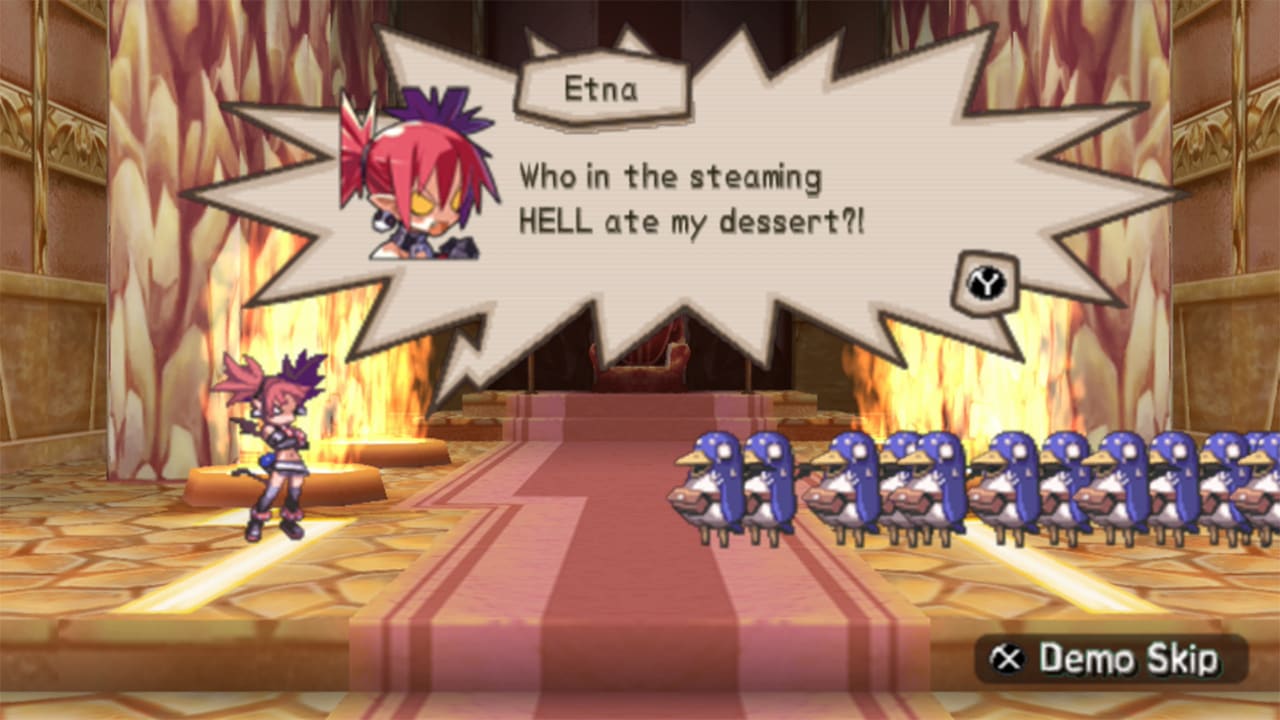
    Starting the game, you’re introduced to our expandable super cool hero, the Prinny, a penguin-shaped husk that houses the spirit of a criminal sentenced to hell. After a quick meeting with your master, Demon Lord Eta, you’re told someone ate her Ultra Dessert and that unless you and your fellow Prinnies get her a new one, you’re all dead. With this promise of an asskicking should you fail, Etna gives you a magical scarf, and it’s off to the races.

    Take three hits, and it’s the end of the line dood!

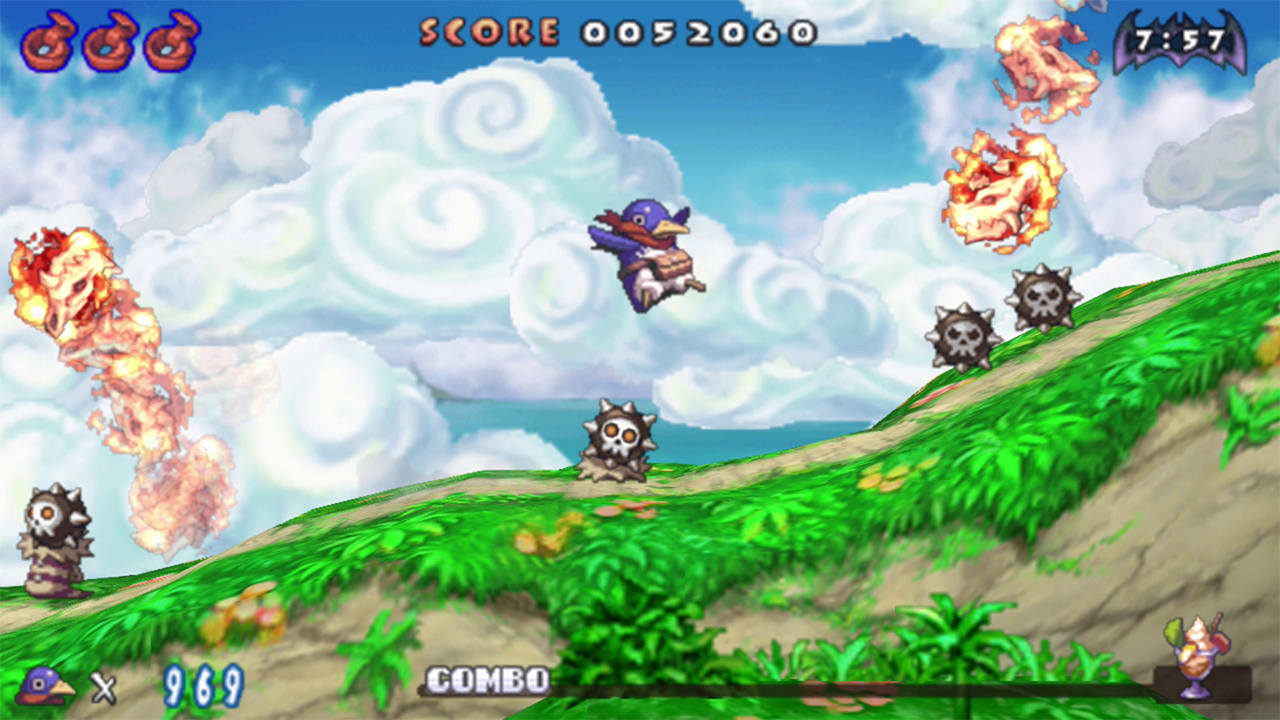
     Once the story begins your UI shows you the main helpful info: your scarves, combo bar, points, a timer, and the total number of Prinnies left. The UI’s not overwhelming when playing and all of the elements are spaced out nicely, so you never have a moment where the action is covered or blocked. The game has a very roguelike feel considering how your Prinny can take three hits, and then they’re gone.

    1000 Prinnies might seem like a lot, but they disappear quickly and watching the life counter in the bottom left adds a very fun sense of impending doom. I’ve always been a fan of watching the counter go down as I struggle, getting closer and closer towards the end but also getting better and better, learning boss and enemy mechanics.

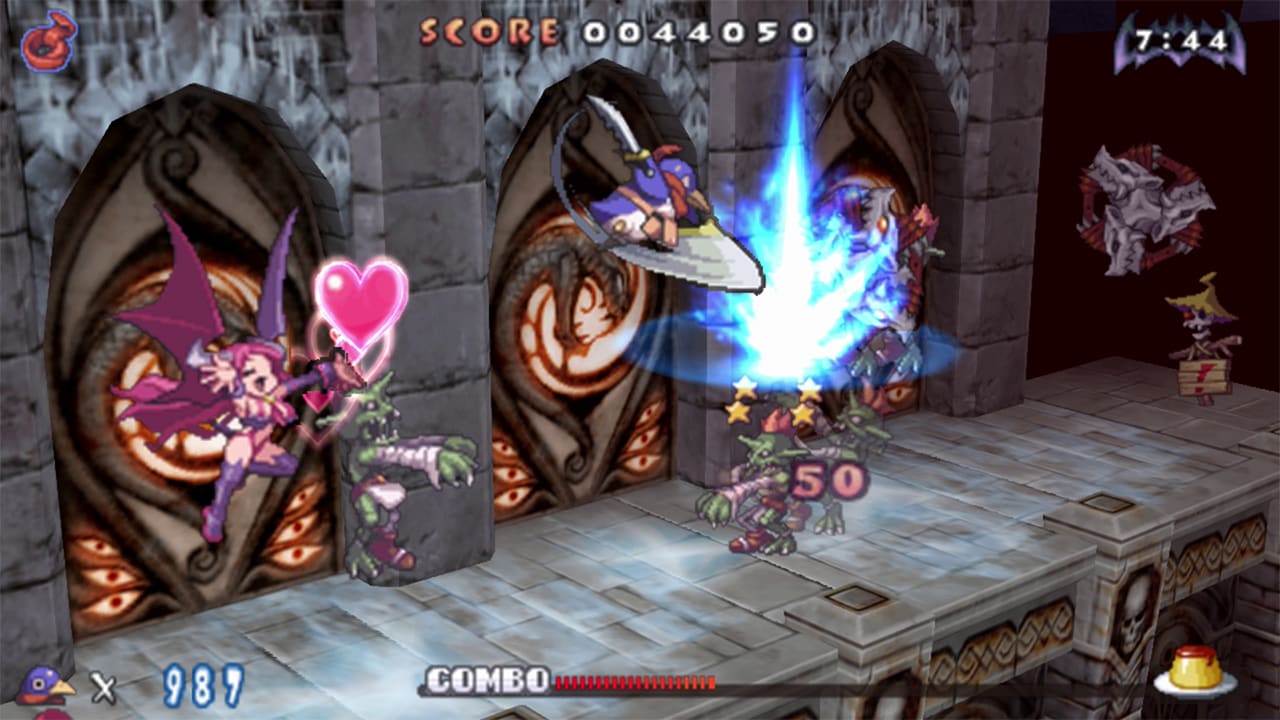
    Overall, the game is a very snappy side scrolling platformer, and it feels great; there are only rare moments where I felt like a death was due to confusing level design or weird controls. One thing to note is that the game changes perspective when you do an air attack from 2d to a pseudo-3d. This can be awkward at first, but once you get used to the perspective shift it can be helpful for platforming or trying to find hidden areas. 

    For combat, your character has a ground slam attack and a sword slice that can be used at short range. The slash attack can be used on the ground or in the air which will cause your Prinny to float while the attack is active. 

    Combat is simple and honestly that’s what I loved about the game. Prinnies are supposed to be a weak throw-away characters, and while they are (sorta) the hero of this story, you can tell they’re not traditional overpowered protagonists. 

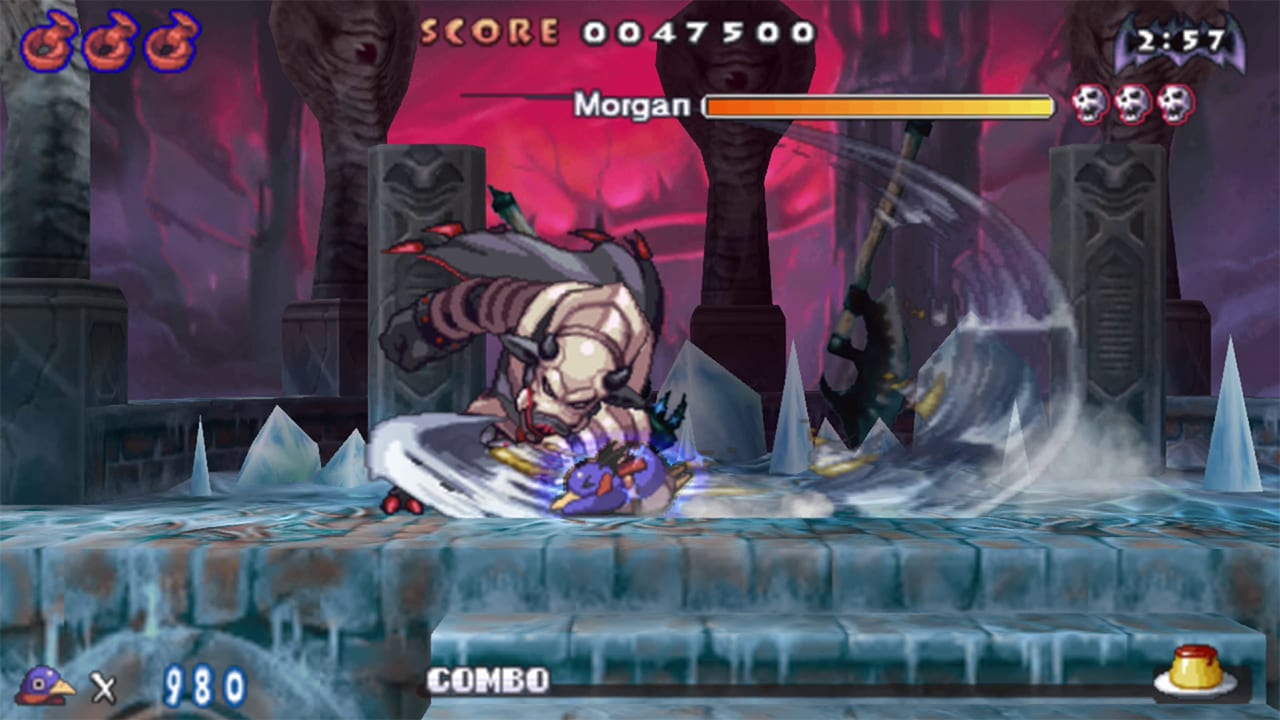
    Enemies and boss fights feel challenging but absolutely beatable. The level design is streamlined and makes it hard to get lost. Additionally, if there was ever a moment where I entered a boss room and didn’t immediately know how to complete the fight, a quick look around the room always guaranteed I knew what was needed to beat them. 

    The music and voice acting is also a huge part of what makes the game great. The soundtrack has a very Nightmare Before Christmas/Disgaea vibe. It’s always very fitting for the level and really gets you bobbing with music. As for voice acting, the Prinnies have their go-to catchphrases that after 4 hours I found myself yelling as I beat enemies or made lots of progress: “Gotta be fast dood!” They all have an attitude and speech type that makes you want to help these doods.

    Additionally, the supporting cast of demons and lords are hilarious and as an unassuming Prinny walking up to these powerhouses, you get amazing dialog as they ridicule you or even pay no attention. And when you end up interrupting, rest assured, it may end with you running for your un-life.

    In short, the game is a great time. If you’re looking for something to pick up and play mindlessly for a few hours, or just laugh at all the crap the hero endures, only to see him finally succeed, it’s still worth it. It’s a simple joy to play and one that shouldn’t be overlooked. As I noted above, the game was released on PSP before, but your best bet at this point if you’re interested is to grab the Nintendo Switch re-release.

  • Disgaea 4 Complete+

    Ed Note: Images for this writeup are from a combo of the Disgaea 4 Complete press kit, and my own save file.

    Disgaea 4 is, somewhat strangely enough, the first Disgaea game I played. Specifically, Disgaea 4 Complete+ for the Switch. As far as I can tell, the “Complete” part just means that they opted to include all of the additional DLC and scenarios that were added to the game after its initial release in… 2011.

    10 years ago.

    Okay, so we might be a teensy bit late on this one.

    One of the best things about Disgaea is the ability to customize your hub world and move all the NPC’s you actually care about next to each other.

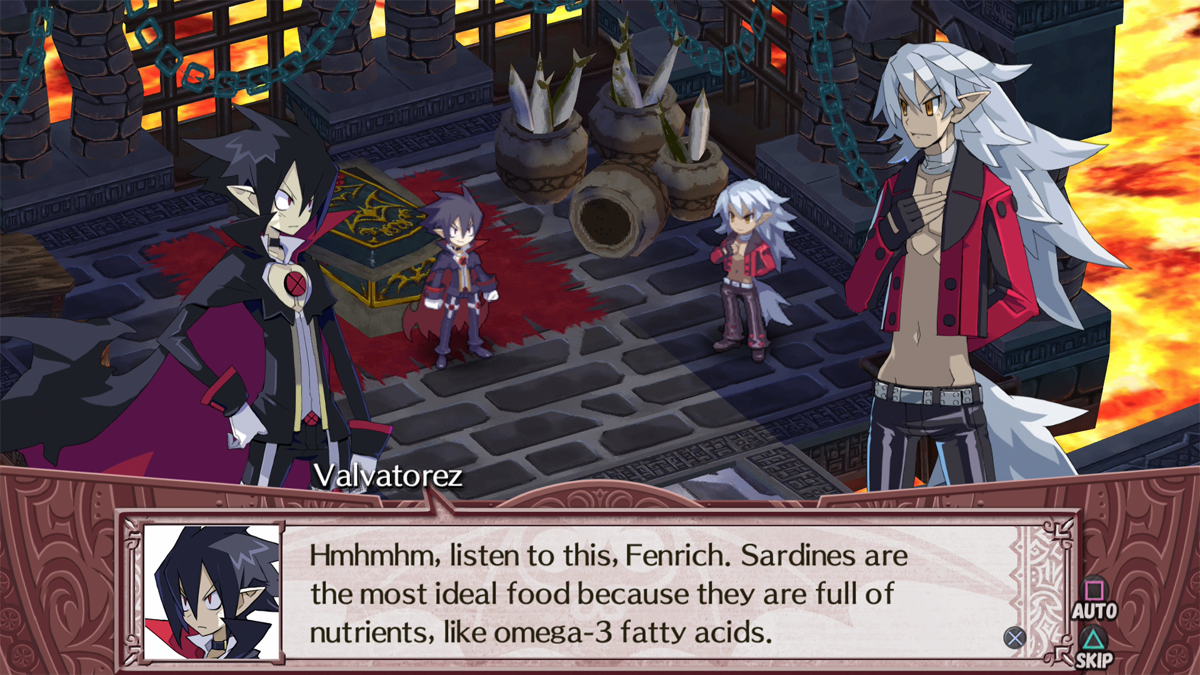
    In any case, like the other games, Disgaea 4 primarily takes place in the Netherworld. The main focus of the story is Valvatorez, a previously incredibly powerful vampire and also arguably total idiot, who never breaks promises he makes. One of these promises involved an agreement to not consume human blood ever. Pretty much all the other side characters are great as well, including Fenrich, Valvatorez’s second in command, who feels like an inverse version of the traitorous vizier trope, and Fuka, a elementary school child who dies, goes to hell, and then proceeds to determinator her way through the Netherworld by refusing to accept her death.

    Valvatorez, the vampire who doesn’t drink blood, and Fenrich, his loyal servant who would really like it if maybe he would again.

    These games can be kinda weird.

    The general arc of the game is Valvatorez’s staging of a coup against the current President of Hell, in an attempt to fix the problems the Netherworld is having, including lack of energy, an inability to handle the influx of guilty souls, and just general failure to… well, be hell.

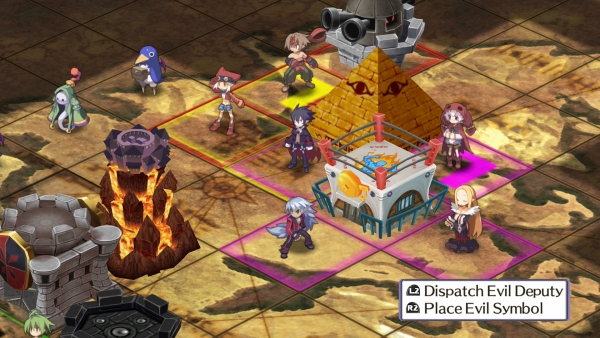
    Behold, the… grid that I don’t remember the name of.

    Mechanically, this comes in with the Corrupternment and building placement map. As you advance through the game, you’ll unlock political titles, buildings, and other elements that give benefits to units placed within their area of effects on this grid. You can also pass bills and policies to boost yourself, your rate of EXP gain, unlock new units, make friends, and also just shake down senators for cash.

    The general structure of the rest of the game is fairly straightforward, with both the Item World and Chara World in Disgaea 4 following a similar structure of being procedurally generated combat levels where you need to clear all enemies, with a few additional minor changes between them. The game also has Magichange, the ability to turn monster characters into weapons temporarily for your other characters to use (don’t worry, they get better), and monster fusion, which lets you fuse monsters into larger versions of themselves with better range and damage.

    Is it really a Disgaea game if the stats aren’t measured in hundred thousands?

    Overall, Disgaea 4 is currently my favorite of the games story-wise, if not mechanically. While the game’s art style and mechanics haven’t aged terribly, many of the UI elements and menus do feel a bit outdated at this point, and some of the connectivity features, like fights and pirate ship leaderboards, feel a bit dead. Despite all of this, though, the fights are still interesting, the grind is nice and grindy, and story and characters are still funny.

    Okay, so maybe I’ve played a bit too much of this.

    You can get Disgaea 4 Complete+ here for Switch, and here for PC if you’re interested.

  • MMORPG Tycoon 2

    Okay, so let’s get the core of my opinion out of the way: MMORPG Tycoon 2 as it currently stands can be pretty fun, but it feels more like a creative playground than a simulator/tycoon style game. If you’re like me, and you are seeking simulation/tycoon games for the system interactions, I’d say wait on this game for the moment. If you’re not like me, and you just want a really cool imaginative playground of game, you still might want to wait, because I can’t tell if its going to stay that way, or turn into the heavy sim I was looking for.

    Look at this. It’s incredible.

    It does have the single greatest video game cursor ever though.

    Okay, let’s talk about the game’s systems, before we get into why I don’t want to currently recommend it.

    MMORPG Tycoon 2 is, as the name suggests, a tycoon game about making a MMO. You start with a blank world map of zones, and it’s your job to make it into a world that your little fake players will want to actually exist in. And also to not go bankrupt while doing it.

    Ah, Kyle Land 2021.

    This means installing the sorts of thing that every MMO needs, from quest-givers, to shops for equipment and taverns to log out in, to putting in zones that spawn monsters so that your players can grind to their hearts’ content. You’ll also have to put down paths, and set up bandwidth networks which power everything.

    In addition to the world building, there’s also a massive amount of customization available. You have the ability to customize the looks of the player characters and NPC’s in the game, with what struck me as an impressive modular system for building simple character models. Buildings and other objects also have robust tweaking and modeling controls.

    The in-game classes, NPC’s, and monsters also all share a pretty robust customization system that allows you to tweak their abilities, stats, and also make changes to their character models.

    People with good taste and thoughtful design ideas can probably use the modeling system to make interesting and neat monsters and characters. I used it to make a 6 story tall hobo-plague doctor with floating arms that just runs around and beats people up.

    Okay, so if the game has all of these features, why do I currently not want to recommend it? Well, while many of these systems exist, they don’t yet interact with each other in particularly interesting ways.

    For example, take the bandwidth system. It’s completely decoupled from every other part of the game. You just put down bandwidth everywhere you have objects, and if they don’t have enough juice, you add more. There’s no real need to manage spikes based on player behavior, or other activity.

    The same thing feels true of the classes and the monster balance. While you have have the ability to make changes to them, as far as I can tell, it doesn’t really influence the fake players’ decisions. While fake players have the ability to request buffs and nerfs, they don’t do much else.

    Closer.

    Finally, the weakest system in the game by far in my opinion is the versioning. This is effectively leveling up your MMO, and I dislike it for two reasons.

    Reason #1. You don’t level up by getting subscribers/money, or by building out more content for your players. You level up just by placing objects down. If you look at some of the screen shots below, you can see that there are areas where I just smashed down a massive amount of objects because I needed to get my level ups. And also…

    Reason #2. The benefits of leveling up are almost entirely numerical, i.e., +5 to loot or something. There are a few that give you more interesting and fun powers (Flight paths, PVP), but most are just… more numbers.

    Even closer.

    And these are the bones with no meat. The level up system is lackluster, but if the numeric benefits were replaced, or added to with a tech tree, all of a sudden they could become far more interesting. If player classes influenced player behavior more, there would be more impetus to balance them and tweak them. And if quest rewards changed a player’s likelihood to complete them, you could use quest rewards to influence player pathing and decisions.

    Of course, these are all just the changes I would make, because I’m curious about what the game would look like as a “simulator” as opposed to a Sims-style creative expression toy, with some light simulation elements. And that’s where I run into my main problem with recommending the game in its current state.

    Perhaps a bit too close. Yes, the crocodile is a player class.

    I can see the game’s design going in one of two different directions, and it’s unclear to me which of the two it will take.

    The first design direction that the developers might choose would be the route of a simulator, something with more in common with maybe Cultivation Simulator, or a pure RollerCoaster Tycoon sort of thing, with systems that govern fake player behavior, happiness, willingness to spend, interaction with in-game systems, etc.

    The second possible design direction would be for the game to take a tone of something like Animal Crossing or the Sims. This version of the game would have less focus on the simulation aspects, but with more attention paid to your ability to customize and edit your MMO to be exactly the way you want it, much like building up a village in Animal Crossing or the joy of playing with Legos.

    Thing is, I’m not sure that it can go both directions at once.

    You don’t get anything out of making custom quests, quest names, or NPC’s other then the satisfaction of making something to annoy your friends with. Or crafting a believable mechanical world, but who does that?

    The game currently contains more of the features related to the “playing with Legos” situation. Which is fine. But I suspect that the person who wants to craft a beautiful creation of a MMO doesn’t want their fake players to quit en-masse because they died too much to an angry herd of sheep. They don’t want to have to carefully build exact flight paths, and try to understand fake player behavior, or have to deal with managing the underlying data grid. They don’t want to find themselves in a situation where they need to slap together a higher level zone just to make sure they don’t lose subscribers who hit the previous level cap. They don’t want to be punished for building a dingy back alley in their city, just because they used spooky looking buildings in what the game thinks should be a “happy zone.”

    The closest comparison I can draw to this is trying to get a highly rated island in New Horizons. Getting a high rating requires that you make a bunch of changes and follow a bunch of rules that may not mesh with the specific look and feel you’re aiming for on your island. And tying in mechanical progression to making those changes feels bad.

    On the flip side, I don’t think the person who just wants play with the simulation/ant farm aspect of the system wants to be forced to put down individual cacti to make the desert area more “Deserty” so that players don’t quit over a lack of immersion.

    Running won’t save you Inbae. Bob is coming.

    And this is why I’m hesitant to recommend the game right now; there’s a lot of potential, but it’s unclear to me what direction this game will go in, so it makes it hard to know who to recommend it to. Will it remain a lite sim where the primary joy is something akin to Animal Crossing, that of building out and creating your own cool space? Or will it become something more mechanically heavy, but less focused on customization?

    With that said, the game has a bunch of potential, and I encourage anyone who finds the premise interesting to add it to their Wishlist and keep an eye on it. It’s $25 on Steam, and as far as I can tell, that’s the only place to get it right now.

  • Wide Ocean Big Jacket

    I’d like to open this writeup on Wide Ocean Big Jacket with a long series of paragraphs discussing the definition of games, what it means to be a game, and just general thoughts on interactive media.

    I’m not going to do that because it would be a tremendous waste of time, and take away from actually talking about the Wide Ocean Big Jacket.

    I think Wide Ocean Big Jacket is very good. It might be great.

    Wide Ocean Big Jacket is not something I would have played if I wasn’t trying to force myself to step outside of my comfort zone. If you’ve read my other reviews, it’s pretty easy to figure out that I prize interesting mechanical gameplay over just about everything else.

    That’s not really what Wide Ocean Big Jacket is about. The game itself has more in common with a visual novel than any other genre. As far as I can tell, there aren’t any major branching decisions, and the whole experience is fairly linear.

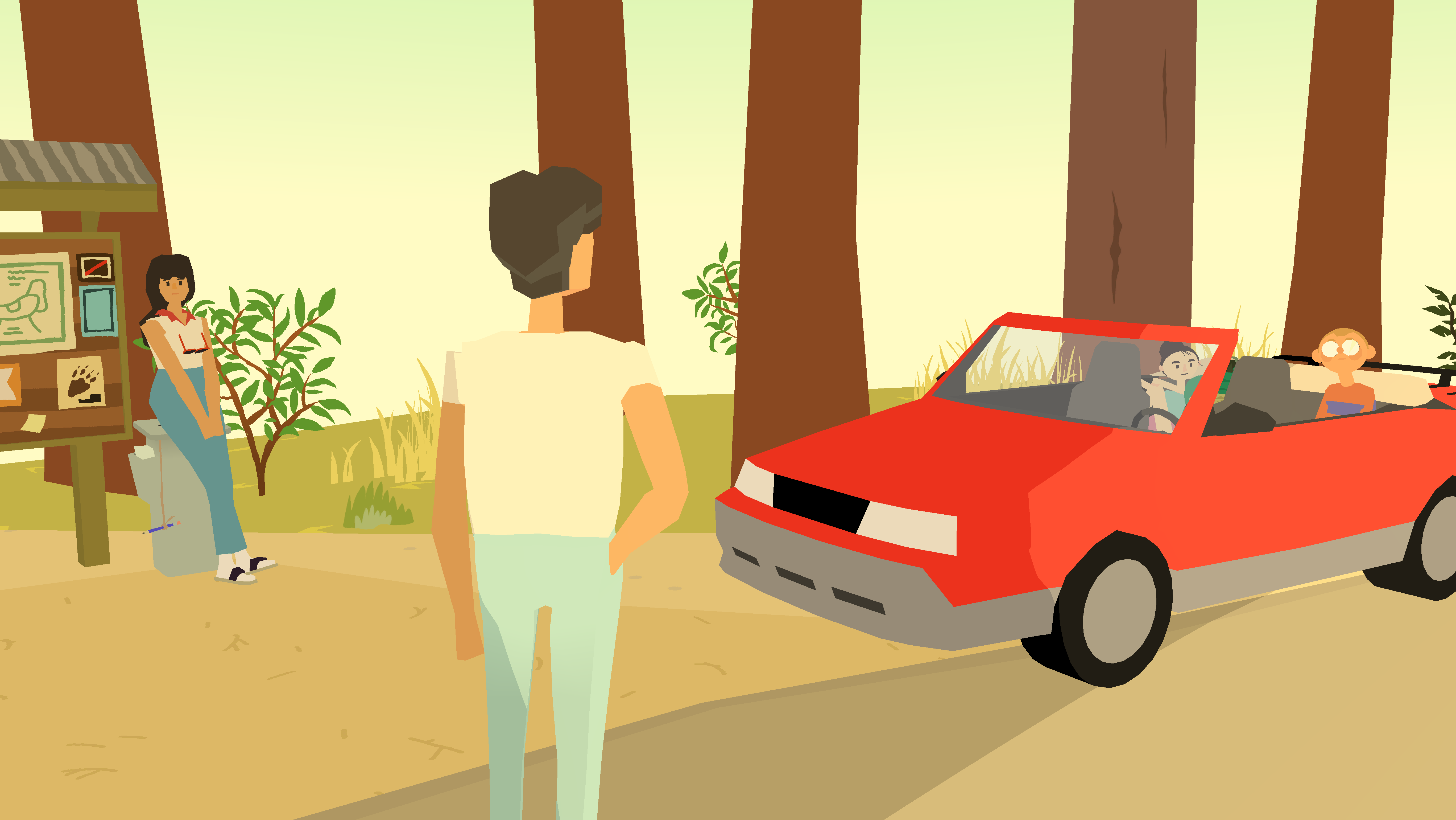
    The thing is, the game absolutely nails almost every aspect of the writing and the setting. I would rank it up there with Night In The Woods in terms of being accurate to what human beings are actually like, and also nailing what going camping is actually like. There are very few games with writing this good.

    I don’t want to say too much about the plot. Generally speaking, it feels like a slice of life style thing. It’s about going camping in the woods and relationships. And that’s all you really need to know.

    Wide Ocean Big Jacket is $8 on itch.io. It’s not a long game by any means, but I don’t think that’s a valuable tool to measure it by. It was also part of the itch.io Racial Justice Bundle, so if you own that, you can download it and play it now. And I think you should.

    Oh, and if you’re on the fence, there’s a demo! It’s an entirely separate set of extra chapters of the game. You’ll have to scroll down a bit on the page to find it.

  • Hunt: Showdown

    Ed Note: The screenshots in this article are from the Hunt: Showdown press kit. Getting good screenshots of the game is kind of tricky, because any time you’d want to get a screenshot of something cool, it’s usually trying to kill you. With that said, in my opinion, the game doesn’t look as good as its marketing material, but I also don’t care because the gameplay is what sells it.

    Today, I’m gonna be talking about Hunt: Showdown, also known as “That Other Game Crytek Made” and “Wait, Crytek Makes More Than Engines?” I like Hunt: Showdown. A week ago Steam said I’d played about 70 hours, and I’ve played another 15 or so since then, so I feel fairly confident in that recommendation.

    If I was forced to stuff Hunt: Showdown into a neat little box to characterize it, it would probably go in the “Battle Royale” box, with Fortnite/Warzone/PUBG. You can play with a squad of up to three folks, you want to shoot people, and you start on a massive single map. I don’t think this is entirely fair and accurate, though, because while the general intention of Hunt is similar to those other games (forcing interesting FPS based fights on a massive open map against other players), the way it goes about making this occur is pretty different.

    For starters, there is no “looting phase” or “drop phase.” Instead, you create a loadout of items and weapons prior to starting a hunt, and once the hunt begins, you just spawn with your team on a random edge of the map. While you can pick up additional ammo and supplies from caravans around the map, and also other dead players, you don’t get to choose what you get from these, and so you mostly just have to make do with what you brought with you. Generally speaking, you’ll bring things like bolt action rifles, six-shooters, shotguns, and sticks of dynamite.

    Also, unlike most Battle Royales, your goal isn’t to wipe out all other players on the map. You can leave more or less whenever you want by getting to an exit point, and waiting out the escape timer. And if you want to save your character (we’ll get into why you might want this in a bit) escaping like this can be the smartest choice.

    Behold, the zombies. Stupid, slow, and not a problem until one that you miss stabs you with a meat cleaver.

    Instead, the goal of a round of Hunt is to escape with a bounty token, an item that you get from either killing an AI boss monster, or prying it from the from cold dead hands of someone else who did. You locate the boss by picking up clues. Each time you pick up a clue, a section of the minimap gets closed off, letting you know the boss isn’t in that zone. After 3, you’re given the boss’s location.

    And this is where things get interesting, because you’ll note I said “Boss.” See, Hunt’s map is fully populated with AI enemies, fairly basic trash mobs. And while these enemies are dumb as bricks, if you’re not careful, or a little too gung-ho, they can easily get you into trouble. Not because they do massive amounts of damage (they don’t) or can kill you quickly (most of them can’t), but because they force you to spend time or ammunition dealing with them.

    It’s a spider made out of people! And yes, it looks just as horrifying close up as you might expect.

    Okay, so I’m bored of writing about the general mechanics. This is enough to explain the general tension and what makes Hunt: Showdown interesting. In brief, all of the game’s systems are built to force you into fights, and the lower player count means that you only need to win 1-2 of these fights in order to “win” a match. The boss objectives mean that despite starting at different locations, players are funneled together, while the game’s sound design and AI means that if you find yourself using non-silenced weapons against monsters, enemy players can quickly locate you. The bounty mechanic puts a target on your head once you’re trying to escape, but it also gives you dark sight, a very minimalist wallhack sort of thing that lets you spot folks trying to ambush you, and make those end game engagements more even.

    The one big thing I haven’t talked about yet is how loadouts and perks work, and while I don’t have too much to say, here’s the five second version:

    Your “Hunters” have a level from 1-50, and whenever they successfully extract from a hunt, they get some more experience based on how they did (mob kills, boss kills, bounties, player kills). Each time they level up, they get a skill point that can be used to unlock passive perks, things like walking quieter, taking less damage from falling, that sort of jazz. If your team wipes in a mission, your Hunter is permanently dead, and there’s no way to bring them back, and you lose all the gear they had on them.

    Gear is somewhat similar. Various actions during a match will pay out Hunt Dollars, which you use to buy gear. Different types of gear are unlocked as you level up your bloodline, and when you buy hunters they come with some of their own gear.

    While you always have access to a pool of Hunters that includes at least one free Hunter to recruit, this free Hunter has random weapons and equipment, and no perks.

    And this is one of the reasons you might choose to extract early: saving your gear and Hunter, and living to fight another day. It might not be worth much, but it can take 2-3 successful matches to get a Hunter to the cap, and losing them feels bad.

    The end result is a game with some interesting character building systems outside of the actual gameplay, and solid FPS mechanics with a set of much older weapons. For me, the game feels like it’s built in a way to encourage and cause interesting gunfights, as opposed to being shot in the head by someone hiding twelve miles away in a cornfield, or simply losing because you couldn’t find a gun when you dropped.

    This doesn’t mean Hunt is flawless. The loading times are incredibly frustrating and long. There are no death cams, just death views, which make it difficult to learn from your deaths, or if the person who killed you was hacking, which it can feel like even if they weren’t. For me, though, these downsides are annoying, but not enough to make the tense gunfights less fun, and the game itself less enjoyable.

    Hunt: Showdown is $40 on Steam, and it’s also on PS4/XboxOne, but it looks like there’s no crossplay between consoles and PC. So if you do want to play it with friends, make sure everyone gets it on the same platform.