Let me save you a lot of time. Go play Inscryption. Here’s the game’s homepage. It is very good. That’s not to say I don’t have problems with it. I actually have one very large problem, but I’ll get to that later. Once you’ve played the game, obviously.
Orna is an augmented reality game in the general vein of Pokemon Go. Where Pokemon Go is heavy on the augmented reality and sometimes forgets to be a game, Orna remembers that AR games are supposed to actually be… well, games. In general, it functions as a semi-procedural RPG. There are monsters to fight, dungeons to explore, quest givers, inns, and shops.
You can filter what shows up on your map by what you’re looking for, including only showing enemies, or only showing larger bosses.
Like Pokemon Go, you have a sphere around you that dictates what you can interact with, and if you want your character to move, you need to move around in real life. The game world is overlaid on top of a world map, and you tap nearby things to interact with them.
Perhaps the biggest difference between Orna and most other augmented reality games I’ve seen is that Orna is focused on being a game. While combat starts out as a fairly simple affair, leveling up gives you the ability to unlock and switch between additional classes. The higher tier classes give access to additional skills, abilities, and skill slots, letting you bring more moves into battle.
For example, earlier in the game I had a thief who turned into a magic wielding wizard. I would buff myself up to be able to dodge attacks, then just stab people a bunch. After a while, I found that not having access to elemental abilities was making it harder to defeat certain enemies. So I switched over being more of caster.
Before I stopped playing, I’d rebuilt again into using physical damage, but casting low-mana cost spells to apply elemental damage of various types to my attacks, while trying to lock the enemy down with sleep and other status effects. This only worked because I’d unlocked a high enough tier class to bring in about 8 spells to battle, and ran a pet that had a chance to heal me each round, so I could just focus on damage and status effects. So there was quite a lot of build variety available to me.
You start out with just two skill slots, but you get more as you unlock higher tier classes.
The end result of all of this is a reasonably in depth system that, oddly enough, illustrates something to me that I hadn’t thought about too much before. Why do so many Augmented Reality games lack in-depth mechanics? The answer, I realized, is because outside of all this combat, you are at least in theory supposed to be playing this game while wandering around outside. In games with in-depth combat mechanics, combat actually requires attention and planning. Trying to play Orna and not walk into people/traffic/road signs is actually pretty tricky.
Instead, I often found myself pausing my walk in order to finish combat encounters or larger boss fights. Orna includes an auto-attack system to get through fights while not paying attention, but using it tended to result in me getting my ass handed to me. A level of attention and focus was necessary to actually win.
Most of the game’s secondary systems also run into a similar problem. There are dungeons, which are a longer gauntlet of battles, and you can’t pause or anything between. There’s the arena, where you face off against other players’ builds controlled by the AI. Both of these can be a bit tricky, and require you to actually be careful with your moves.
On the flip side, there are some systems that encourage moving around, at least a little bit. You get quests through daily random quests, from quest givers, or from other sources. Some quests just ask you to “explore” and walk a certain distance. In addition, there’s a territory capturing system that gives you bonuses for a time period for beating the mini-boss controlling an area.
No, the blue currency isn’t premium, it’s Orns, used to create various buildings and unlock new classes. But you can’t buy it with real money.
You can also construct various different types of shops and buildings to provide additional passive income, and other boosts and benefits. Some of these buildings can be seen and used by other players, while some can’t. But if you want you can choose to make the public ones private. In theory, this would let you wander around and discover other players’ structures, but in practice, I mostly just built everything in one place, and never left that area.
There are a bunch of other systems, including upgrading items, socketing gems into items, fishing, and various multiplayer raids, but I haven’t played around with them enough to really know what to say.
Look, this photo of my gear is just here to pad out the article.
And that’s a general overview of Orna. An interesting augmented reality game without excessive microtransaction bullshit, but which is sometimes a bit hard to play because of how many mechanics and systems work. Or at least, difficult to play while not getting hit by a truck.
If Orna sounds cool, or you want to play something that requires you to walk around a bit and isn’t Pokémon Go, you can find Orna on the Apple App Store and Google Play store if you just search the name. If you’re not sure, there’s more info on the game’s webpage here.
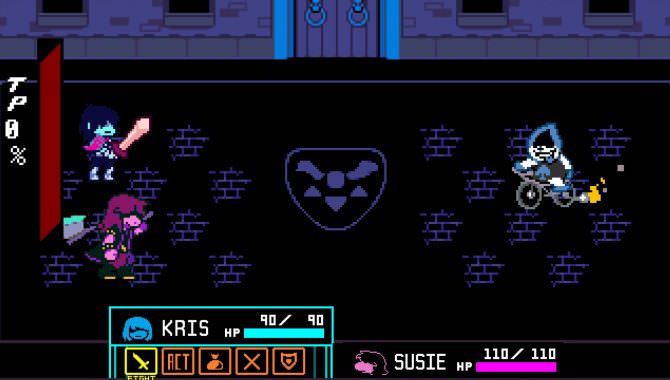
Deltarune is a turn-based RPG. It’s made by Toby Fox, the creator of the darlingest of indie darlings, Undertale. There are a large number of similarities between the two games, including rad as hell music, incredibly weird yet cohesive stories, and bullet hell gameplay mechanics for dodging enemy attacks.
They’re also both games that at least to my mind are much richer if you go into them with no spoilers. As such, if you enjoyed Undertale or games like Earthbound, I would encourage you to grab your gaming machine of choice, and download Chapter 1 & 2 right now. They’re free, and they’re available for PC, Switch, and PS4.
Now, it’s possible that this isn’t enough information for you. You want to know more about what you’re actually getting into. So this next section of the article is for those of you who are either on the fence, or not as interested. Perhaps you played Undertale and it never grabbed you. Perhaps you’ve had your fill of weird internet humor. Perhaps you’re tired of listening to Megalovania. Whatever the reason, I’d still suggest you check out Deltarune.
Deltarune is still just as weird as its famed predecessor, and the music is in my opinion just as good. However, Deltarune’s combat and ACTION system are vastly improved over those of Undertale.
One of Undertale’s primary selling points was that you didn’t have to kill anyone. You could play the game as traditional turn-based RPG with grinding, attacks, and murder. But you could also play through the game by choosing to talk and interact with enemies, and then SPARING them, ending combat without defeating them.
How the story unfolds if you choose to spare enemies is one of the most unique parts of the game. Unfortunately, choosing to spare “trash mobs” quickly becomes tedious after the first time you fight that type of enemy. Combat encounters in Undertale are fairly simple. Combat starts, and on your turn as a pacifist, you select various options in the interaction bar to try to butter up or calm down your opponent. Whenever they attack you, you play a bullet hell dodging mini-game to avoid being hit. While this is fine for bosses, it quickly becomes a boring for the other fights. Every type of normal enemy has the same sequence each time to “beat” the encounter.
But this writeup is about Deltarune, not Undertale. Deltarune still allows you to be a pacifist, but without making the encounters boring. There are a few new mechanics that solve this problem, as well as some general ways that combat encounters have been made more meaningful than they were in Undertale.
The first new mechanic is a system called TP. When enemies attack you in both Undertale and Deltarune, you play a short bullet hell sequence. This sequence varies wildly based on the enemy, but the general rule is: don’t get hit. Deltarune adds the TP gauge to these sequences. It’s used for various special actions and magic attacks including healing, and it fills by being just barely close enough to not take damage from attacks.
The second new mechanic is that pacifist actions also occasionally have their own mini-games associated with them. They’re nowhere near as elaborate as the bullet hell sequences mentioned above, but they’re more fun than simply choosing options on a menu like in Undertale.
And finally, you now have multiple party members to use. Some of the more interesting encounters in the game play with how pacifist options work differently for each party member. And this makes sense because some of your party members are… shall we say… “Less Inclined to Non-Violence” than others.
(Looking at you Susie.)
Deltarune keeps the parts of Undertale that were already loved by pretty much everyone (including the strange story, bizarre art and animation, and music that goes so much harder than it needs to), but just makes them more fun to experience.
I highly recommend you play Deltarune, or at least what’s out so far. I don’t think you’ll be disappointed.
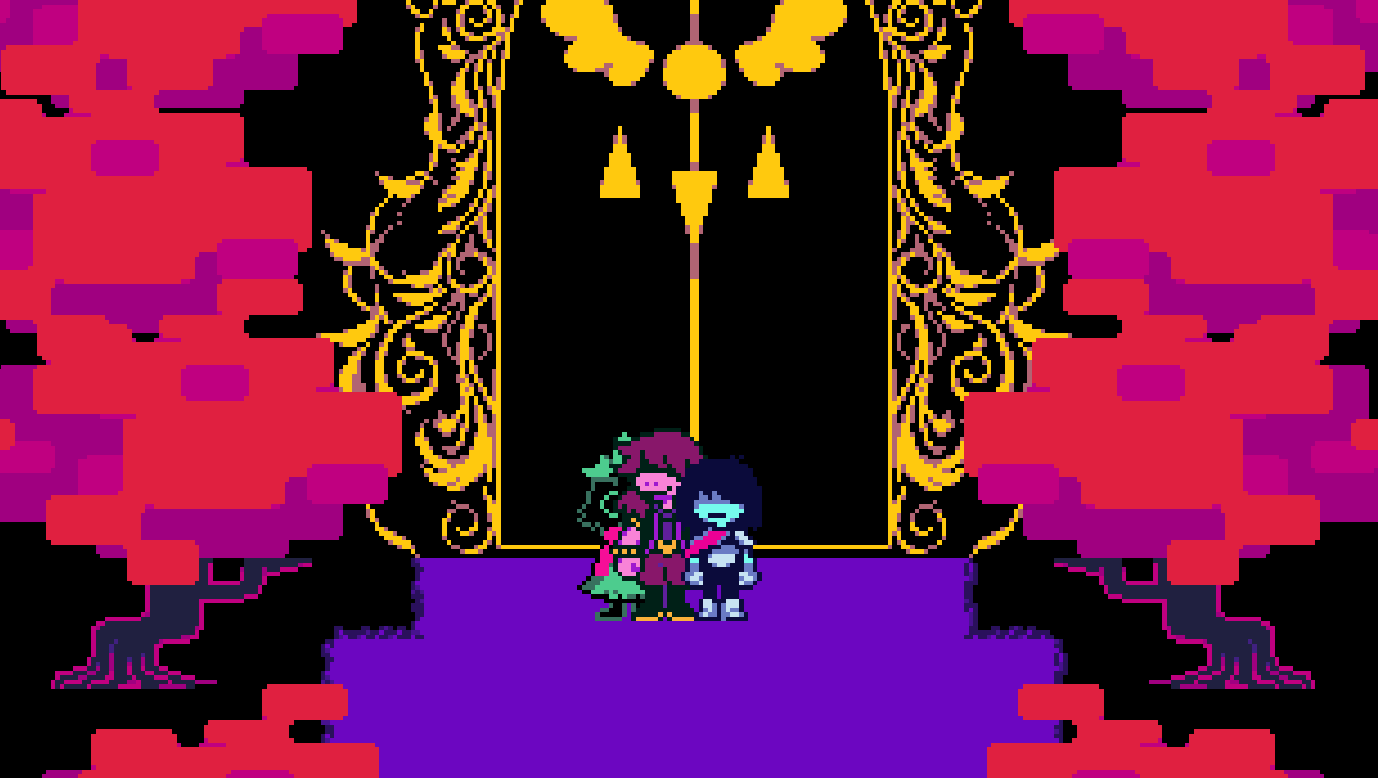
Author Note: Images are from the IGDB because I was too lazy to take screenshots while I was playing.
Author Note: Images in this article are from the Operation: Tango Press kit. It turns out getting nice images off a two player game on an ultra wide monitor is kind of a pain. I’d say they accurately reflect the look of the game.
Operation: Tango is a really cool asymmetric co-op puzzle game, where you play as one of two secret agents. And when I say “Co-Op,” I mean Co-Op. There is no single player option here. Good news is that you only need to own one copy of the game to play it with someone else on Steam, since they can just download the demo, and play the full game through that.
In Operation Tango, you and your friend take the role of two spies. One player is the Hacker, and one player is the Agent. The world has a “Futurist 80’s spy” vibe which is generally executed exceedingly well with bright colors, flashy outfits and locales, and clean UI for the puzzles.
Working together with your partner in anti-crime, you’ll need to make your way through a series of missions, each with a varied set of objectives and goals. While the game does require coordination and timing to be successful, not all puzzles are on timers, and even those that are tend to be generous, giving an illusion of intensity while offering far more time than might otherwise be obvious.
Because of its whole thing, most of the puzzles in Operation Tango that I saw don’t really fall into any single consistent pattern that can be used to describe them, outside of the idea of relying on asymmetric information. So I’m just going to go through a few that I remember and liked, to give a general sense of the vibe.
One mission has one player effectively playing an infinite runner while the other player feeds them information and call outs, while moving obstacles out of their way, healing them, and managing the rest of the interface. Others involve disabling security drones and cameras so that the other player can get by. There are a few re-used elements, such as lock picking, but those tend to amp up in difficulty as you progress.
My one big criticism would be that the game does suffer from a bit of a breakdown near the end. The last mission in the game is by far the weakest one in my opinion, and feels like the designers took 2 half finished missions and smashed them together to make a single level. To quote the person I played with, the finale felt like a worse version of Keep Talking and Nobody Explodes, and there’s a section in the previous level that is more or less just Spaceteam. With that said, the rest of the game is much stronger, and much more fun.
The game also doesn’t necessarily lend itself well to replayability once you’ve done a level as both roles. While the game does its best to randomize various elements of any given puzzle, once you understand the rules in play for a given puzzle, they’re mostly solved. Looking around to search for clues or ideas was the most enjoyable part of the game, and when you know what you’re looking for, it’s a lot less of a “Secret Agent” infiltrating a building, and more “Puzzle Speedrunning.”
Still though, Operation: Tango was one of my favorite demos from PAX East for a reason, and the full game feels like it delivers on the promise of the demo. Because of what the game offers, and because of the fact that only one person has to buy the game, I feel comfortable recommending it. If this article hasn’t persuaded you, I suggest you grab a friend, pull down the demo, and see what you think.
Lucifer Within Us is very good. It’s an incredibly interesting deductive reasoning puzzle game that takes place in a world where exorcists (of which you are one) solve crimes. It is also very short.
This makes it kind of a problem to recommend. Here’s the closest metaphor I can come up with: Lucifer Within Us is a piece of fudge from that really nice bakery that you don’t go to, because even though the fudge is the most delicious thing in the world, it’s $12 an ounce. The fudge is delicious and incredible, but the money to fudge ratio is incredibly high.
So, first a brief overview of mechanics, and a screenshot, so I can reduce the number of words I have to write. Like I mentioned above, in Lucifer Within Us you’re an exorcist for the Church of the worship of Ain Soph. The first murder in over 100 years has just occurred, and you need to find the culprit, and name the demon possessing them. You do this by gathering evidence and interrogating witnesses to the crime.
Oh and also if you catch them in a lie, you can delve into their mind with divinely imbued powers and see into their soul, revealing possible motives for the crime.
You’re given access to the crime scene, and the witnesses. You can search the crime scene for physical evidence, and talk to the witnesses. Each witness gives you their version of events, which can be played out over a timeline. However, because it’s just their version of events, almost everyone will be hiding something about what actually happened. You’ll need to call them out on their contradictions and omissions to determine the truth.
Being able to scan through the timeline is a really cool mechanic.
Okay, first let’s talk about the good stuff.
Lucifer Within Us is an incredibly unique puzzle game/deductive reasoning game. There are a lot of things that can be complimented about it. Its unique blend of cyberpunk and faith. Its general art direction for its characters and world. The 3D models look like old school Runescape, but they suffice, and the art for the demons and characters reminds me of Hades. Look, this is the part where we say nice things about the game, okay? I do not give a shit that the 3D models are basic. It doesn’t matter. The transitions, effects, and everything else easily makes up for it. The mechanics are incredible, and I’ve never seen another game that works like this one does. I love the parallel timeline for suspects. The process of actually solving the crimes, in 2 hours of straight puzzle solving, hit a “Adventure Game Bullshit” moment only once. That’s a high fucking bar.
As a brief aside: talking about Lucifer Within Us is going to require spoiling either one of two things: the specific plot and details of the game, or the specific number of “levels” in the game. I’m choosing to spoil the later. The reason for this is since Lucifer Within Us is a narrative based puzzle game, I think more would be lost by revealing narrative and plot details than the other info.
And when I say short, I mean short. My own steam achievement list lets me estimate the game at being just over two hours in length. My playtime says that the game has 4 hours and 20 minutes on it, of which just under half was spent getting every achievement just so that I was sure that I hadn’t missed anything. I had not. This is compounded by the fact that it offers almost no replayability outside of the aforementioned achievements, which don’t add that much.
“Well” you might be thinking. “Perhaps he used his incredible reasoning skills and logic to speed through the game, without appreciating properly.” To which I reply, 1. Haha, funny joke implying I have skills and reasoning and 2. No. No it’s not. It’s because there are only 3 levels.
The length (or lack thereof) is compounded by the game’s ending. I have mixed feelings on it, and I’m not going to go into details here, but the last portion of the game feels as if Lucifer Within Us suffered from a massive cut in scope at some point in production. I’ve actually emailed the devs in the hope of getting an interview, because I really want to know what’s going on. The game ends with what amounts to PowerPoint presentation and a massive lore dump, despite the rest of the game carefully avoiding heavyhanded storytelling.
No, really.
Look, I’m gonna be honest. I do enjoy novelty and unique events. Would I refund the game currently if I could? No. It was $12. I’m always happy to see people pushing the envelope of neat game mechanics and design. Much of the writing and subtle world building present in Lucifer Within Us, along with the mechanics, is top notch. It is premium, grade A, good stuff. But I’d be lying the game’s ending didn’t disappoint me. I was just starting to get interested in the world, and then lore dump plus credits roll.
If you prize unique mechanics and storytelling over content length, I can recommend Lucifer Within Us. But if you’re expecting something that takes you more then a couple of hours to play through, you’ll likely be disappointed. It’s available on Steam, and also here on itch.io.
Ed Note: We reached out to Kitfox about trying to set up an interview to ask some questions about the game. I was going to add/include that as part of this writeup if it happened, but it’s been over a week, and I haven’t heard anything yet, so for now review will stand on it’s own.